Sony A7 III Aurora Borealis Photography
Understanding the Aurora Borealis
What Are the Northern Lights?
The Aurora Borealis, or Northern Lights, is a natural light display in the sky, usually observed in the high-latitude regions around the Arctic. Its southern counterpart is the Aurora Australis, or Southern Lights. But what causes this spectacular phenomenon?
It all starts with the sun. The sun constantly sends out a stream of charged particles called the solar wind. Earth is protected from this solar wind by its magnetic field, the magnetosphere. This field acts like a shield, deflecting most of the particles.
However, the magnetic field is weaker at the North and South Poles. Here, some particles from the solar wind can sneak through and enter our atmosphere. When these energetic particles collide with gas atoms and molecules—like oxygen and nitrogen—they transfer energy. This energy is then released as tiny flashes of light. When billions of these flashes happen at once, they create the beautiful, dancing lights we see as the aurora.
A Celestial Light Show
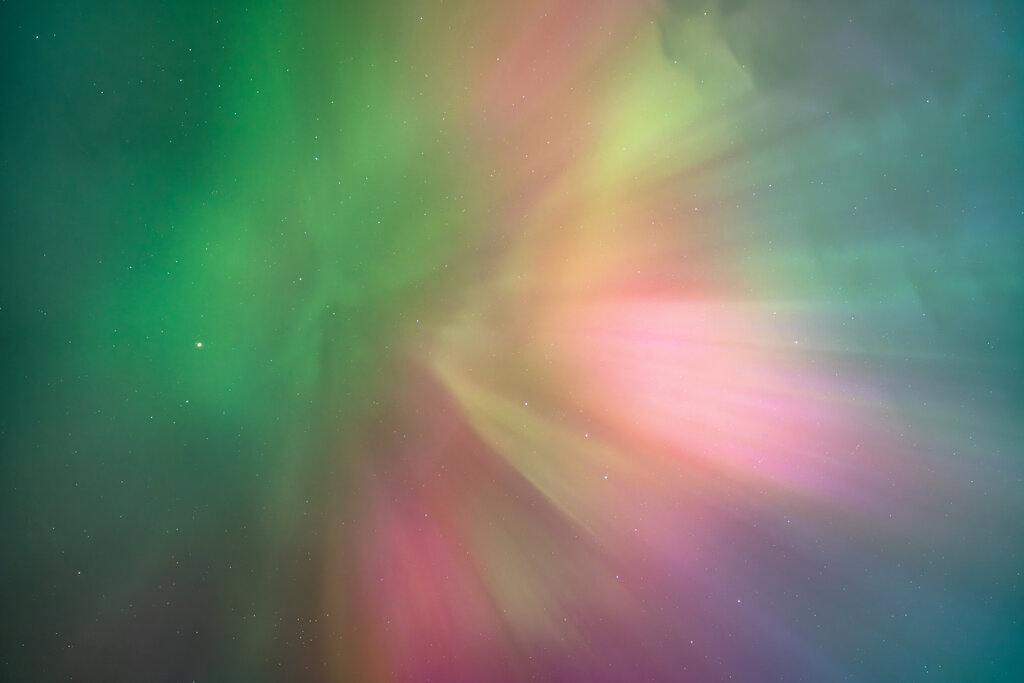
Auroral displays are never the same. They can appear as faint, scattered clouds of light, or as dramatic, fast-moving curtains of color that fill the sky. Common shapes include arcs that stretch from horizon to horizon, pulsating patches, and rays that shoot upward.
The colors are determined by which gas is being excited and at what altitude. The most common color is a pale yellowish-green, produced by oxygen molecules about 60 to 150 miles up. High-altitude oxygen, above 150 miles, can glow a rare, all-red color. Nitrogen molecules produce blue or purplish-red light.
Chasing the Aurora
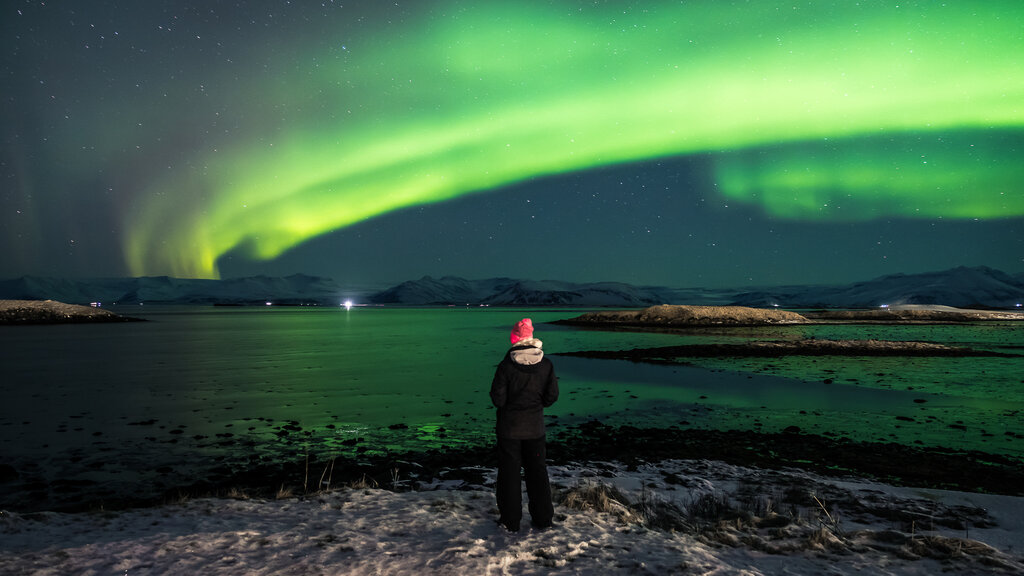
To see the Northern Lights, you need to be in the right place at the right time. The best viewing locations are inside the "auroral oval," a ring-shaped zone centered on the magnetic North Pole. This includes places like northern Canada, Alaska, Iceland, Greenland, Norway, Sweden, and Finland.
Fairbanks lies within the Aurora Oval, and has incredibly clear skies and more than its fair share of hours of darkness in the winter, so seeing the Aurora is pretty likely if you visit for more than a few days.
The best time of year is from late August to early April, when the nights are longest and darkest. While the aurora can happen at any time, activity often peaks between 10 p.m. and 2 a.m. local time. For the best experience, get away from city lights, find a spot with a clear view of the northern horizon, and be patient.
The Sun's Influence
The intensity of an aurora is directly linked to the sun's activity. The sun goes through an approximately 11-year cycle of high and low activity. During the peak of this cycle, known as the solar maximum, the sun is more active, producing more solar flares and coronal mass ejections (CMEs). These events send massive bursts of charged particles toward Earth, resulting in more frequent and intense auroras.
When a powerful CME strikes Earth's magnetosphere, it can trigger a geomagnetic storm. These storms supercharge the aurora, making it brighter, more dynamic, and visible from much lower latitudes than usual. Scientists at agencies like NOAA's Space Weather Prediction Center monitor the sun's activity to forecast the likelihood and intensity of auroral displays.
Now that you know what causes the aurora and where to find it, let's test your knowledge.
What is the fundamental cause of the Aurora Borealis?
The most common color seen in the aurora, a pale yellowish-green, is produced by charged particles exciting which type of molecule at a specific altitude?
Understanding the science behind the lights makes seeing them in person an even more awe-inspiring experience.