Solo Professional Time Mastery
Advanced Time Blocking
Themed Days for Deep Focus
Your calendar helps you manage individual tasks, but day theming organizes your entire mindset. Instead of juggling different types of work every day, you assign a specific focus to each day of the week. This approach drastically reduces context switching, the mental cost of shifting your brain from one type of activity to another.
For a single professional, a themed week might look like this:
- Monday: Deep Work on primary projects.
- Tuesday: Client meetings and communication.
- Wednesday: Business development and marketing.
- Thursday: Creative brainstorming and skill development.
- Friday: Administrative tasks, finances, and weekly planning.
This structure allows you to immerse yourself in one mode of thinking for a whole day, leading to more substantial progress and less mental fatigue.
Day theming is like single-tasking for your entire week.
Buffers for Household Logistics
Managing a career and a household alone means there's no backup. A sudden need for groceries, a package to mail, or a messy kitchen can easily derail a scheduled block of deep work. The solution isn't to plan every chore down to the minute, but to build in flexible buffers.
Buffer blocks are pre-scheduled, protected slots in your calendar for handling life's necessary logistics. Think of them as containers. You might not know exactly what will go into the container on Monday, but you know you'll need it. Scheduling a two-hour "Life Admin" block on Wednesday afternoon or a "Home Reset" on Saturday morning ensures these tasks have a place to land without disrupting your professional commitments.
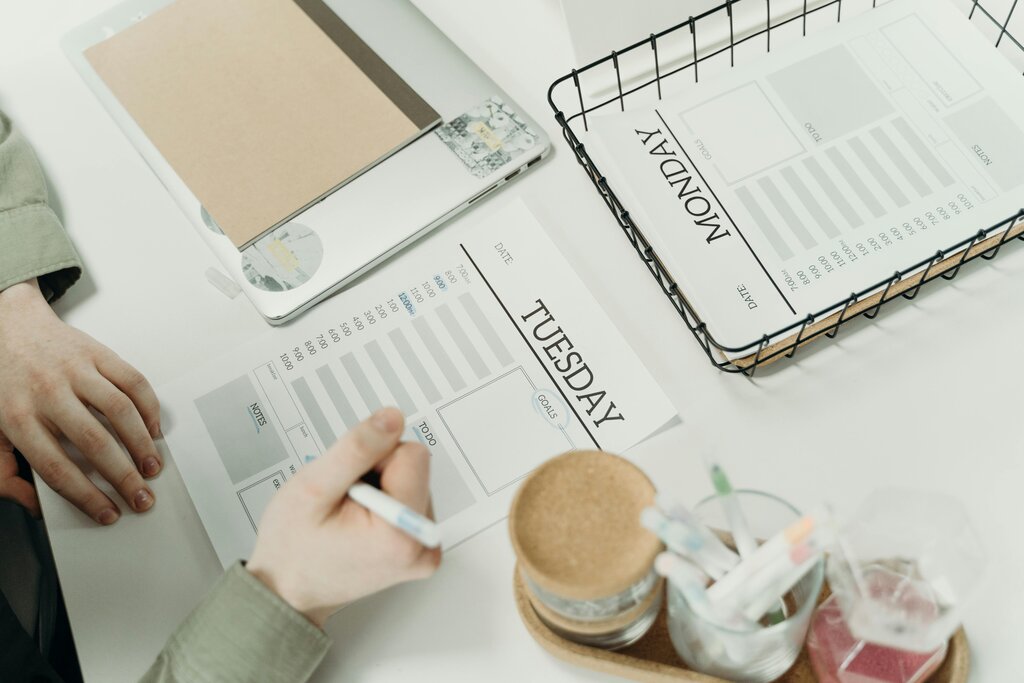
This protects your high-focus time. When an errand pops into your head, you don't have to act on it immediately. You can simply add it to the list for your next buffer block, knowing it will be handled without sacrificing your productivity.
Combining Your Tools
It's helpful to distinguish between two related concepts: task batching and time blocking. They work best when used together.
Task batching is grouping similar small tasks to do in one go. For example, answering all your non-urgent emails at once, or paying all your monthly bills in one sitting.
Time blocking is scheduling a specific time in your calendar to do a particular thing. That 'thing' could be a single large task or a batch of smaller tasks.
You might batch all your errands (grocery store, post office, dry cleaner) and then create a time block on Friday afternoon to complete that batch.
Combining task batching with time blocking—scheduling specific periods in yourcalendar for these activities—leads to better time management and helps you work withminimal distractions and maximum focus.
This combination is powerful. You get the efficiency of batching and the commitment of scheduling it on your calendar, ensuring the work actually gets done.
Choosing Your System
Should you use a digital calendar or a paper planner? There's no single right answer, and the best system is the one you'll stick with. Each has distinct advantages for advanced time blocking.
| System | Pros | Cons |
|---|---|---|
| Digital | Easy to move blocks around; can set recurring themes and buffers; integrates with other tools. | Can be distracting; notifications can pull you out of deep work; less tangible sense of your day. |
| Analog | Tactile and intentional; no digital distractions; promotes focused planning sessions. | Harder to change if plans shift; requires manual setup each week; no reminders. |
Many people find success with a hybrid approach. You could use a digital calendar for appointments and meetings with firm times, and a paper planner for theming your days and creating flexible blocks for your own tasks. This gives you the adaptability of digital tools alongside the focused, intentional nature of writing by hand.
Time to check what you've learned.
What is the primary benefit of 'day theming' as a productivity strategy?
What is the main purpose of scheduling 'buffer blocks' in your calendar?
By moving beyond simple scheduling and implementing themes and buffers, you create a robust system that supports deep professional focus while ensuring life's logistics don't cause constant interruptions.