Solidity Smart Contracts and Token Creation
Introduction to Blockchain and Ethereum
What Is a Blockchain?
At its core, a blockchain is a special kind of digital ledger. Think of it like a shared notebook that's passed around a group of people. Every time someone wants to add a new entry, they write it on a new page. But here’s the twist: once a page is filled and added to the notebook, it can never be changed or removed.
This notebook isn't stored in one place. Instead, every person in the group has an identical, up-to-date copy. This is what we mean by decentralized. There's no single person or company in charge. This distribution makes the system incredibly robust. If one person loses their copy, it doesn't matter, because the network still holds the true record.
A blockchain is a chain of digital "blocks" that contain records of transactions. Each block is cryptographically linked to the one before it, creating an immutable and transparent record.
So how does the group agree on what to add to the notebook? They use a consensus mechanism. This is a set of rules that everyone follows to validate new entries. It’s a bit like voting. Before a new page (or "block") can be added to the chain, a majority of the participants must agree that the information on it is valid. This process secures the network and prevents fraudulent entries.
Enter Ethereum
The first major blockchain was Bitcoin, designed purely as a decentralized digital currency. It's a powerful system, but its function is specific: tracking who owns which bitcoins. Ethereum, launched a few years later, had a much broader vision.
If Bitcoin is like a simple calculator, designed to do one thing very well, Ethereum is like a smartphone. It's not just a single application; it's a platform where developers can build and run their own applications. It took the basic idea of a blockchain and made it programmable.

This programmability is made possible by smart contracts. A smart contract is just a piece of code that lives on the blockchain. It automatically runs when certain conditions are met, and its results are recorded on the ledger. Think of it as a digital vending machine: you put in a coin (data or value), and the contract automatically dispenses a product (an action or result) according to its pre-written rules. These contracts are the building blocks for applications on Ethereum.
Just like most blockchains, Ethereum has its own cryptocurrency, called Ether (ETH). It's used to pay for transaction fees and computational services on the network. Every time someone uses an application or executes a smart contract, a small amount of ETH is paid to the network participants who keep everything running.
The World of dApps
Applications built on blockchains like Ethereum are known as decentralized applications, or dApps. Unlike traditional apps that run on servers owned by a single company (like Google or Meta), dApps run on a peer-to-peer network. Their backend logic is handled by smart contracts.
Why is this important? Running an application on a decentralized network gives it some unique properties:
- No single point of failure: Since the app runs on thousands of computers worldwide, it can't be shut down by a single entity.
- Censorship resistance: No central authority can block users or remove content.
- User control: Users can interact with dApps without giving up control of their personal data.
DApps are being built for a huge range of purposes. One of the biggest areas is Decentralized Finance (DeFi), which aims to recreate traditional financial services like lending, borrowing, and trading without intermediaries like banks.
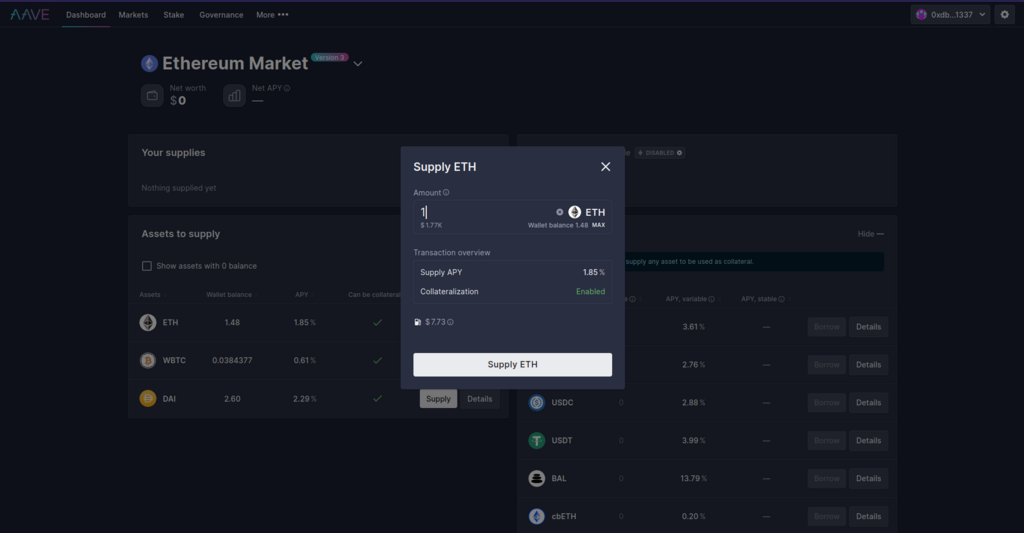
But finance is just the beginning. Developers are also creating dApps for gaming, social media, online voting systems, and digital identity management. By running on a global, transparent, and neutral platform, these applications open up new possibilities for how we interact online.
Time to check your understanding of these core concepts.
What does it mean for a blockchain to be "decentralized"?
The provided text uses an analogy to compare Bitcoin and Ethereum. Which statement best captures it?