Solidity Smart Contract Programming
Introduction to Solidity
The Language of Smart Contracts
If you want to build an application on a blockchain like Ethereum, you need to write code that the network can understand and execute. This is where Solidity comes in. It's the primary programming language for creating smart contracts, which are the building blocks of decentralized applications (dApps).
Think of Solidity's relationship to Ethereum like JavaScript's relationship to the web. Just as JavaScript brings interactivity to websites, Solidity brings logic and rules to blockchain transactions. It allows developers to define how digital assets are managed and exchanged without needing a central authority.
Why Solidity Exists
Traditional programming languages weren't designed for the unique environment of a blockchain. A smart contract often handles valuable assets, so its code must be extremely precise and secure. Once a contract is deployed to the blockchain, it's generally unchangeable. There's no
On the blockchain, code is law. Solidity was created to write these laws clearly and safely.
Solidity is a statically-typed language, which means the type of each variable (like a number, a string of text, or an address) must be declared upfront. This helps catch errors during development, long before the contract is deployed and put in control of real assets. This focus on security and predictability is what makes Solidity suitable for its important job.
How It Compares
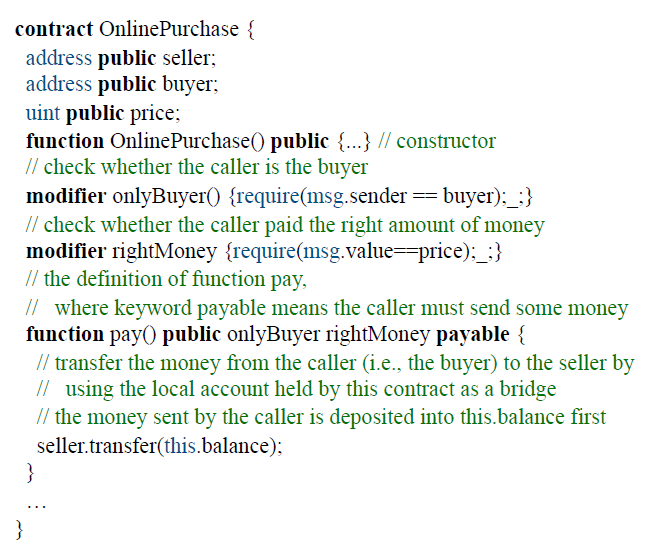
If you've ever seen languages like C++, Java, or JavaScript, Solidity's syntax will look familiar. It uses curly braces {} to group code and semicolons ; to end statements. This familiarity helps developers coming from web or software development get started more easily.
However, it has key differences. Unlike dynamically-typed languages like Python or JavaScript where you can change a variable's type on the fly, Solidity's static typing enforces strict rules. It's also a compiled language, meaning the human-readable Solidity code is converted into low-level bytecode that the Ethereum Virtual Machine (EVM) can execute.
| Feature | Solidity | JavaScript | Python |
|---|---|---|---|
| Primary Use | Smart Contracts | Web Development | General Purpose, AI |
| Typing | Statically Typed | Dynamically Typed | Dynamically Typed |
| Execution | Compiled for EVM | Interpreted by Browser | Interpreted |
Solidity is a high-level programming language used for implementing smart contracts.
Now that you have a basic understanding of what Solidity is and why it's important, let's test your knowledge.
What is the primary role of the Solidity programming language?
Solidity is described as a 'statically-typed' language. What does this mean?
Understanding Solidity's role is the first step toward building on the decentralized web. You're now ready to explore its core components.