Solidity Smart Contract Programming
Introduction to Blockchain and Ethereum
What Is a Blockchain?
Think of a blockchain as a special kind of notebook. This notebook isn't owned by one person. Instead, everyone in a group has an identical copy. When someone wants to add a new page, they announce it to everyone. The group checks that the new page is valid, and then everyone adds it to their copy of the notebook. Once a page is added, it's sealed and linked to the previous page, creating a chain of pages.
This is the core idea of a blockchain. It's a decentralized ledger, meaning no single person or company controls it. It's maintained by a network of computers around the world. Information is stored in blocks, and each new block is cryptographically linked to the one before it, forming a secure and chronological chain. This structure makes the data immutable—once information is recorded in a block, it's incredibly difficult to alter or remove.
This shared notebook can be used to record anything of value, like transactions, ownership records, or votes. Because it's decentralized and immutable, it creates a system built on trust and transparency without needing a central authority like a bank or government.
Enter Ethereum
Bitcoin introduced the world to blockchain as a way to create a digital currency. Ethereum took this idea a giant leap further. While Ethereum has its own cryptocurrency called Ether (ETH), its true innovation is making the blockchain programmable.
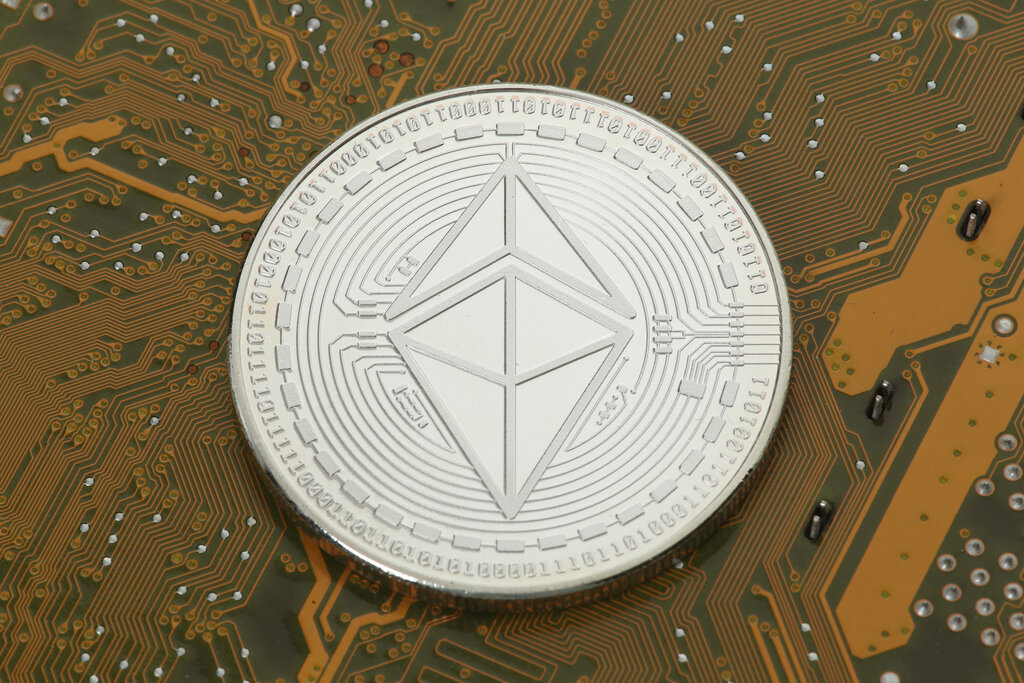
Instead of just being a ledger for financial transactions, the Ethereum blockchain can run code. This means developers can build applications that run on this decentralized network. These are often called decentralized applications, or dApps. They aren't controlled by any single entity, making them resistant to censorship and single points of failure.
Smart Contracts
The programs that run on Ethereum are called smart contracts. A smart contract is just a piece of code that lives on the blockchain. It automatically executes when certain conditions are met, much like a real-world contract. The classic analogy is a vending machine. If you put in the correct amount of money (the condition), then the machine automatically gives you a snack (the outcome). There's no need for a cashier.
Blockchains are also a platform for executing programs called smart contracts — pieces of code that automatically execute according to conditional software logic such as, “if x is true, then execute y.”
Smart contracts work the same way but with digital assets. For example, a contract could be written to automatically release funds to a musician once their new song reaches 10,000 streams. Because the contract is on the blockchain, its rules cannot be changed, and it will execute exactly as written. This creates a powerful system for agreements that are transparent, secure, and automatic.
The Ethereum Virtual Machine
How does Ethereum actually run all this code? The answer is the Ethereum Virtual Machine, or EVM. The EVM is the heart of Ethereum. It's the environment where all smart contracts are executed.
Think of the EVM as the operating system for the Ethereum network. Every computer (or node) that participates in the network runs a copy of the EVM. When a smart contract is triggered, every node on the network processes that transaction through its EVM. This collective execution ensures that everyone agrees on the outcome and the state of the network remains consistent. It's this shared computation that makes Ethereum a sort of global, decentralized computer.
Before we move on, let's review the key terms we've just covered.
Now, let's check your understanding of these foundational concepts.
What is the primary characteristic that makes a blockchain "decentralized"?
How did Ethereum's main innovation differ from Bitcoin's original use of blockchain technology?
Understanding these core ideas—the decentralized nature of blockchains, Ethereum as a programmable platform, self-executing smart contracts, and the EVM as the engine—is the first step into the world of blockchain development.