Solidity and TypeScript Blockchain Development
Blockchain Basics
A Shared Digital Notebook
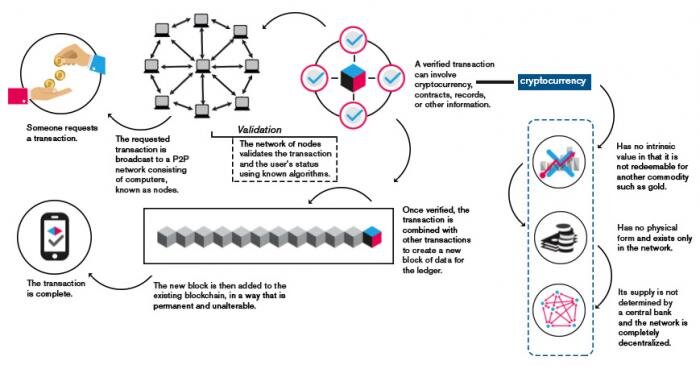
At its heart, a blockchain is a special kind of database. Think of it like a shared digital notebook. Everyone in a group has an identical copy. When someone wants to add a new entry, they announce it to everyone else. The group then works together to verify that the entry is valid before adding it to their notebooks.
Once an entry is added, it’s there forever. It can't be secretly changed or deleted because everyone else's copy would show the original entry. This creates a permanent, transparent, and highly secure record of information. Each new entry, or "block," is cryptographically linked to the one before it, forming a chain. Hence, the name blockchain.
At its most basic level, a blockchain is a digital ledger maintained by a decentralized network of computers.
The Power of Decentralization
The most revolutionary aspect of blockchain is its decentralized nature. In a traditional system, like a bank, all data is stored on a central server controlled by a single entity. If that server goes down or is compromised, the entire system is at risk. This central authority also has complete control to approve, deny, or even reverse transactions.
Blockchain flips this model on its head. Instead of one central server, the database is distributed across a vast network of computers, often called nodes. No single person or organization owns or controls the network. This eliminates the single point of failure and removes the need to trust a central intermediary.
This structure makes the network incredibly resilient. To take it down, an attacker would need to compromise a majority of the computers simultaneously, which is practically impossible. It also ensures that the rules of the network are enforced collectively, not by the whim of a single entity.
Reaching an Agreement
If there's no central authority, how does the network agree on which transactions are valid and should be added to the chain? This is solved using a consensus mechanism.
A consensus mechanism is a set of rules that allows the distributed nodes in the network to agree on the current state of the ledger. It’s how the group decides which new entries to add to the shared notebook.
The most famous example is Proof of Work (PoW), pioneered by Bitcoin. In a PoW system, nodes called "miners" compete to solve a complex mathematical puzzle. The first miner to solve it gets to propose the next block of transactions and is rewarded for their effort. This process requires significant computational power, making it extremely difficult and expensive for anyone to cheat the system. By making it costly to add blocks, the network ensures that participants are invested in its integrity.
While PoW is very secure, its high energy consumption has led to the development of other methods. Another popular mechanism is Proof of Stake (PoS). Instead of computational power, participants lock up or "stake" their own cryptocurrency to get a chance to validate transactions and create new blocks. If they act maliciously, they risk losing their staked funds. This creates a financial incentive to follow the rules and maintain the network's security.
Code That Executes Itself
Beyond simply recording transactions, blockchains can also run programs. These are called smart contracts.
A smart contract is a piece of code that lives on the blockchain and automatically executes when certain conditions are met. Think of it like a digital vending machine. You put in money (a transaction), select an item (call a function), and the machine automatically dispenses your snack (executes the contract's terms). There’s no need for a cashier or intermediary. The rules are written in code and enforced by the network.
Smart contracts are just like regular contracts in the real world, but they are digital and enforced by a network of computers rather than a legal system.
This programmability opens up a world of possibilities for decentralized applications (dApps). Smart contracts can be used to create everything from decentralized financial systems and voting platforms to supply chain management tools and digital identity solutions. Because they run on a decentralized network, they are transparent, tamper-proof, and always available.
Let's check your understanding of these core concepts.
What is the primary reason that entries in a blockchain are considered permanent and resistant to tampering?
In a blockchain, what is the role of a consensus mechanism?
These three pillars—decentralization, consensus, and smart contracts—form the foundation of blockchain technology. Understanding them is the first step toward building powerful and innovative applications.