Solid State Transformer Manufacturers Today
Solid-State Transformer Overview
The Transformer, Reimagined
When you think of an electrical transformer, you probably picture a large, heavy metal box humming away on a utility pole or in a substation. For over a century, these devices have used wound copper coils and a magnetic iron core to change voltage levels. It's a proven, reliable technology. But what if we could do the same job with something smarter, smaller, and more versatile?
Enter the solid-state transformer (SST), also known as a smart transformer. Instead of relying on bulky physical components, an SST uses advanced power electronics—semiconductor devices like transistors and diodes—to convert electricity. It's a fundamental shift from analog, magnetic-based technology to a digital, software-controlled system.
At its core, an SST performs a multi-step electrical conversion. It takes incoming alternating current (AC), converts it to direct current (DC), steps the voltage up or down at a very high frequency, and then converts it back into the precise AC waveform needed. This high-frequency operation is the secret to its advantages.
Smaller, Smarter, More Efficient
Traditional transformers are limited by the frequency of the power grid, typically 50 or 60 Hz. Because SSTs can operate at frequencies thousands of times higher, the magnetic components they require are dramatically smaller and lighter. An SST can be up to ten times smaller and lighter than a conventional transformer with the same power rating.
But the benefits go far beyond size. SSTs offer a level of control that traditional transformers simply can't match.
Because they are based on power electronics, SSTs can actively manage power flow, correct voltage sags or swells, and even filter out electrical noise, improving overall grid stability and quality.
This intelligence makes them a key component for modernizing the electrical grid. They can also achieve higher efficiencies because they can be optimized electronically, reducing the energy wasted as heat during voltage conversion.
| Feature | Traditional Transformer | Solid-State Transformer |
|---|---|---|
| Core Technology | Copper Coils & Iron Core | Semiconductor Power Electronics |
| Size & Weight | Large & Heavy | Compact & Lightweight |
| Control | Passive, None | Active, Full Control of Power Flow |
| Frequency | Grid Frequency (50/60 Hz) | High Frequency (kHz) |
| Power Quality | No Improvement | Can Correct & Improve |
| Grid Integration | AC only | AC/DC, Multiple Sources |
Powering the Smart Grid
The unique capabilities of solid-state transformers make them essential for the energy systems of the future. In smart grids, SSTs can act as intelligent energy routers. They can direct power where it's needed, seamlessly connect different parts of the grid, and even enable two-way power flow, allowing homes with solar panels to sell excess energy back to the grid.
This is especially crucial for integrating renewable energy sources. Wind turbines and solar panels generate DC power or variable-frequency AC, which can't be connected directly to the grid. An SST can easily handle this conversion, acting as a universal adapter that links these clean energy sources to the existing infrastructure. It can also manage the connection to energy storage systems, like large batteries, charging them when there's excess power and drawing from them when demand is high.
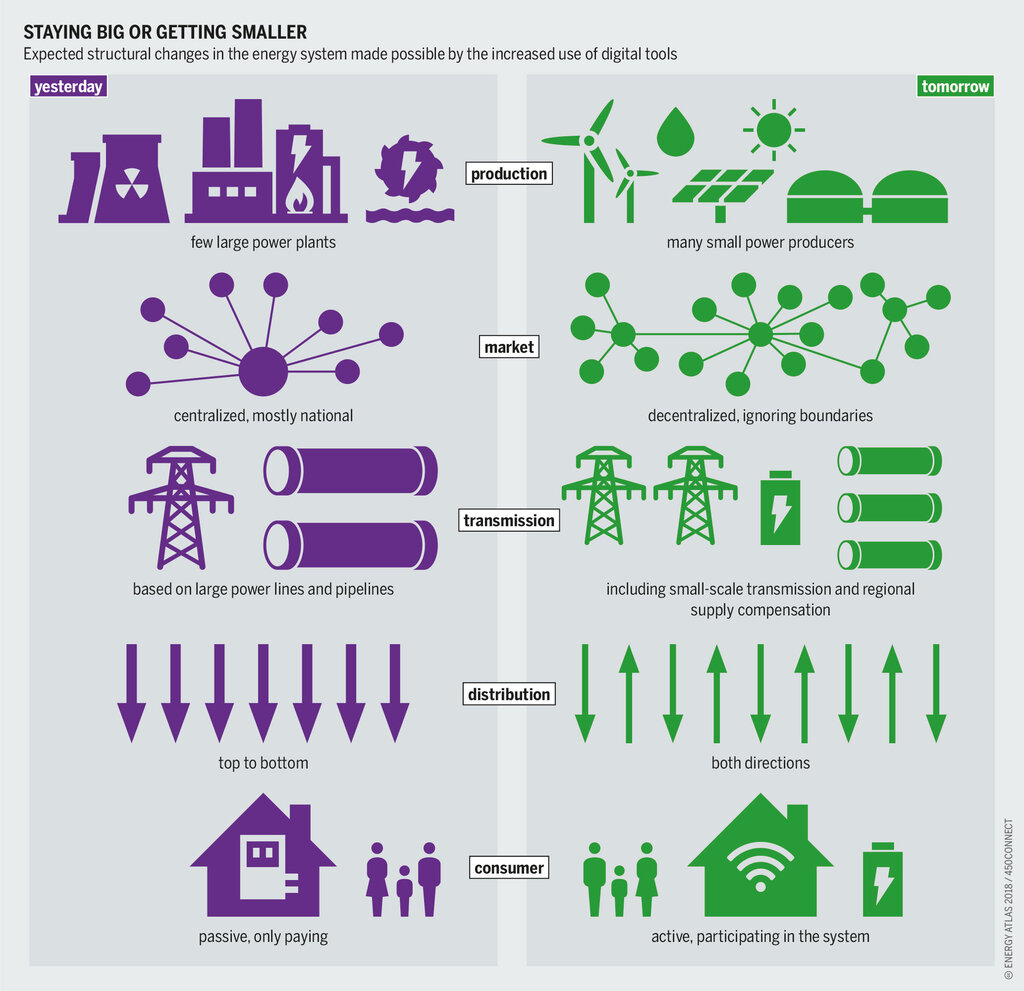
Other applications are emerging rapidly, from creating stable, independent microgrids for critical facilities to building the next generation of ultra-fast charging stations for electric vehicles.
Market and Future Growth
The market for solid-state transformers is still in its early stages but is poised for explosive growth. While currently a niche market valued in the hundreds of millions of dollars, projections show it expanding into a multi-billion dollar industry within the next decade.
Several key drivers are fueling this adoption. The global push to modernize electrical grids and build out smart grid infrastructure is a primary factor. The rapid increase in renewable energy installations and the rising popularity of electric vehicles also create a strong demand for the advanced power management capabilities that only SSTs can provide. As the technology matures and costs come down, SSTs are set to become a standard component in our energy ecosystem.
What is the core technology that enables a solid-state transformer (SST) to function?
What is the main advantage of an SST operating at a much higher frequency (thousands of times higher) than a traditional transformer?
Solid-state transformers represent a significant leap forward, moving beyond simple voltage conversion to offer intelligent, flexible control over electrical energy. They are a critical tool for building a more efficient, reliable, and sustainable power grid.