Solid State Chemistry Essentials
Introduction to Solid-State Chemistry
The World of Solids
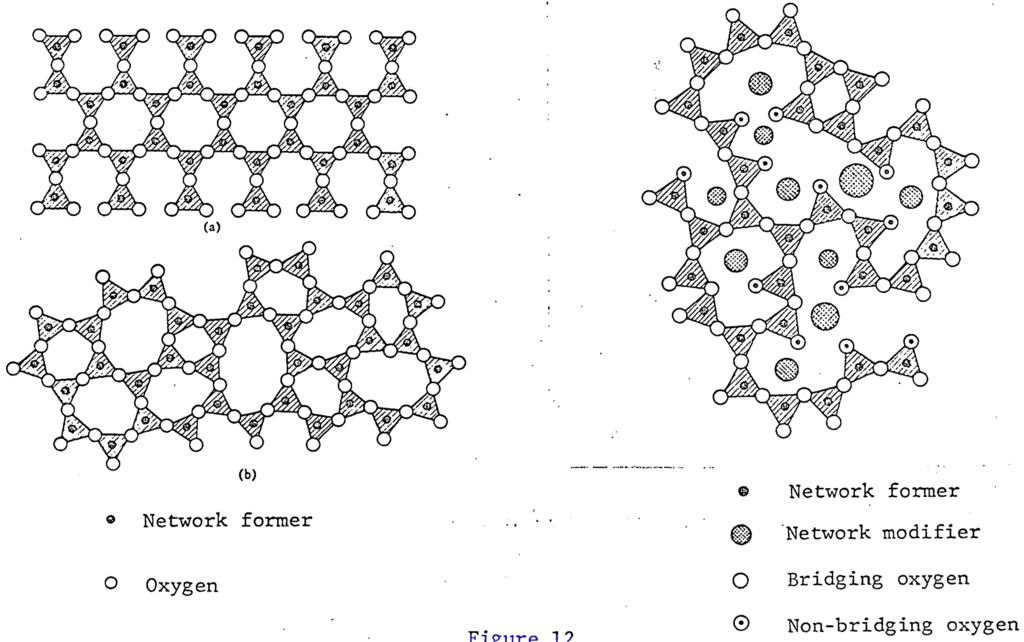
When you think of a solid, you might picture a rock, a block of ice, or a piece of metal. While they're all solid, the atoms inside them are arranged in very different ways. This internal arrangement is the first big idea in solid-state chemistry. It separates all solids into two main groups: crystalline and amorphous.
Crystalline solids are highly ordered. Their atoms, ions, or molecules are arranged in a repeating, three-dimensional pattern. Imagine stacking bricks perfectly to build a wall. The pattern is predictable and extends over long distances. Salt, diamonds, and snowflakes are all crystalline.
Amorphous solids are the opposite. Their particles have no long-range order. Think of a pile of bricks dumped randomly from a truck. There's no repeating pattern. Glass, rubber, and many plastics are amorphous. This lack of order means their properties are often different from their crystalline cousins.
The Crystalline Character
The orderly arrangement of crystalline solids gives them unique and predictable characteristics. One of the most important is a sharp, definite melting point. When you heat a crystalline solid like ice, it stays solid at -1°C, 0°C, and then melts completely at exactly 0°C (at standard pressure). There's no in-between slushy phase. The energy you add goes into breaking the entire crystal structure at once.
Amorphous solids behave differently. If you heat a glass rod, it doesn't suddenly turn into a liquid. Instead, it gradually softens over a range of temperatures, becoming more pliable until it flows. This is because there isn't a single, uniform structure to break apart.
Another key feature of many crystals is anisotropy. This means their physical properties can change depending on the direction you measure them. A good analogy is a piece of wood. It's much easier to split wood along its grain than against it. Similarly, a crystal might conduct electricity or light differently along one axis compared to another. This is a direct result of the ordered, but not necessarily symmetrical, arrangement of its particles. Amorphous solids, being disordered, are typically isotropic, meaning their properties are the same in all directions.
Order defines behavior. The repeating internal pattern of a crystal leads to its sharp melting point and directional properties.
Four Types of Crystals
Crystalline solids can be further divided into four types based on the particles they're made of and the forces holding them together. This bonding determines their physical properties, like hardness and conductivity.
Ionic Solid
noun
A crystalline solid composed of positive and negative ions held together by electrostatic attraction.
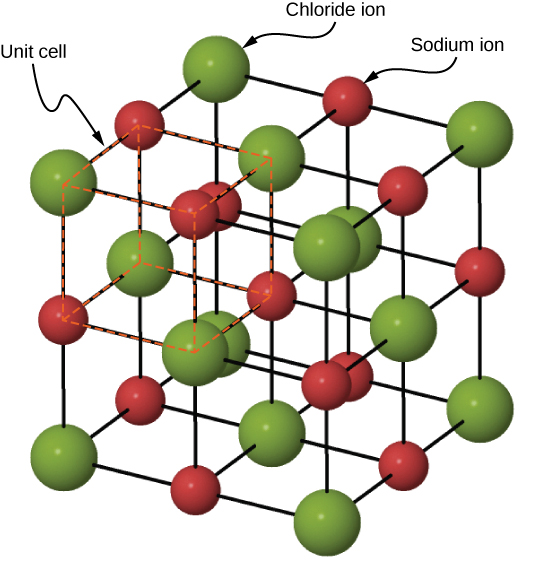
These solids form when a metal transfers electrons to a nonmetal, creating positively and negatively charged ions. Think of table salt (NaCl). The strong attraction between these opposite charges makes ionic solids hard and brittle, with very high melting points. They don't conduct electricity as solids because the ions are locked in place. However, if you melt them or dissolve them in water, the ions are free to move and can carry an electric current.
Covalent Solid
noun
A crystalline solid in which atoms are linked by a continuous network of covalent bonds.
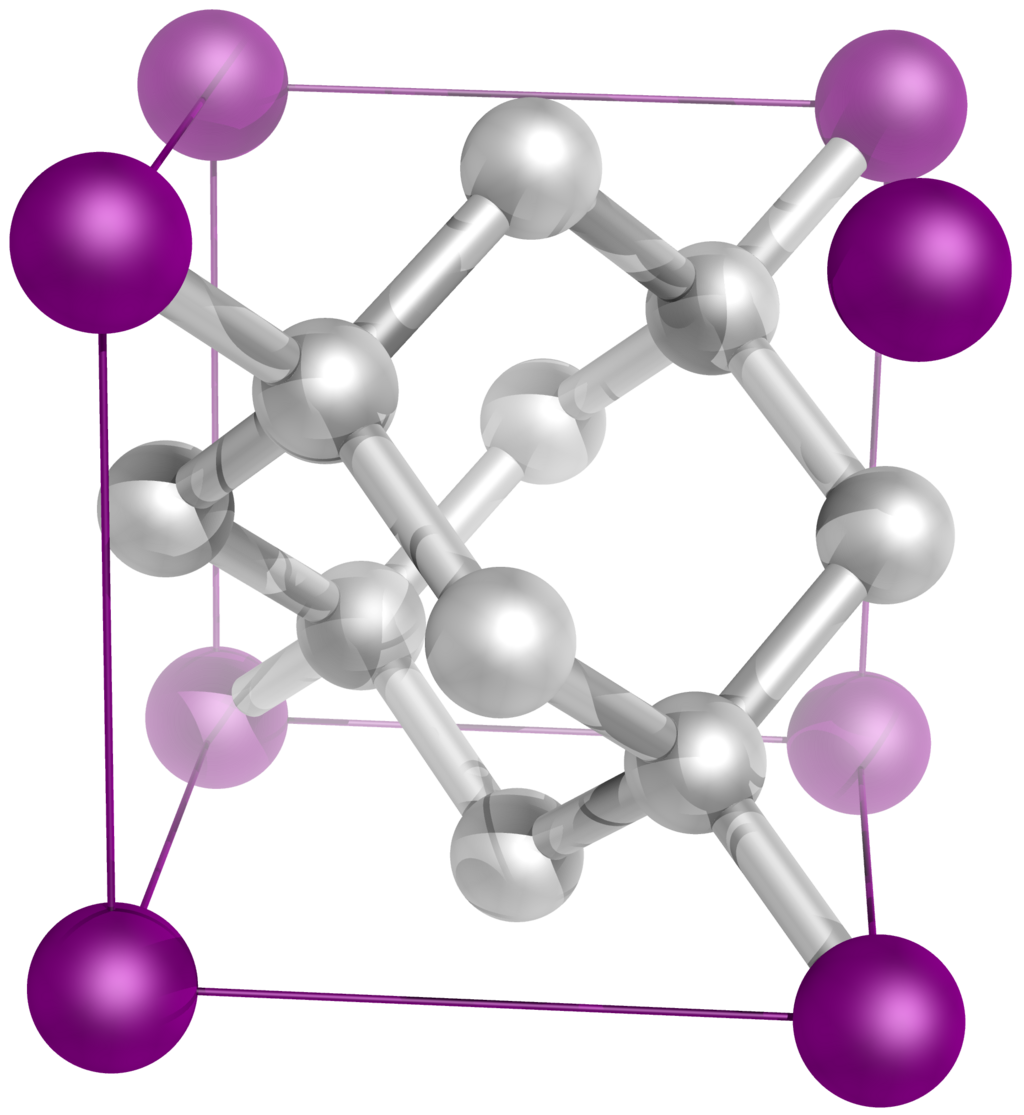
Also known as network solids, these are essentially giant molecules. Every atom is bonded to its neighbors by strong covalent bonds, forming a vast network. Diamond (carbon) and quartz (silicon dioxide) are prime examples. This extensive bonding makes them extremely hard and gives them the highest melting points of all solids. Since their electrons are locked in these bonds, they are typically poor electrical conductors.
Metallic Solid
noun
A crystalline solid composed of metal atoms held together by a 'sea' of delocalized electrons.
In metallic solids, metal atoms are arranged in a regular lattice, but their outermost electrons are not tied to any single atom. Instead, they form a delocalized "sea" of electrons that flows freely throughout the entire crystal. This electron mobility is why metals are excellent conductors of both heat and electricity. It also explains why they are malleable (can be hammered into sheets) and ductile (can be drawn into wires); the atoms can slide past one another without breaking the metallic bonds.
Molecular Solid
noun
A crystalline solid composed of distinct molecules held together by relatively weak intermolecular forces.
These solids are made of individual molecules, like water () or carbon dioxide (). The covalent bonds within each molecule are strong, but the forces holding one molecule to another in the crystal are much weaker (these are called intermolecular forces). Because these forces are easy to overcome, molecular solids are typically soft, have low melting points, and are poor electrical conductors. A sugar cube is a perfect example: it's a crystal, but it's soft and melts at a relatively low temperature.
Basic Properties
The type of solid and its internal structure dictate its fundamental properties. Here are a few key ones:
| Property | Description | Examples |
|---|---|---|
| Density | The mass of a substance per unit volume. It depends on how heavy the atoms are and how closely they are packed. | Lead is dense because its atoms are heavy and packed tightly. |
| Hardness | A measure of a material's resistance to scratching or indentation. | Diamond (covalent solid) is the hardest known material. Talc (a molecular-like solid) is very soft. |
| Conductivity | The ability to transmit heat or electricity. | Metals have high electrical conductivity due to their sea of electrons. Most other solids are poor conductors (insulators). |
Understanding these classifications and properties is the first step in solid-state chemistry. It allows us to predict how a material will behave and to design new materials with specific, useful characteristics.
What is the primary characteristic that distinguishes crystalline solids from amorphous solids?
A material is observed to soften gradually over a range of temperatures rather than melting at a single, precise point. This material is most likely a(n) ______ solid.