Solar System Secrets for Educators
Rocky Worlds' Secrets
The Wrinkled Planet
Imagine a giant iron ball wrapped in a thin, rocky shell. That’s Mercury. Its metallic core makes up about 85% of the planet's diameter, an enormous proportion compared to Earth's 55%. This 'Iron Ball' structure is the key to understanding Mercury's most peculiar feature: its wrinkles.
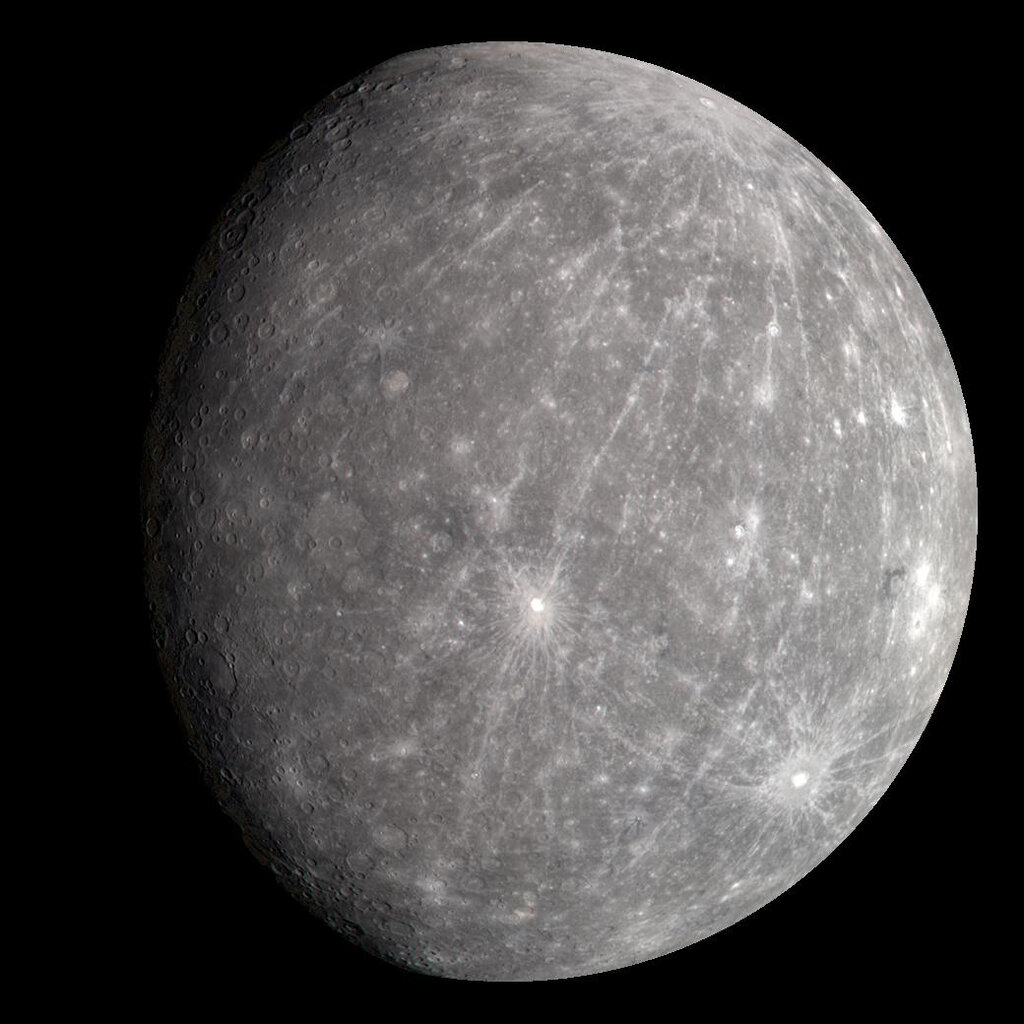
As Mercury’s massive core slowly cooled over billions of years, it shrank. This caused the planet's single-plate crust to buckle and break, much like the skin of a drying apple. This process created immense cliffs and scarps, some stretching for hundreds of miles and soaring over a mile high. These features are called lobate scarps, or rupes in Latin.
This colossal iron core also generates a magnetic field, though it's only about 1% as strong as Earth's. While weak, it’s still strong enough to interact dramatically with the solar wind, the stream of charged particles constantly flowing from the Sun. This interaction creates 'magnetic tornadoes'—twisting bundles of magnetic fields that connect the planet's surface directly to interplanetary space. These tornadoes, technically called magnetic flux transfer events, can channel the raw solar wind right down to Mercury's surface.
The Pressure Cooker
Venus is often called Earth's twin, but it's more like an evil twin. Its surface is a 'Lead-Melting Oven,' with temperatures averaging 465°C (870°F). This extreme heat is the result of a runaway greenhouse effect, but the real story is in the pressure. The atmosphere is 92 times denser than Earth's at sea level. Down on the surface, the carbon dioxide is so compressed it ceases to behave like a gas. It becomes a supercritical fluid—a bizarre state of matter that flows like a liquid but fills space like a gas. Walking through it would feel like wading through a thick, incredibly hot soup.
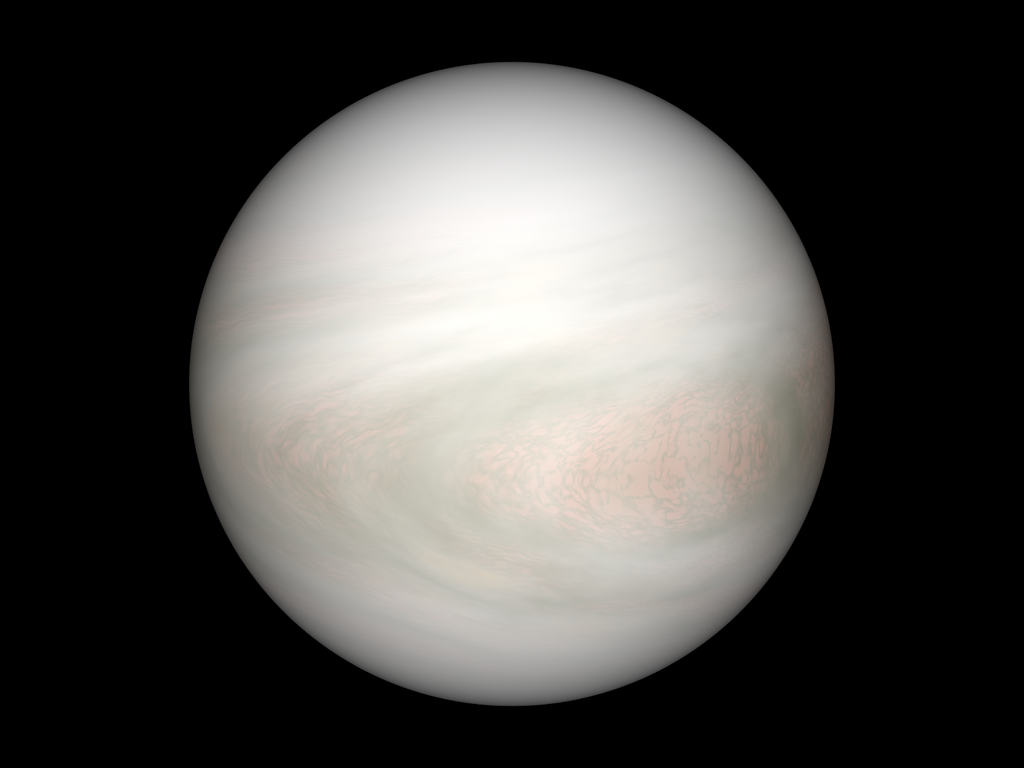
The conditions on Venus are so alien that even the mountains have a strange feature. At the highest altitudes, where temperatures are slightly cooler, scientists believe it 'snows' heavy metals. Vaporized minerals and metals, like lead sulfide and bismuth sulfide, rise from the hot lowlands. In the upper atmosphere, they condense and fall as a metallic frost, coating the tops of the highest peaks in a reflective, radar-bright sheen.
The Red Planet's Blues
Mars, the cold desert world, offers a stark contrast to Venus. Its atmosphere is thin, less than 1% of Earth's density. But this thin air creates a surprisingly beautiful spectacle: blue sunsets. On Earth, our sky is blue because nitrogen and oxygen molecules scatter blue light more effectively than red light. For sunsets, the long path of light through the atmosphere scatters away most of the blue, leaving the reds and oranges we see.
On Mars, the opposite happens. The atmosphere is full of fine, red dust. These larger dust particles scatter red light forward, keeping it close to the Sun's path in the sky. However, they scatter blue light in a more focused, forward-facing direction. So, while the sky around the sun turns a faint blue, the rest of the Martian sky glows with a pale reddish or butterscotch color. When you look toward the setting sun on Mars, you see a distinct blue halo.
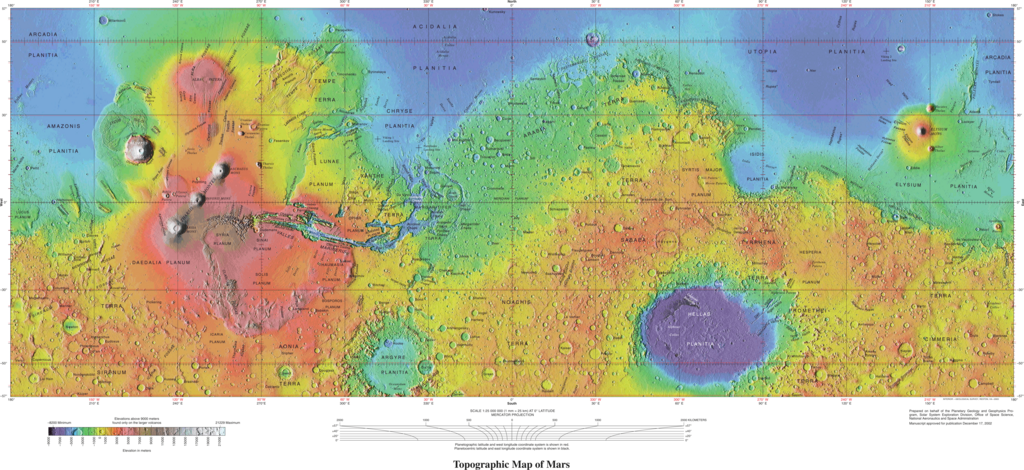
The geology of Mars is a story of extremes, largely because it lacks active plate tectonics. Without crustal plates moving around, volcanic hotspots can stay in one place for billions of years, building up colossal mountains. The result is Olympus Mons a shield volcano nearly three times the height of Mount Everest. It's so wide that its base would cover the state of Arizona, and its slopes are so gentle you wouldn't even feel like you were climbing a mountain if you stood on them.
The peak of Olympus Mons is so high that it actually pokes out above the main, dusty layers of the Martian atmosphere. An observer at the summit would look down on the clouds and dust storms below.
Similarly, the immense tectonic stresses on a static crust created Valles Marineris, a canyon system that dwarfs the Grand Canyon. It stretches as long as the entire United States and plunges up to 7 kilometers (4 miles) deep. These features are geological scars, frozen in time on a planet whose dynamic youth is long past.
Why does Mercury have prominent cliffs and scarps, known as lobate scarps or "rupes"?
On Venus, the atmosphere is so dense and hot near the surface that carbon dioxide enters a bizarre state that flows like a liquid but fills space like a gas. What is this state of matter called?