Solar Ground Mount Execution Mastery
Site Assessment
Starting on Solid Ground
Before breaking ground on a solar project, a detailed site assessment is essential. It's a systematic evaluation of the location to ensure the ground-mounted system will be safe, stable, and perform optimally for its entire lifespan. This process goes far beyond simply finding a sunny spot; it involves a deep dive into the local environment, the characteristics of the soil, and the shape of the land.
Conduct Detailed Site Assessments: Comprehensive site assessments are crucial for uncovering hidden issues that could lead to unexpected costs.
Think of it as the foundation for your foundation. A thorough assessment identifies potential challenges early, allowing for a design that is resilient, cost-effective, and perfectly suited to its surroundings. Skipping or rushing this step can lead to project delays, budget overruns, and even system failure down the road.
Weather and Climate
Understanding the local climate is the first step. Historical weather data provides a clear picture of the forces the solar array will need to withstand over the next 25 to 30 years.
The most critical factors are wind and snow loads. Wind doesn't just blow past solar panels; it pushes and pulls on them, creating significant stress. Engineers use regional wind speed maps and historical data to calculate the maximum expected wind pressure on the array. This informs the design of the racking and foundation, ensuring it won't lift or buckle in a storm.
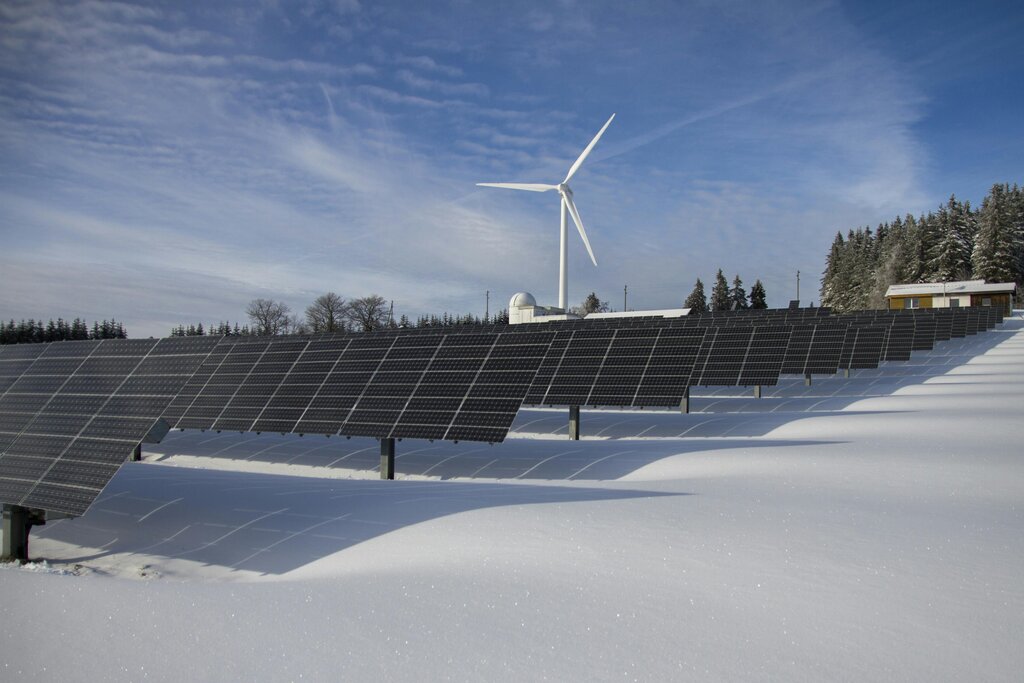
Similarly, snow is not just a gentle blanket. It's heavy. A deep, wet snowfall can add thousands of pounds of weight across an array. The assessment determines the maximum historical snow depth and density, so the support structure can be engineered to bear this load without collapsing. The tilt of the panels also plays a role, as a steeper angle can help shed snow more effectively.
Ground Conditions
The stability of a ground-mounted system depends entirely on the ground itself. A geotechnical survey, which involves soil testing, is performed to understand the composition and properties of the soil. This analysis reveals how the ground will behave under the load of the solar array and in different weather conditions.
| Soil Type | Suitability | Key Consideration |
|---|---|---|
| Sandy/Gravel | Good | Excellent drainage, easy to drive posts. |
| Clay | Moderate | Can expand/shrink with moisture, potentially shifting foundations. |
| Loam | Excellent | Ideal balance of stability and drainage. |
| Rocky | Challenging | Difficult and expensive for driven posts; may require ballasted foundations. |
| Peat/Organic | Poor | Low stability and highly compressible; often requires ground improvement. |
Alongside soil testing, a topographical survey maps the contours and features of the land. While a perfectly flat site is easiest to work with, solar arrays are often installed on sloped or rolling terrain. The survey identifies the grade of slopes, drainage patterns, and any obstacles.
This information is crucial for planning the layout. It helps engineers position the arrays to maximize sun exposure, avoid shading from one row to the next, and manage water runoff to prevent erosion around the foundations. A detailed topographical map allows for a design that works with the land, minimizing the need for extensive and costly earthmoving.
Environmental Review
A responsible site assessment also includes an evaluation of the project's potential environmental impact. This step is about being a good steward of the land. The review identifies sensitive ecological areas, such as wetlands, endangered species habitats, or important cultural and historical sites that must be avoided.
It also considers the long-term effects on the local ecosystem. For example, the assessment might look at how the array could affect local wildlife movement or whether native, pollinator-friendly vegetation can be planted beneath the panels to improve biodiversity. Addressing these points early ensures the project complies with environmental regulations and contributes positively to the local environment.
What is the primary purpose of conducting a detailed site assessment before installing a ground-mounted solar system?
When analyzing a location's climate for a solar installation, what are the two most critical factors for determining the structural load the racking and foundation must withstand?
By thoroughly analyzing the climate, ground, and environmental context, a proper site assessment lays the groundwork for a successful solar installation.