Solar Energy Entrepreneurship and Market Opportunities
Solar Market Strategy
Choosing Your Battlefield
The solar market isn't a single entity. It's a collection of distinct arenas, each with its own rules, players, and rewards. Understanding these segments is the first step in crafting a winning strategy. The three primary markets are Residential, Commercial & Industrial (C&I), and Utility-scale.
| Feature | Residential | C&I (Commercial & Industrial) | Utility-scale |
|---|---|---|---|
| Typical Size | 5-25 kW | 50 kW - 5 MW | 5 MW - 500+ MW |
| Sales Cycle | Days to weeks | Months | Years |
| Complexity | Low-Medium | Medium-High | Very High |
| Capital Needs | Low | Medium | Very High |
| Key Driver | Lowering utility bills | Reducing operating costs, ESG goals | Power Purchase Agreements (PPAs) |
| Primary Risk | High volume of small sales | Complex financing, longer payback | Interconnection delays, basis risk |
Residential solar is a high-volume game focused on individual homeowners. Sales cycles are short, and the process is becoming increasingly standardized. Success depends on efficient lead generation and a streamlined sales-to-installation pipeline.
The C&I sector serves businesses, schools, and non-profits. Projects are larger and more customized, involving complex financial modeling (like calculating ROI and IRR) and navigating corporate procurement processes. These projects offer higher margins than residential but demand deeper technical and financial expertise.
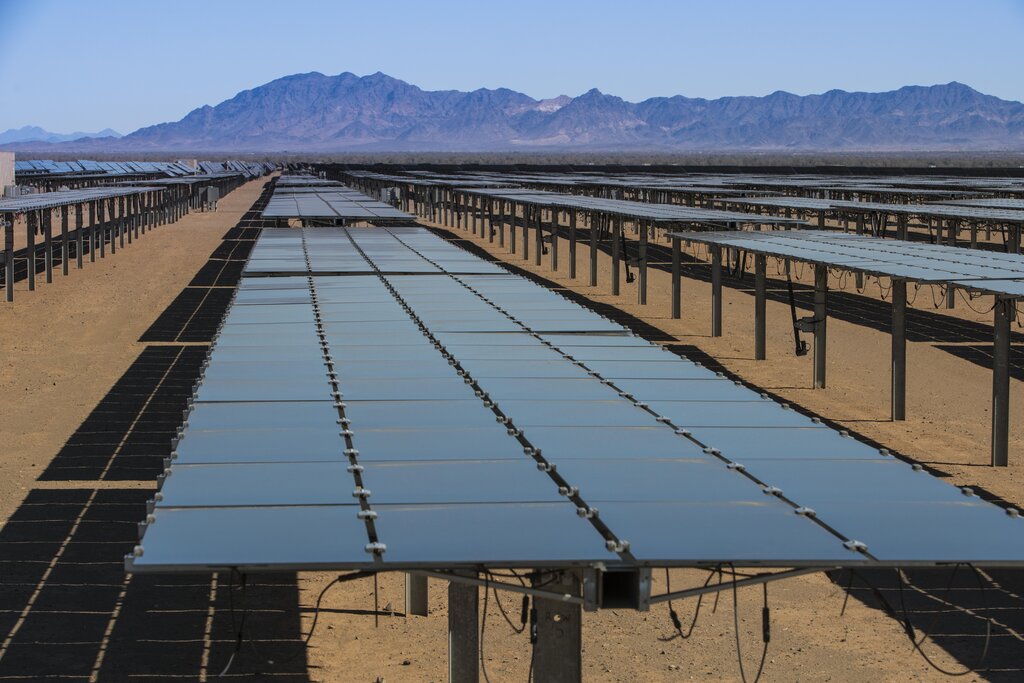
Utility-scale solar involves developing massive solar farms that sell power directly to utility companies. These are long-term, capital-intensive infrastructure projects. Success requires navigating complex permitting, securing long-term Power Purchase Agreements (PPAs), and managing significant financial risks like basis risk, where the price of power at your project's location differs from the price at the major trading hub where you hedged.
Navigating the Policy Maze
Government policy is the wind in the sails of the solar industry—or the storm on the horizon. Two of the most significant forces shaping the U.S. market today are the Inflation Reduction Act (IRA) and the evolution of net metering policies.
The Inflation Reduction Act (IRA) of 2022 provided the solar industry with something it has craved for years: long-term certainty. By extending the Investment Tax Credit (ITC) for ten years and adding new incentives for domestic manufacturing and projects in low-income communities, it created a stable foundation for growth across all market segments.
While the IRA provides a federal tailwind, state-level net metering policies dictate the day-to-day economics of distributed solar (Residential and C&I). The trend is a clear shift away from traditional net metering, where utilities credit solar owners at the full retail rate for excess power they export to the grid.
California’s Net Billing Tariff (NEM 3.0) is the leading example. It drastically reduces compensation for exported solar energy, basing it on the 'avoided cost' to the utility, which is often much lower than the retail rate. This change fundamentally alters the value proposition of standalone solar.
The strategic implication is clear: in markets with updated net metering rules, pairing solar with battery storage is no longer an upsell, it's the core offering. Businesses that master the sale and installation of integrated solar-plus-storage solutions gain a significant competitive advantage.
The Modern Solar Business Model
As the industry matures, business models are evolving. The old model of a single company handling everything from marketing and sales to procurement and installation is becoming less common, especially in the residential space. Specialization is the new key to efficiency and scale.
Solar Broker
noun
A business model where a company focuses exclusively on customer acquisition and sales, then subcontracts the physical installation to a network of vetted installation partners. Also known as a 'dealer' model.
This disaggregation of the value chain has profound effects. It lowers the capital required to enter the market, as sales-focused companies don't need to invest in trucks, warehouses, and installation crews. It also gives rise to a new ecosystem of specialized players, including lead-generation agencies that do nothing but supply qualified prospects to sales teams.
For a new entrant, this presents a choice: do you build a vertically integrated company that controls the entire customer experience, or do you find a niche as a specialized sales dealer or a high-quality installation partner? The dealer model offers faster scaling with less capital, while the integrated model provides more control over quality and margins.
Due to Investment Tax Credit (ITC) reduction, property developers need a crash course in interconnecting solar energy at all levels of the electric grid because electrical interconnection complexity increases with solar project size and location.
Riding the Market Waves
The solar industry is dynamic and cyclical. Recently, the market has been grappling with a significant oversupply of photovoltaic modules. A surge in manufacturing capacity, particularly in Southeast Asia, combined with softening demand in some markets, has led to a steep drop in panel prices.
While this is a challenge for manufacturers, it's an opportunity for developers and installers who can leverage lower equipment costs to offer more competitive pricing. However, it also signals a fiercely competitive environment.
This pressure is driving market consolidation. Smaller, less efficient companies are being acquired or forced out of the market, while larger, well-capitalized players expand their market share. The competitive edge is shifting towards companies that excel not just in installation, but in operational efficiency, supply chain management, and sophisticated customer financing.
In the context of utility-scale solar projects, what is 'basis risk'?
California's Net Billing Tariff (NEM 3.0) significantly reduces the compensation for excess solar energy exported to the grid. What is the primary strategic response for solar companies in such a market?
Understanding these market dynamics—segmentation, policy, business models, and current trends—is crucial for anyone looking to build a sustainable business in the solar industry. The opportunities are immense, but they belong to those who can see the field clearly and make strategic choices.