Solar Energy and Earth's Atmosphere
Solar Radiation
The Sun's Energy
The Sun is the powerhouse of our solar system, constantly bathing Earth in energy. This energy travels 93 million miles through space in the form of electromagnetic radiation. We call this stream of energy solar radiation, and it's the fundamental driver of Earth's weather, climate, and life itself.
Solar radiation isn't just one type of light. It's a whole spectrum of energy, much like a musical chord is made of different notes. The main components that reach us are:
- Visible Light: This is the part of the spectrum our eyes can see, the familiar colors of the rainbow.
- Infrared (IR) Radiation: We can't see it, but we feel it as heat. It has longer wavelengths than visible light.
- Ultraviolet (UV) Radiation: With shorter wavelengths than visible light, UV radiation is invisible to us but is powerful enough to cause sunburn.
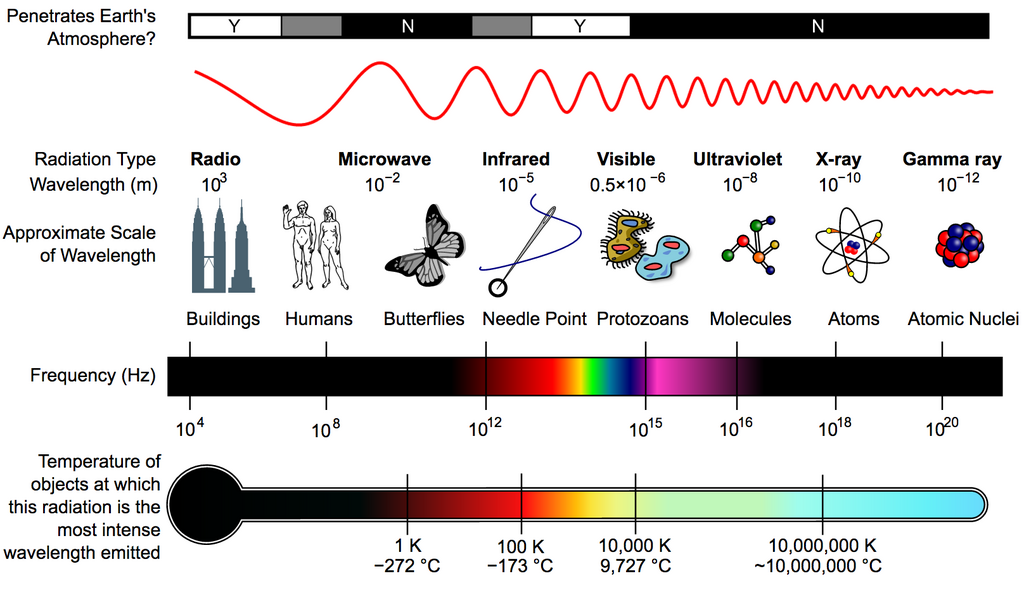
Because the Sun is Earth's fundamental energy source and only sunshine, we need a quantitative record of the Sun's solar energy output.
Measuring Sunlight
To understand the impact of solar radiation, we need to measure it. The term for this measurement is solar irradiance, which is the amount of solar power hitting a specific area.
irradiance
noun
The power per unit area of electromagnetic radiation incident on a surface.
The most common unit for irradiance is watts per square meter (). A watt is a measure of power, or the rate at which energy is used or transferred. So, means one watt of energy is hitting a one-meter-by-one-meter square every second.
While watts measure the rate of energy flow, we often want to know the total amount of energy collected over time. For this, we use units like kilowatt-hours per square meter (). This is like measuring not how fast water flows from a tap, but the total amount of water that filled a bucket over a full day.
For context, a single square meter in a sunny region like the American Southwest might receive over 2,000 kWh of solar energy in a year.
The amount of solar radiation isn't constant. It varies by location, time of day, and season. However, scientists have a baseline. The total solar irradiance measured at the top of Earth's atmosphere, directly facing the Sun, is about 1,360 .
Averaged over the entire planet, the amount of sunlight arriving at the top of Earth’s atmosphere is only one-fourth of the total solar irradiance, or approximately 340 watts per square meter.
Why the difference? Earth is a sphere, so only the part directly facing the sun gets the full intensity. This incoming energy is the starting point for everything that happens in our atmosphere and oceans.