Solana vs Ethereum Long-Term Investment
Blockchain Basics
What Is a Blockchain?
At its most basic level, a blockchain is a digital ledger maintained by a decentralized network of computers.
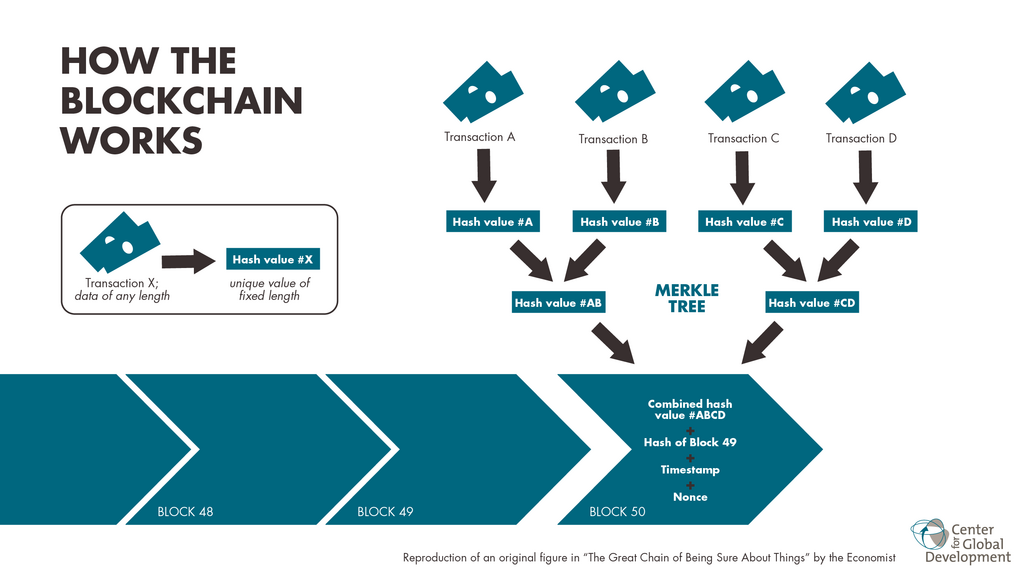
Think of it like a shared digital notebook. Each page in the notebook is a block, and it contains a list of transactions. Once a page is full, it’s added to the end of the notebook, creating a chain of pages. The key difference is that this notebook isn't owned by one person. It's distributed across thousands of computers worldwide, and everyone has the same copy.
Each block is cryptographically linked to the one before it. It contains the transaction data, a unique identifier called a hash, and the hash of the previous block. This creates a secure, interlocking chain. Changing the data in one block would change its hash, which would break the link to all subsequent blocks. It's like a digital seal that makes the ledger tamper-proof.
Hash
noun
A unique, fixed-length string of characters generated from a piece of digital data. Even a tiny change to the data will produce a completely different hash.
Because blocks are linked together using hashes, the data on a blockchain is considered immutable, meaning it cannot be changed once it's recorded.
Keeping Everyone in Sync
If thousands of computers have a copy of the ledger, how do they all agree on which new transactions to add? This is a critical problem in decentralized systems, and it's solved using a consensus mechanism.
A consensus mechanism is a set of rules that allows the network to agree on the state of the ledger. It ensures that only valid transactions are added and that everyone's copy of the notebook stays identical. There are many different types, but two are the most common.
Proof of Work (PoW)
Proof of Work was the first consensus mechanism, made famous by Bitcoin. In this system, network participants, called miners, compete to solve a complex mathematical puzzle. The first miner to solve the puzzle gets to add the next block to the chain and is rewarded with cryptocurrency.
This process requires immense computational power, which makes it very secure. To attack the network, a bad actor would need to control more than half of the network's total computing power, which is practically impossible for large networks. However, this high energy consumption is a significant drawback.
Proof of Stake (PoS)
Proof of Stake is a more energy-efficient alternative. Instead of miners competing with computational power, participants, called validators, are chosen to create new blocks based on the amount of cryptocurrency they have "staked." Staking means locking up a certain amount of your coins as collateral.
If a validator approves fraudulent transactions, they lose their stake. This financial incentive ensures they act honestly. Because it doesn't rely on solving puzzles, PoS uses far less energy than PoW.
| Feature | Proof of Work (PoW) | Proof of Stake (PoS) |
|---|---|---|
| Participants | Miners | Validators |
| How they're chosen | Solving a puzzle | Amount of crypto staked |
| Energy Use | Very High | Very Low |
| Security Model | Computational Power | Economic Incentives |
The Power of Decentralization
Traditional systems, like banks, are centralized. A single entity controls the data, makes the rules, and processes all transactions. If that central entity is compromised or goes offline, the whole system is at risk. Blockchain networks are different because they are decentralized.
In a decentralized network, there is no single point of failure or control. The ledger is maintained by all participants, and the rules are enforced by the network's protocol. This structure provides several key benefits:
- Security: With data distributed across thousands of nodes, it's incredibly difficult for an attacker to compromise the network.
- Transparency: Most blockchains are public, meaning anyone can view the transaction history. This creates an open and auditable system.
- Censorship Resistance: No single entity can block or reverse transactions. As long as you follow the network's rules, your transaction will be processed.
These core principles—a secure chain of blocks, a consensus mechanism to ensure agreement, and a decentralized network structure—are the foundation of blockchain technology.
Let's check your understanding of these fundamental concepts.
What is the primary role of a consensus mechanism in a blockchain network?
In a Proof of Stake (PoS) system, how are participants chosen to create new blocks?