Soil Stories Unearthing Narratives
Soil Basics
The Recipe for Soil
Soil is much more than just dirt. It's a complex, living system that forms over immense timescales. Think of it like a slow-cooked stew with five key ingredients that scientists remember with the acronym CLORPT.
-
Climate: Temperature and rainfall are the primary drivers. Water seeps into rock, freezes, and expands, cracking it apart. Warm, wet conditions speed up chemical reactions and the breakdown of organic material, forming soil faster than in cold, dry places.
-
Organisms: Life is crucial. Plant roots push through rock, lichens and microbes release acids that dissolve it, and burrowing animals mix everything up. When these organisms die, they become organic matter, the vital ingredient that gives topsoil its dark, rich quality.
-
Relief (Topography): The shape of the land matters. Steep slopes erode easily, leading to thin soils. Valleys and flat plains, on the other hand, collect water and sediment, allowing deep, rich soils to develop.
-
Parent Material: This is the original rock that soil forms from, like granite, limestone, or sandstone. It determines the soil's basic mineral makeup and contributes to its texture—whether it's sandy, silty, or full of clay.
-
Time: Good soil is not made overnight. It can take 500 to 1,000 years to form a single inch of topsoil. The soil under your feet is the product of millennia of slow, steady work.
What's in a Handful of Soil?
If you could zoom in on a sample of healthy soil, you'd find it's only about half solid material. The other half is pore space, filled with air and water that are essential for plant roots and soil organisms.
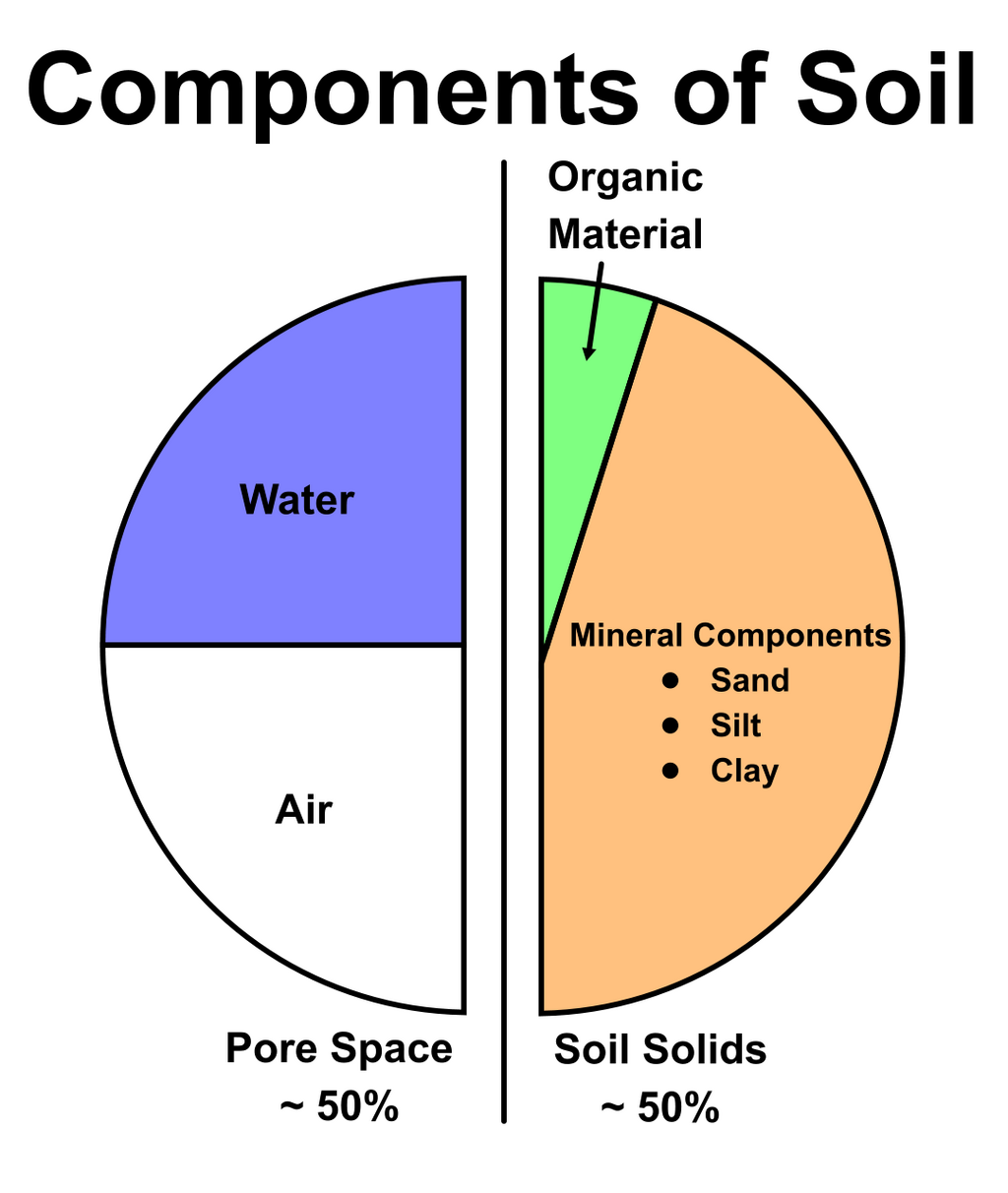
The solid part is made of two things: minerals and organic matter.
Minerals make up the bulk of the soil. They are categorized by size into sand, silt, and clay. Most soils are a mix of all three, and this combination defines the soil's texture.
- Sand: The largest particles. They feel gritty. Sandy soils drain water very quickly.
- Silt: Medium-sized particles that feel smooth and silky, like flour.
- Clay: The smallest particles. They feel sticky when wet and hold onto water tightly.
Organic matter is the living and dead stuff: decomposing plants, microbes, and fungi. Though it's a small percentage of the total, it's incredibly important. It provides nutrients and acts like a glue, binding mineral particles together into clumps called aggregates. This creates the soil's structure.
A soil with good structure has plenty of pore spaces, allowing roots, water, and air to move freely. A soil with poor structure is compacted and dense, making it difficult for plants to thrive.
A System for Classification
Just as biologists classify life into kingdoms and species, soil scientists classify soils to understand their properties and how they formed. This helps in predicting how a certain soil will behave, whether for construction, conservation, or environmental studies. While there are many systems worldwide, one of the most comprehensive is the USDA's Soil Taxonomy.
Soil Taxonomy uses a hierarchy, much like the one for plants and animals: Order, Suborder, Great Group, Subgroup, Family, and Series.
The broadest category is the Soil Order. There are 12 orders in total, each distinguished by the presence or absence of specific diagnostic horizons, or layers, that tell a story about the soil's development. These layers are revealed in a soil profile, which is a vertical cross-section of the soil from the surface down to the parent material.
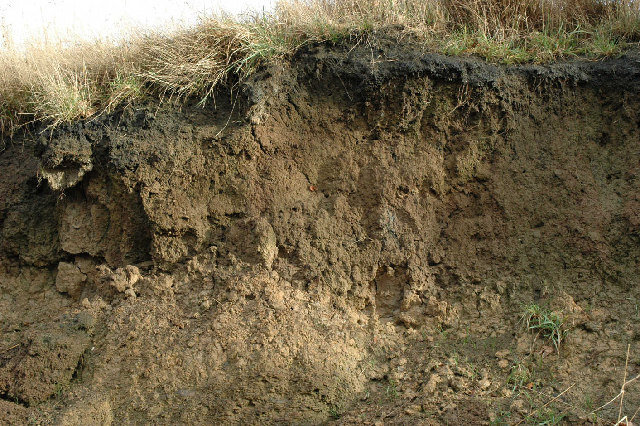
You don't need to memorize all 12 orders, but knowing a few gives you a sense of the diversity. For example:
- Mollisols are dark, fertile soils rich in organic matter, typical of grasslands like the American prairies.
- Aridisols are dry soils found in deserts, often with accumulations of salt or calcium carbonate.
- Spodosols are acidic soils that form under coniferous forests, characterized by a bleached, ashy-gray layer beneath the topsoil.
Each order reflects the dominant formation processes at play. By learning to read the soil, we can better understand the environment around us.
Now, let's test your knowledge on these soil fundamentals.
Soil scientists use the acronym CLORPT to remember the five key factors of soil formation. Which of the following is NOT one of those factors?
The relative proportions of sand, silt, and clay in a soil sample determine its ________.
Understanding these basic principles of soil formation, composition, and classification is the first step in appreciating the complex and vital world beneath our feet.