Software Testing Fundamentals
Testing Fundamentals
Thinking Like a Tester
As a developer, your primary goal is to build something that works. You follow the blueprint, connect the pieces, and ensure the final product functions as intended. A software tester, however, adopts a different perspective. Their job isn't just to confirm that the software works, but to actively discover how it might fail.
This is the core of the testing mindset: a constructive, critical approach focused on finding weaknesses before users do. It's about asking 'what if?' What if a user enters text where a number is expected? What if they click a button twice? What if their internet connection drops mid-transaction? It's a shift from proving it works to probing for where it breaks.
This mindset is central to building high-quality software. The process involves two key concepts that often get confused: Quality Assurance and Quality Control.
(QA) is process-oriented. It's about establishing the right procedures and standards throughout the development lifecycle to prevent defects from being introduced in the first place. Think of it as designing a safe and efficient assembly line.
Quality Control (QC) is product-oriented. It's the act of inspecting the final product (or parts of it) to find defects. This is the classic 'testing' activity, like checking a car at the end of the assembly line to make sure the doors are attached correctly. QA tries to prevent the problem; QC tries to find the problem.
Shifting Quality Left
In older software development models, testing was an activity saved for the very end. Developers would build the entire application, and then 'throw it over the wall' to the testing team. This often led to a stressful, expensive scramble to fix bugs right before a release.
The modern approach is called s. The idea is to move testing activities earlier in the development lifecycle, or 'left' on a typical project timeline diagram. Instead of being a final phase, quality becomes a continuous activity integrated from the very beginning.
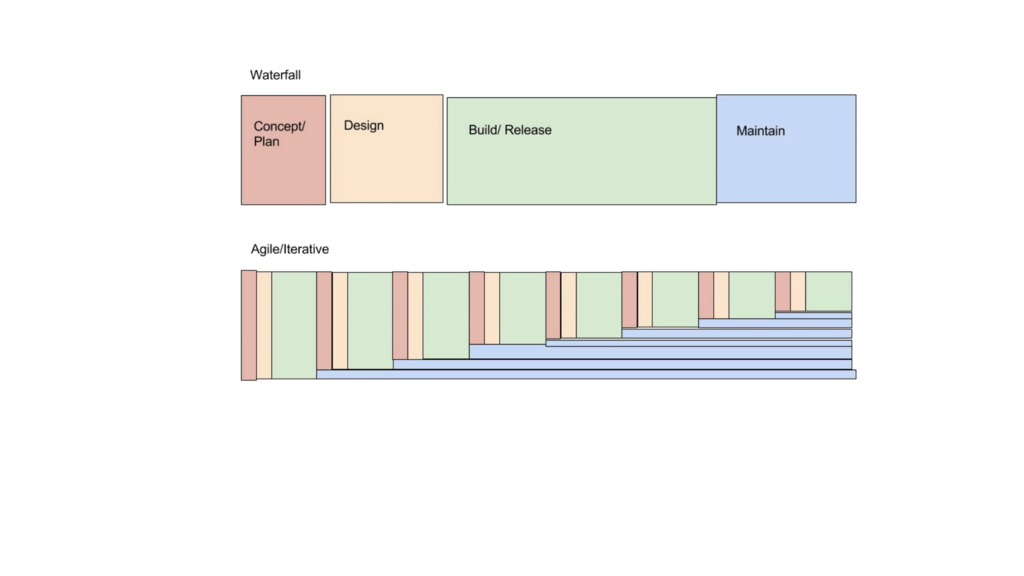
Shifting left involves both verification and validation activities throughout the process. These two terms sound similar but address different questions about quality.
| Verification | Validation | |
|---|---|---|
| The Question | Are we building the product right? | Are we building the right product? |
| Focus | Conformance to specifications and standards. | Meeting user needs and requirements. |
| Activities | Code reviews, static analysis, walkthroughs. | User acceptance testing, beta testing. |
| Example | Checking if a password field enforces an 8-character minimum as specified. | Checking if users find the password creation process easy and secure. |
The Testing Pyramid
If you test everything early, how do you decide what kind of tests to write? The Testing Pyramid is a strategic framework that helps teams balance their testing efforts for maximum efficiency. It prioritizes different types of tests based on their speed, cost, and scope.
Unit Tests form the large base of the pyramid. These tests check the smallest pieces of your code, like a single function or method, in isolation. They are extremely fast to run and simple to write. Because they pinpoint exactly which piece of code is broken, they are a developer's best friend. You should have a lot of them.
Integration Tests sit in the middle. They verify that different parts or 'units' of your application work together correctly. For example, does your application successfully write data to the database and then read it back? These tests are slower than unit tests because they involve multiple components.
End-to-End (E2E) Tests are at the very top. These tests simulate a real user journey through the entire application, from the user interface (UI) down to the database. For an e-commerce site, an E2E test might involve searching for a product, adding it to the cart, and completing the checkout process. While incredibly valuable for validating the whole system, they are the slowest, most brittle, and most expensive tests to write and maintain. You should have only a few of these, covering your most critical user workflows.
The strategy is simple: write lots of fast, cheap unit tests, a good number of integration tests, and a small, carefully selected group of E2E tests.
Time to see what you've learned about the fundamentals of testing.
Which of the following best describes the core principle of the "testing mindset"?
A team is establishing a mandatory code review process and defining coding standards to prevent common errors. This activity is a primary example of:
Understanding these core principles—the testing mindset, the pyramid, and the concept of shifting left—provides the foundation for any effective quality strategy. It's not just about finding bugs, but about building quality into the software from day one.