Software Engineering Principles and Practices
Software Engineering Lifecycle
From Code to Craft
Writing code that works is one thing. Building software that lasts is another entirely. The difference isn't just about syntax or algorithms; it's about process. Professionals don't just start typing. They follow a structured path to turn an idea into a reliable, maintainable product. This path is known as the Software Development Life Cycle, or SDLC.
At the core of software engineering is the SDLC—a structured process that guides projects from conception to deployment and beyond.
Think of it as the blueprint for building software. It provides a framework for planning, creating, testing, and deploying applications, ensuring that the final product not only functions correctly but also meets user needs and business goals.
The Classic Blueprint
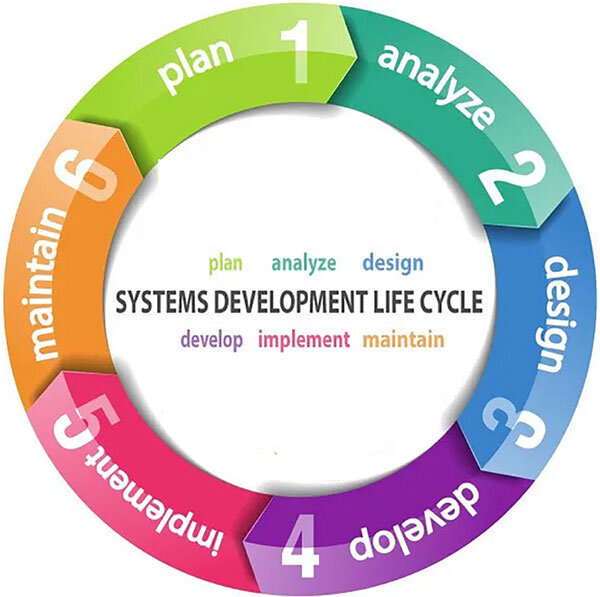
The SDLC breaks the complex process of software creation into a series of manageable phases. While different models exist, they all share a common set of core stages.
-
Planning & Requirements: This is the “why” and “what” phase. It involves gathering needs from stakeholders, defining the project's scope, and conducting feasibility studies. The goal is a clear understanding of what the software must accomplish. This is the domain of , a discipline focused on precisely defining and documenting these needs.
-
Analysis: With requirements in hand, teams analyze them to create detailed functional specifications. They figure out what the system needs to do without getting bogged down in how it will do it.
-
Design: Here, the “how” takes center stage. Architects and senior developers create the technical blueprint. This includes choosing the system architecture, databases, and programming languages. Decisions made here have long-lasting consequences.
-
Implementation (Coding): This is where the code gets written. Developers take the design documents and turn them into a functioning application, one component at a time.
-
Testing & Deployment: Once the code is written, it needs to be rigorously tested to find and fix bugs. After it passes quality checks, it’s deployed to a production environment where users can access it.
-
Maintenance: The job isn't over at launch. This phase involves fixing bugs that appear in production, making updates, and adding new features over time. For successful software, this is often the longest and most costly phase of the entire lifecycle.
Choosing Your Path
Knowing the phases is one thing; navigating them is another. Teams use methodologies to guide their journey through the SDLC. The two most dominant philosophies are Waterfall and s. They represent fundamentally different approaches to building software.
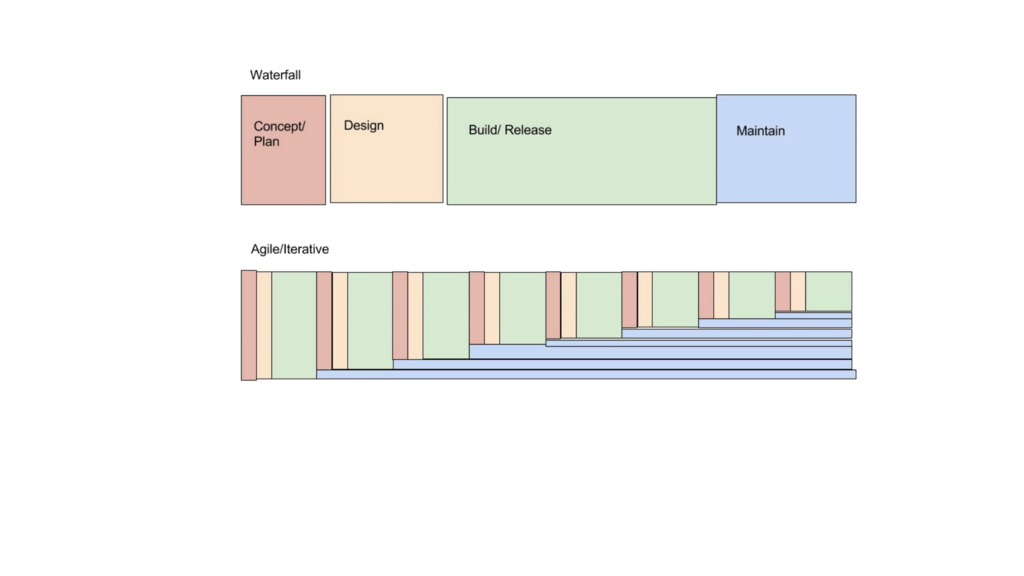
The Waterfall model is a linear, sequential approach. You complete each phase fully before moving on to the next, like a waterfall flowing over a series of cliffs. It's rigid and requires all requirements to be known upfront. This works well for projects with very stable goals, like building a bridge, but can be brittle when faced with changing needs.
Agile methodologies, on the other hand, are iterative and incremental. The project is broken into small, manageable chunks called sprints or iterations. At the end of each cycle, the team delivers a working piece of the software. This allows for constant feedback and makes it easy to adapt to change.
| Feature | Waterfall | Agile |
|---|---|---|
| Approach | Linear, sequential | Iterative, cyclical |
| Flexibility | Low; changes are difficult and costly | High; change is expected and welcomed |
| Customer Feedback | Gathered at the beginning and end | Continuous throughout the project |
| Delivery | One large delivery at the end | Frequent, small deliveries |
| Documentation | Extensive and formal | Just enough to get the job done |
| Best For | Projects with fixed, clear requirements | Projects with evolving or unclear requirements |
Agile in Action
Within the Agile philosophy, two popular frameworks are Scrum and Kanban. They provide specific rules and practices for implementing an iterative workflow.
Think of Agile as the philosophy (like democracy) and Scrum/Kanban as the specific systems of government (like a presidential republic or a parliamentary system).
Scrum is a framework that uses fixed-length iterations called sprints, typically lasting 2-4 weeks. Each sprint is a mini-project that includes planning, implementation, and a review. The team commits to a specific amount of work from a prioritized list called the Product Backlog and aims to deliver a potentially shippable increment of the product at the end of each sprint.
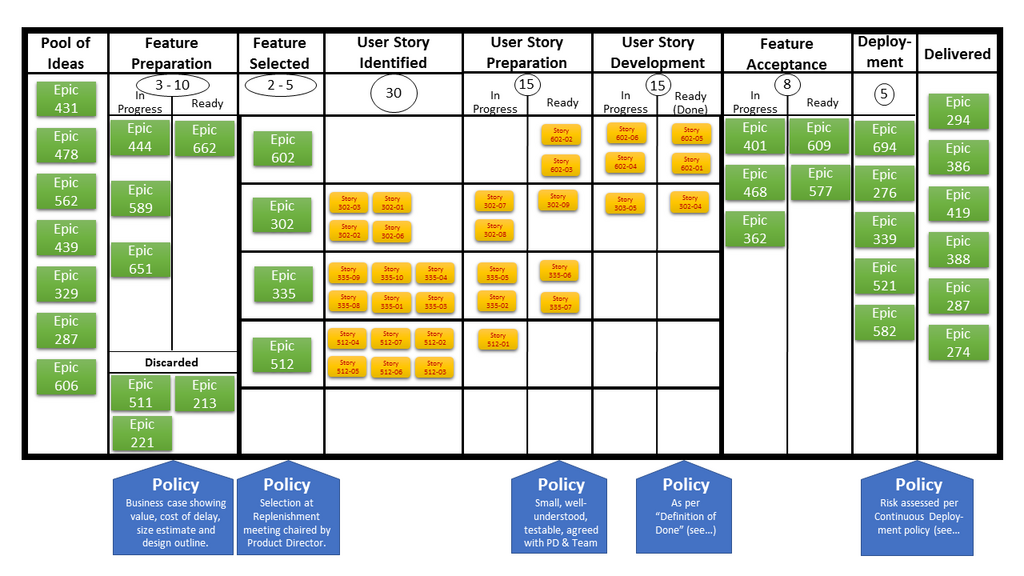
Kanban is less structured. Instead of fixed sprints, it focuses on a continuous flow of work. The primary tool is the Kanban board, which visualizes the workflow in columns (e.g., To Do, In Progress, Done). The main rule is to limit the amount of work in progress (WIP) in each column. This helps identify bottlenecks and ensures a smooth, steady delivery pace.
Managing the Work
Regardless of the methodology, a few key practices are vital for success. Requirements engineering breaks down large goals into small, specific tasks. In Agile, this often takes the form of user storiess, which frame a feature from an end-user's perspective: "As a [type of user], I want to [perform some task] so that I can [achieve some goal]."
Once work is defined, teams need to estimate the effort required. Estimation is notoriously difficult. Techniques range from simple time-based guesses (e.g., "this will take 2 days") to more abstract methods like story points, which rate tasks by complexity and uncertainty rather than hours.
Finally, teams must manage s. This is the implied cost of rework caused by choosing an easy, limited solution now instead of using a better approach that would take longer. Like financial debt, it accrues interest over time, making future changes harder and more expensive. A good engineering process involves paying down this debt strategically to keep the codebase healthy.
Understanding the SDLC and its related methodologies is what elevates a programmer to a software engineer. It's about seeing the bigger picture, from initial idea to long-term maintenance, and making deliberate choices that lead to successful, sustainable software.
What is the primary purpose of the Software Development Life Cycle (SDLC)?
In which phase of the SDLC is the technical blueprint, including system architecture and database choices, created?