Software Architecture Interview Prep
Software Architecture Fundamentals
The Blueprint of Software
Before a single line of code is written, a crucial set of decisions must be made. These decisions form the software's architecture—its fundamental structure. Think of it like a blueprint for a house. The blueprint doesn't show where every nail will go, but it defines the layout of the rooms, the placement of plumbing and electrical systems, and the overall structure that will support the entire building.
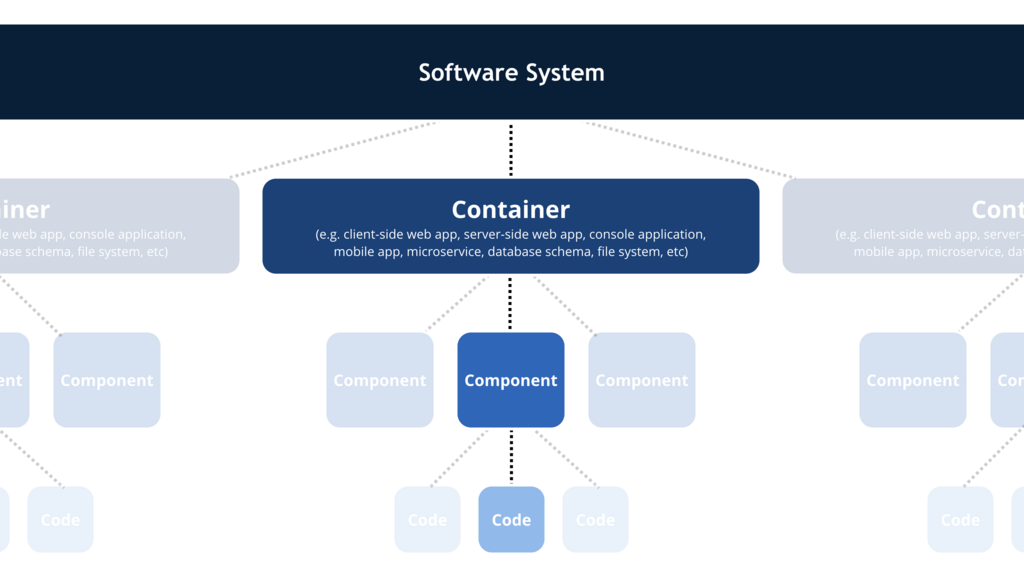
Software architecture works the same way. It's the high-level plan for a software system. It outlines the major components, how they interact with each other, and the rules that govern their relationships. This blueprint guides the development process and has a massive impact on the final product.
Getting the architecture right from the start saves time, money, and headaches down the road. A weak foundation will eventually cause cracks in the walls, and a poor architecture will lead to a system that's buggy, slow, and difficult to change.
Core Principles
Good architecture isn't accidental. It's built on a few core principles that help ensure a system is robust and effective. Let's look at three of the most important ones: modularity, scalability, and maintainability.
modularity
noun
The practice of separating a system into independent, interchangeable components, or modules.
Imagine building something with LEGO bricks. Each brick is a simple, self-contained unit. You can build a small car or a giant castle by combining them in different ways. If you don't like one part of your creation, you can swap out a few bricks without having to rebuild the entire thing.
Modularity in software is similar. It involves breaking a large, complex system into smaller, manageable pieces. Each module has a specific job and can be developed and tested independently. This makes the entire system easier to understand and manage. It also allows different teams to work on different parts of the application at the same time without stepping on each other's toes.
scalability
noun
A system's ability to handle an increasing amount of work or its potential to be enlarged to accommodate that growth.
When a new app or website becomes popular, its user base can explode overnight. Scalability is what allows a system to handle that sudden growth gracefully. An application that works perfectly for 100 users might crash and burn when 100,000 users try to access it at once.
Designing for scalability means planning for future growth. It's about creating an architecture that can be expanded to handle more data, more requests, and more users without requiring a complete redesign. Think of it like a highway. A two-lane road might be fine for a small town, but a growing city needs an eight-lane freeway that can handle much more traffic.
maintainability
noun
The ease with which software can be modified to correct faults, improve performance, or adapt to a changed environment.
Software is never truly "finished." There are always bugs to fix, features to add, and security updates to apply. Maintainability measures how easy it is to make these changes. A highly maintainable system is one where a developer can quickly find the source of a problem and fix it without accidentally breaking something else.
This principle is closely tied to modularity. When a system is made of well-organized, independent modules, it's much easier to maintain. You can update or replace one module without affecting the rest of the system, just like swapping a single lightbulb instead of rewiring the whole house.
The Ripple Effect of Decisions
Every architectural decision has consequences that ripple through the entire software development lifecycle. Choosing a particular way to structure the database, for example, will affect how data is stored, how it's retrieved, and how fast the application runs. Deciding to build the system as a collection of small services instead of one large application will change how teams are organized and how features are deployed.
These high-level choices are difficult and expensive to change later on. It’s like deciding to move the kitchen after the house has already been built—it's possible, but it will involve a lot of demolition and rebuilding. That's why thinking carefully about the architecture at the beginning is so critical. It sets the project on a path, defining its constraints and possibilities for years to come.
Now that you have a grasp of these fundamentals, let's see how well you've understood them.
Which of the following best describes the role of software architecture?
A development team is building a large e-commerce platform. They decide to structure the application so that the user authentication, product catalog, and payment processing are all separate, independent services. This decision primarily demonstrates which architectural principle?
Understanding these core concepts is the first step toward designing software that is not only functional but also durable and adaptable over the long term.