Sodium Nickel Ferrous Battery Deep Dive
Battery Basics
Storing Power on the Go
Batteries are essentially self-contained chemical packages that store energy and convert it into electricity whenever we need it. Think of a battery like a compressed spring. When you compress it, you're storing potential energy. When you let it go, that stored energy is released as motion. A battery does something similar, but with chemical energy instead of mechanical.
This ability to convert chemical energy into electrical energy is what powers everything from your phone to a flashlight. It all happens through a process called an electrochemical reaction.
The Three Key Players
Every battery, no matter its size or shape, has three main parts that work together to create an electrical current.
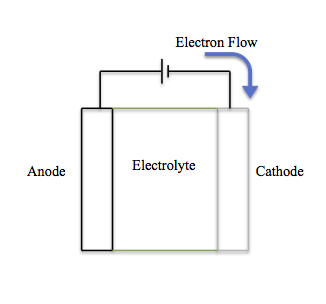
First, we have two electrodes. These are the terminals where electricity enters or leaves the battery.
Anode
noun
The negative electrode of a battery. During discharge, it releases electrons into the external circuit.
Cathode
noun
The positive electrode of a battery. During discharge, it accepts electrons from the external circuit.
The third critical component is the electrolyte. It separates the anode and cathode and is filled with charged particles called ions.
Electrolyte
noun
A substance, often a liquid or gel, containing ions that conducts electricity. It allows ions to move between the anode and cathode.
The Electrochemical Dance
So how do these parts create power? When you connect a battery to a device, like a lightbulb, you create a path for electricity to flow. This kicks off a chain reaction.
A chemical reaction at the anode causes it to release electrons. Since electrons can't travel through the electrolyte, they are forced to take the long way around—through the external circuit. As they flow through the circuit, they deliver energy to the device, making it work.
After passing through the device, the electrons arrive at the cathode, where a different chemical reaction occurs that accepts them. Meanwhile, ions move through the electrolyte between the anode and cathode to keep the charges balanced. If the ions didn't move, the whole process would quickly grind to a halt.
This continuous flow of electrons through the circuit and ions through the electrolyte is what we call electricity. The process continues until the chemicals in the anode and cathode are used up. At that point, the battery can no longer produce electrons, and we say it's dead.