Sodium Battery Showdown
Battery Basics
How Batteries Work
At its core, a battery is a self-contained device that converts stored chemical energy into electrical energy. It does this through a process called an electrochemical reaction. Every battery has three main parts: an anode (the negative side), a cathode (the positive side), and an electrolyte.
The anode and cathode are made of different chemical materials. They are separated by a thin barrier and are submerged in the electrolyte, which is a chemical medium that allows charged particles, or ions, to flow through it. When you connect a device to a battery, you create an external circuit. This triggers a chemical reaction inside. The anode starts to release electrons into the circuit and positive ions into the electrolyte. The electrons travel through your device, powering it, and end up at the cathode. Meanwhile, the ions travel through the electrolyte to the cathode to balance the charge. This flow of electrons is what we call electricity.
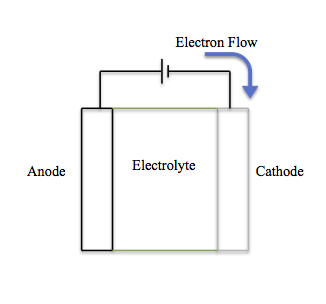
Think of it like a tiny, controlled chemical reaction. As long as there are enough reactants in the anode and cathode, the battery can continue to supply power. When the materials are used up, the battery is "dead."
Storing and Releasing Energy
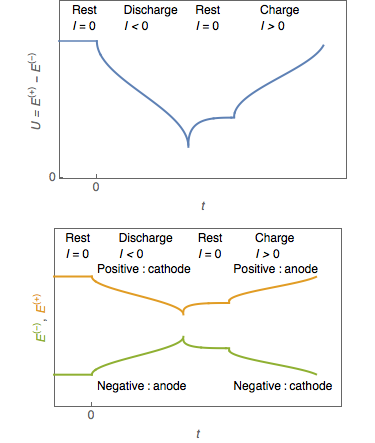
Energy in a battery is stored within the chemical bonds of the anode and cathode materials. When the battery is discharging (powering something), these chemicals change into more stable forms, releasing energy in the process.
Some batteries are single-use. Once their chemical energy is spent, they can't be restored. These are called primary batteries. Others, known as secondary or rechargeable batteries, can have their chemical reactions reversed. When you plug a rechargeable battery into a charger, the electrical energy from the outlet forces the electrons and ions to flow in the opposite direction. This process restores the anode and cathode materials to their original, higher-energy state, ready to be used again.
Key Performance Metrics
Not all batteries are created equal. We measure their performance using several key metrics that help us decide which battery is right for which job.
Energy Density
noun
The amount of energy a battery can store relative to its volume or weight. A battery with high energy density can store a lot of power in a small, light package.
Power Density
noun
The amount of power a battery can deliver relative to its volume or weight. High power density means the battery can release a large amount of energy very quickly.
Think of it this way: Energy density is like the size of a water tank (how much it holds), while power density is like the size of the pipe coming out of it (how fast the water can flow).
Two other important metrics are cycle life and efficiency.
Cycle life refers to the number of times a rechargeable battery can be fully charged and discharged before its capacity drops to a certain level, typically 80% of its original capacity. A long cycle life means the battery will last for many recharges.
Efficiency is the ratio of the energy you get out of a battery to the energy you put in to charge it. No process is perfectly efficient; some energy is always lost, usually as heat. A higher efficiency rating means less wasted energy.
An Overview of Battery Types
Different chemistries result in different performance characteristics, making certain batteries better suited for specific tasks.
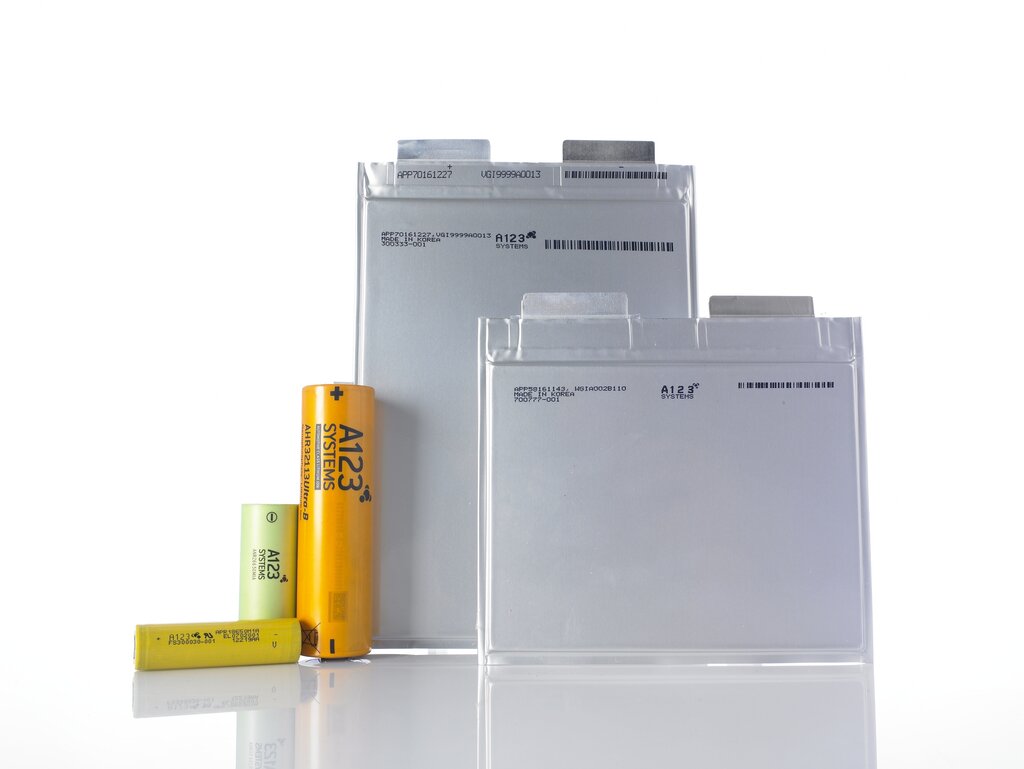
Here’s a quick look at some common types:
| Battery Type | Key Characteristics | Common Uses |
|---|---|---|
| Lithium-ion (Li-ion) | High energy density, lightweight, long cycle life. | Smartphones, laptops, electric vehicles (EVs). |
| Lead-acid | Heavy, low energy density, but inexpensive and reliable. | Car starter batteries, backup power systems. |
| Nickel-metal hydride (Ni-MH) | Good performance, less toxic than older nickel-cadmium batteries. | Rechargeable AA/AAA batteries, hybrid vehicles. |
| Sodium-based | Uses abundant and cheap materials (like sodium). An emerging technology with potential for large-scale energy storage. | Grid storage, next-generation EVs. |
Understanding these fundamentals is the first step. Each battery type has its own unique chemistry and trade-offs, which we'll explore as we delve into newer technologies like sodium-based batteries.
Now, let's test your knowledge.
What are the three essential components of any battery?
When a battery powers a device, what flows from the anode to the cathode through the external circuit?