Socratic Interview AI
Understanding the Socratic Method
The Art of Questioning
The Socratic Method is not about winning a debate. Instead, it’s a shared journey to deeper understanding. It’s a form of cooperative, argumentative dialogue that uses questions to stimulate critical thinking and unpack complex ideas.
The Socratic Method is a form of cooperative argumentative dialogue, rooted in asking and answering questions to stimulate critical thinking and draw out ideas.
At its core, this method challenges us to move beyond surface-level answers. By asking and answering probing questions, we can examine our own beliefs, uncover assumptions, and find the logical support (or lack thereof) for our ideas.
A Philosopher in the Marketplace
This technique gets its name from Socrates, a classical Greek philosopher who lived in Athens. He didn't write books or give lectures. Instead, he wandered the city, engaging people from all walks of life in conversation. He would ask seemingly simple questions about concepts like justice, virtue, or knowledge. Through his persistent questioning, he often revealed that the people he spoke with, and even he himself, didn’t really understand these concepts as well as they thought.
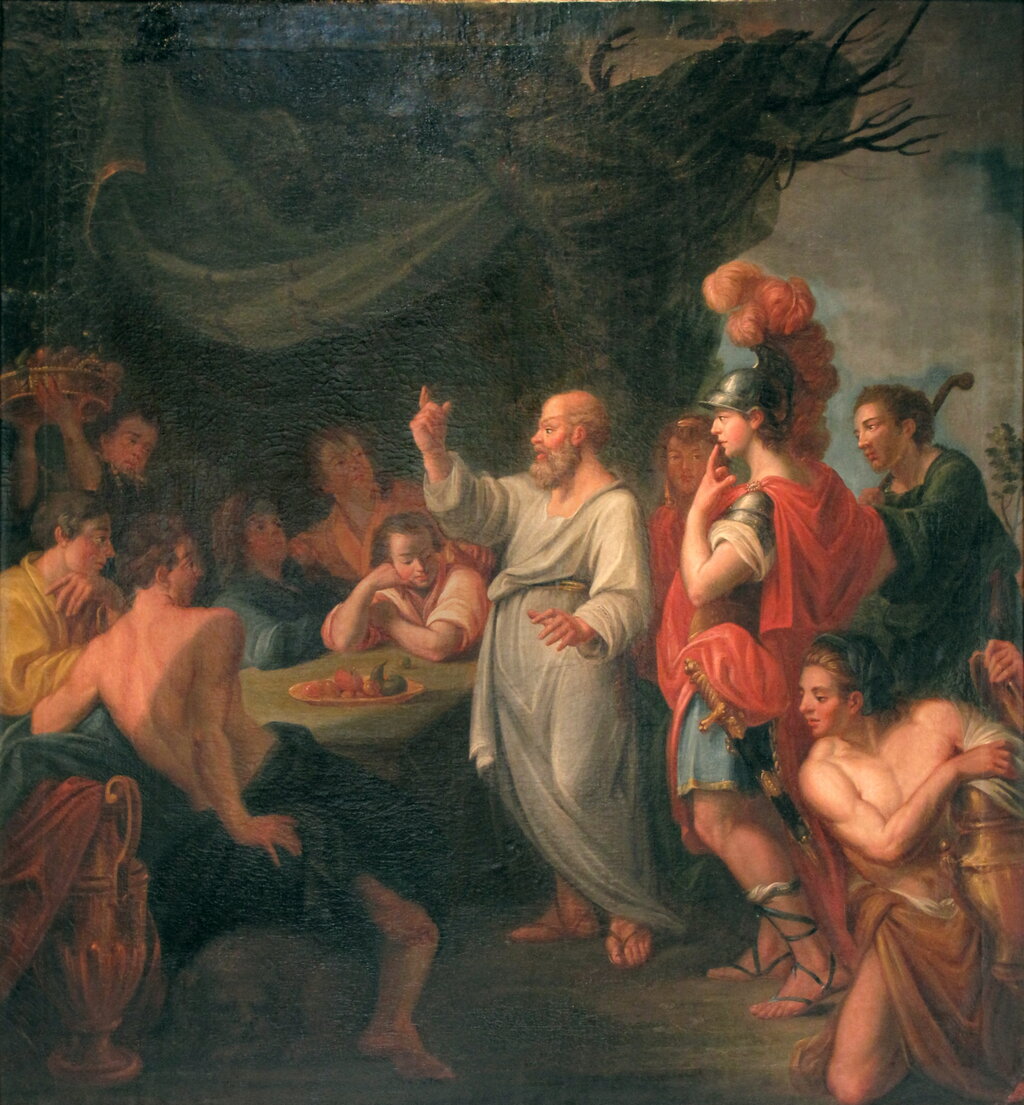
Socrates claimed his wisdom was in knowing that he knew nothing. This humility was central to his method. He wasn't there to provide answers. He was there to help others question their own, leading them to discover inconsistencies and gaps in their own logic. The goal was self-examination and intellectual growth.
Techniques of Socratic Questioning
Socratic questioning isn't just asking random questions. It's a disciplined process that uses different types of questions to explore an idea systematically. Here are some of the main categories:
| Question Type | Purpose | Example |
|---|---|---|
| Clarification | To get a clearer picture of what is being said. | "What exactly do you mean by 'fairness'?" |
| Probing Assumptions | To challenge the unstated beliefs behind an argument. | "What are you assuming when you say that?" |
| Probing Evidence | To ask for the reasons and evidence supporting a claim. | "What evidence do you have to support that idea?" |
| Exploring Perspectives | To consider alternative points of view. | "How might someone with an opposing view see this?" |
| Probing Consequences | To explore the logical outcomes of an argument. | "If that's true, what would be the implications?" |
By moving through these types of questions, a discussion can dig deeper into a topic, moving from a simple statement to a much more nuanced understanding.
Today, the Socratic Method is a cornerstone of many educational systems, particularly in law schools and philosophy seminars. It encourages students to think for themselves, engage actively with material, and build strong, logical arguments. By moving the focus from memorization to exploration, it helps develop true intellectual curiosity and critical thinking skills that last a lifetime.
The goal is to empower learners to analyze concepts, challenge their own assumptions, and construct their own understanding from the ground up.
Ready to test your knowledge on the Socratic Method?
What is the primary goal of the Socratic Method?
Socrates's famous claim, "I know that I know nothing," is central to his method. What does this statement emphasize?
The Socratic method remains a powerful tool for teaching and learning, reminding us that the most profound insights often come not from answers, but from the courage to ask better questions.