Sociology of Mortality in the Digital Age
Clinical Sequestration Dynamics
From Tamed to Forbidden Death
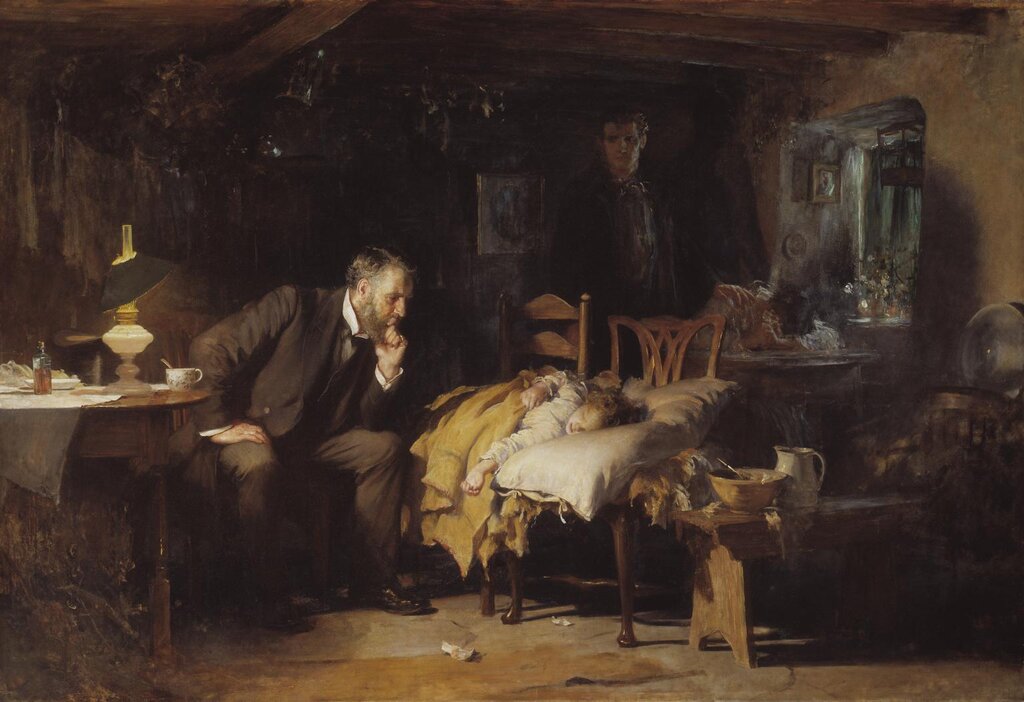
In pre-modern societies, death was a public ritual. It occurred in the home, surrounded by community, and was understood as a familiar, albeit solemn, part of the life cycle. The historian Philippe Ariès termed this phenomenon 'tamed death'—an event integrated into the social fabric, managed by the dying person and their kin, not a medical establishment. The process was transparent, the rituals communal. The dying individual remained a subject, an actor in their own final chapter.
Over the last two centuries, this familiarity has been systematically dismantled. Death has been reclassified from a metaphysical event into a technical problem, a failure of medical intervention. Ariès charted this transition to the 'forbidden death' of the modern era, where dying is no longer a public ceremony but a private, often shameful, event. It is hidden away, medicalized, and stripped of its social meaning. This shift did not happen by accident; it is the direct consequence of the rise of a new epistemological framework for understanding the body.
The Clinical Gaze
The modern hospital, as a site of knowledge production, fundamentally altered the perception of the dying. Michel Foucault’s concept of the medical gaze is crucial here. This wasn't merely about doctors looking at patients; it was a new way of seeing that bypassed the individual's subjective experience to focus on the body as a machine composed of observable, measurable pathologies. The question shifted from 'Who is this person?' to 'What is the disease?'
Under this gaze, the dying person is reconstituted as a clinical object. Their narrative is replaced by a chart, their social identity superseded by a diagnosis. The body becomes a site for intervention, a territory to be managed by medical protocols until the moment it ceases to function. This objectification is a prerequisite for sequestration. By reframing death as a biological event rather than a social one, it becomes possible—and logical—to remove it from the social sphere and confine it to a specialized, controlled environment. The goal is no longer a 'good death' in the traditional sense, but the orderly management of corporeal decline.
The clinical gaze depersonalizes. It transforms the subject of a life into the object of a science.
This process is what Ivan Illich critiqued as the radical medicalization of life. He argued that modern medicine, in its hubris, had turned death from a natural inevitability into a personal defeat—a failure of the system. For Illich, this expropriation of death, robbing individuals of the autonomy to experience their own mortality, was the ultimate form of iatrogenesis. The result is a society that can no longer cope with the reality of finitude, demanding its institutional concealment.
The Architecture of Sequestration
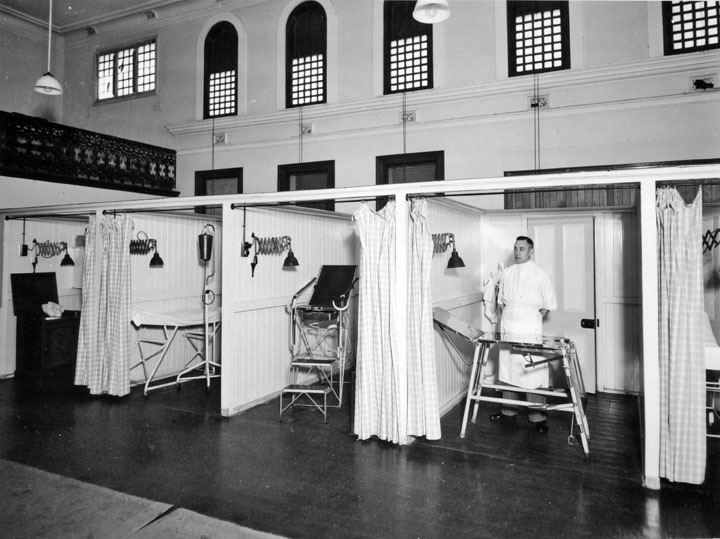
The physical sequestration of the dying is the logical endpoint of this cultural shift. Hospitals, nursing homes, and hospices are the modern equivalents of the lazaretto, spaces designed to contain a phenomenon deemed disruptive to the smooth functioning of society. By relocating the process of dying to these institutional settings, the sight, sound, and smell of death are removed from public life. This segregation preserves the illusion of a sanitized, death-free world for the living.
This spatial isolation is not neutral; it actively shapes the experience of dying. The clinical environment, with its rhythms of rounds, charts, and procedures, imposes a new temporality on the patient. Time is no longer measured by personal milestones but by clinical benchmarks. The social world of the dying person shrinks to the confines of their room, their interactions mediated by medical staff. Grief itself becomes privatized, a quiet affair conducted in hushed corridors and designated 'family rooms,' far from the collective witness of the community.
Sociologist Norbert Elias, in his poignant work The Loneliness of the Dying, argued that this process creates an unprecedented form of social and emotional isolation. While people have always died, he contended that dying in a society that so vehemently denies death is a uniquely lonely experience.
The living, unsure how to act around the dying without the guidance of established social rituals, often withdraw. They are embarrassed by the raw reality of mortality, which contradicts the modern emphasis on health, youth, and control. Consequently, the dying are left in a social vacuum, physically cared for but emotionally abandoned. This sequestration creates a profound physical absence, a void that contemporary digital practices now attempt, often clumsily, to fill.
Now that we've examined the social and physical sequestration of death, let's test your understanding of these core sociological concepts.
Historian Philippe Ariès used which term to describe the pre-modern experience of death as a public, familiar event integrated into the community?
According to the text, Michel Foucault's concept of the 'medical gaze' primarily reframes the dying person as a: