Sociology for UPSC Mains 2026
Introduction to Sociology
What Is Sociology?
Sociology is the scientific study of society, human social behavior, patterns of social relationships, social interaction, and culture. It's a lens for understanding how our individual lives are shaped by the larger social forces around us, and how we, in turn, shape those forces.
At its core, sociology asks a simple but profound question: How does the society we live in make us who we are?
Sociology
noun
The systematic study of the development, structure, interaction, and collective behavior of organized groups of human beings.
This discipline goes beyond surface-level observations. Instead of just describing what happens in society, it seeks to explain why it happens. It looks for patterns in everything from marriage and family to crime and social movements, using systematic methods to understand the social world.
The Birth of a New Science
Sociology didn't appear out of thin air. It was born in the 19th century, a time of massive social upheaval in Europe. Three major revolutions created the fertile ground for this new way of thinking:
- The Enlightenment: This intellectual movement emphasized reason, evidence, and critical thinking. It encouraged scholars to question traditional authority and study society through a scientific lens, just as they studied the natural world.
- The French Revolution (1789): This political upheaval tore down the old social order of monarchy and aristocracy. The resulting chaos and change made people acutely aware of society itself as something that could be built, destroyed, and studied.
- The Industrial Revolution: This economic and technological transformation pulled people from rural farms into crowded, anonymous cities. It created a host of new social problems: poverty, pollution, crime, and worker exploitation. Thinkers began to wonder how to understand and solve these issues on a large scale.
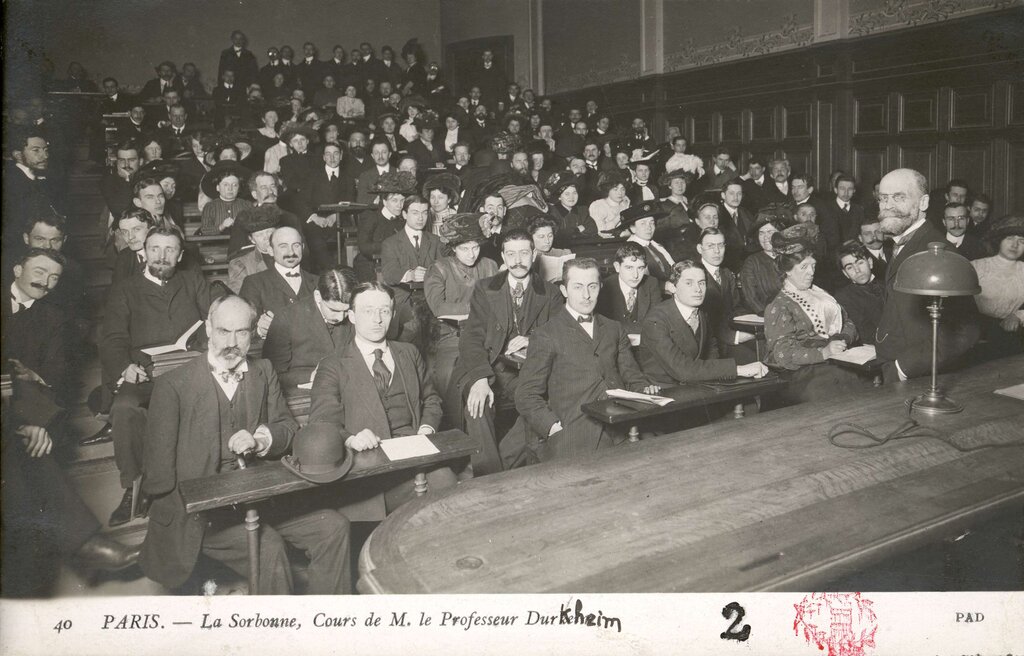
It was in this context that French philosopher Auguste Comte coined the term "sociology" in 1838. He envisioned it as the "queen of the sciences," a discipline that could use scientific methods to uncover the laws of social order and progress, ultimately helping to improve society.
Sociology and Its Neighbors
Sociology is part of the family of social sciences, but it has its own unique perspective. It often overlaps with its neighbors, but its focus is distinct.
| Social Science | Primary Focus | Key Question Example |
|---|---|---|
| Sociology | Society, social structures, and group behavior. | How does social class affect a person's life chances? |
| History | Past events and specific contexts. | What were the specific causes of the French Revolution? |
| Psychology | The individual mind, emotions, and behavior. | How do individuals cope with stress? |
| Political Science | Power, government, and political systems. | How do different voting systems affect election outcomes? |
| Economics | Production, distribution, and consumption of goods. | What is the impact of interest rates on inflation? |
| Anthropology | Culture, customs, and human origins (often non-Western). | What are the marriage rituals of the Yanomami people? |
While a historian might detail the events of a particular war, a sociologist would analyze war as a recurring social phenomenon, looking for patterns in its causes and consequences across different societies. While a psychologist studies an individual's decision to commit a crime, a sociologist examines crime rates and how they relate to social factors like poverty and education. Sociology provides the broad, societal context for the specific questions its neighbors ask.
Beyond Common Sense
A common critique of sociology is that it's just common sense. We all live in society, so don't we already understand how it works? Not quite. Common sense is based on our limited personal experiences, assumptions, and beliefs. It's often contradictory and unexamined.
For example, common sense might say, "Poverty is the result of laziness." A sociologist, however, would test this idea with evidence. They would investigate factors like the job market, educational opportunities, discrimination, and economic policies to find a more complete, evidence-based explanation.
Sociological knowledge is different because it is:
- Systematic: It relies on careful research methods, not just hunches.
- Evidence-based: Conclusions are drawn from analyzing data, whether from surveys, interviews, or historical records.
- Critical: It challenges our taken-for-granted assumptions and questions the obvious.
Sociology forces us to look beyond individual stories and personal biases to see the larger patterns that shape our lives. This perspective is crucial for anyone seeking to understand and address complex social issues, making it a cornerstone of preparation for public service.
Which of the following best defines sociology?
Which of the following historical events was NOT a primary catalyst for the emergence of sociology as a discipline?