Social Media for Adult English Learners
Introduction to Informal Digital Learning
Learning Beyond the Classroom
Think about how you learn new things in your daily life. If you want to fix a leaky faucet, you might watch a quick video tutorial. To understand a new hobby, you might read blogs or join an online forum. This type of learning is informal, self-directed, and happens on your own terms. When this approach is applied to learning English using technology, it's called Informal Digital Learning of English, or IDLE.
IDLE isn't about sitting through scheduled lessons or completing assignments. It's about voluntarily using digital tools to improve your English skills in a way that fits your life and interests. You are in control. You choose what you want to learn, when you want to learn it, and how you want to learn it.
The core idea of IDLE is simple: learning happens naturally when you engage with English content you genuinely find interesting.
self-directed
adjective
A process in which individuals take the initiative, with or without the help of others, in diagnosing their learning needs, formulating learning goals, identifying resources for learning, choosing and implementing appropriate learning strategies, and evaluating learning outcomes.
The Benefits of Learning Your Way
For adult learners, the flexibility of IDLE is a huge advantage. You don’t need to rearrange your schedule for a class. You can practice English while commuting to work by listening to a podcast, during your lunch break by reading a news article, or before bed by watching a show in English. Your learning is woven into the fabric of your day.
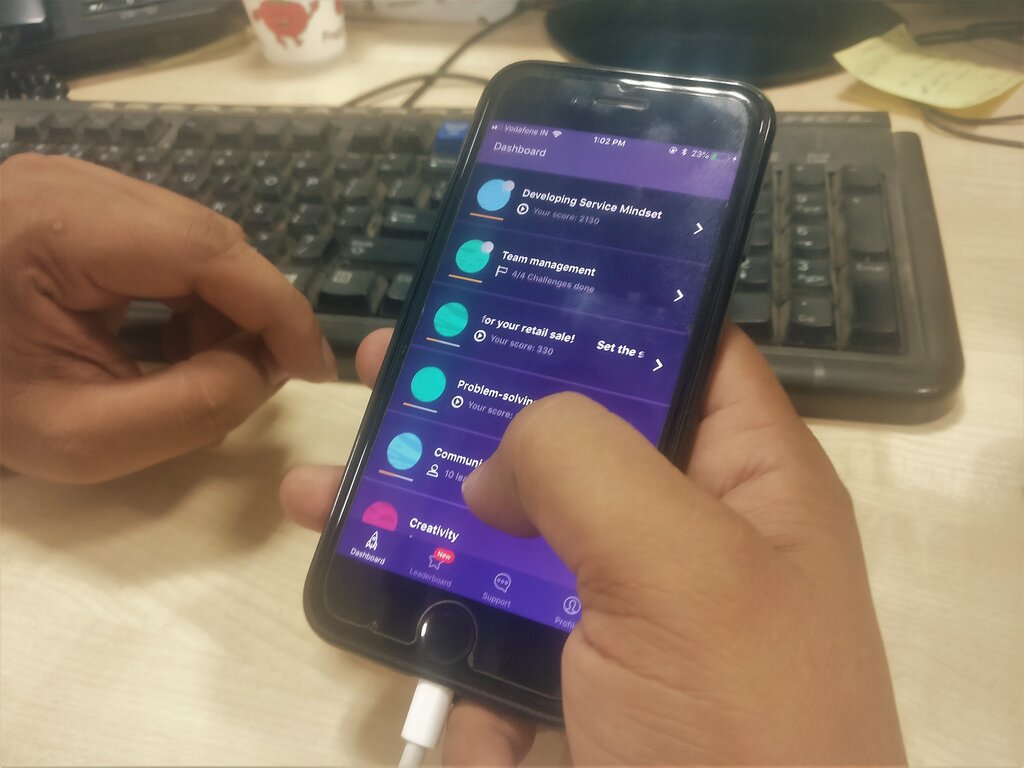
This method also allows for highly personalized learning. Instead of following a one-size-fits-all curriculum, you can focus on topics that matter to you. If you love cooking, you can watch English-language cooking channels. If you're a fan of video games, you can follow English-speaking streamers. This personal connection makes learning more engaging and sustainable because it doesn't feel like a chore.
Navigating the Challenges
While IDLE offers a lot of freedom, it also comes with a few challenges. Without a formal structure, it can be difficult to know what to focus on or how to measure your progress. You might pick up a lot of vocabulary related to your hobbies but miss out on essential grammar concepts.
Another hurdle is the lack of feedback. In a classroom, a teacher can correct your pronunciation or point out a grammatical error. When you learn on your own, it's harder to spot and fix your own mistakes. It requires a lot of self-discipline to stay motivated and consistently practice without the accountability of a formal course.
Formal online training in digital literacy can help online learners differentiate between fact and fiction, especially in regards to online resources that may contain inaccurate information or opinion-based content.
Finally, the sheer volume of information available online can be overwhelming. Finding high-quality, reliable, and appropriate resources for your level can feel like searching for a needle in a haystack. It’s a skill in itself to learn how to find what works best for you.
Your Device Is Your Classroom
The tools for IDLE are likely already in your pocket or on your desk. Smartphones, tablets, and computers are powerful gateways to a world of English content. They allow you to immerse yourself in the language through countless activities.
You can listen to podcasts to tune your ear to different accents, watch videos to connect words with actions and context, or read articles to expand your vocabulary. Interactive apps can make practicing grammar feel like a game. The key is to use these devices not just for passive consumption, but for active engagement with the English language.
Now, let's test your understanding of what we've covered.
What is the core principle of Informal Digital Learning of English (IDLE)?
A busy professional learns English by listening to business news podcasts during their daily commute. Which key advantage of IDLE does this scenario best illustrate?
Informal digital learning offers a flexible and personalized path to improving your English. By understanding its strengths and weaknesses, you can use the digital tools around you to create your own effective learning environment.