Social and Preventive Pharmacy in Practice
Health Determinants
Beyond the Pill Bottle
A patient's health is shaped long before they walk into a pharmacy. Their well-being is a product of their life circumstances: their income, their education, the safety of their neighbourhood, and the strength of their social support networks. These factors are known as the social determinants of health, and they often have a greater impact on health outcomes than clinical care alone.
Think of it this way. You can counsel a patient perfectly on their diabetes medication, but if they cannot afford healthy food or live in an area without safe places to exercise, managing their condition becomes incredibly difficult. Understanding these underlying factors is crucial for pharmacists who want to provide truly effective care. It shifts the focus from just treating illness to understanding the root causes of poor health.
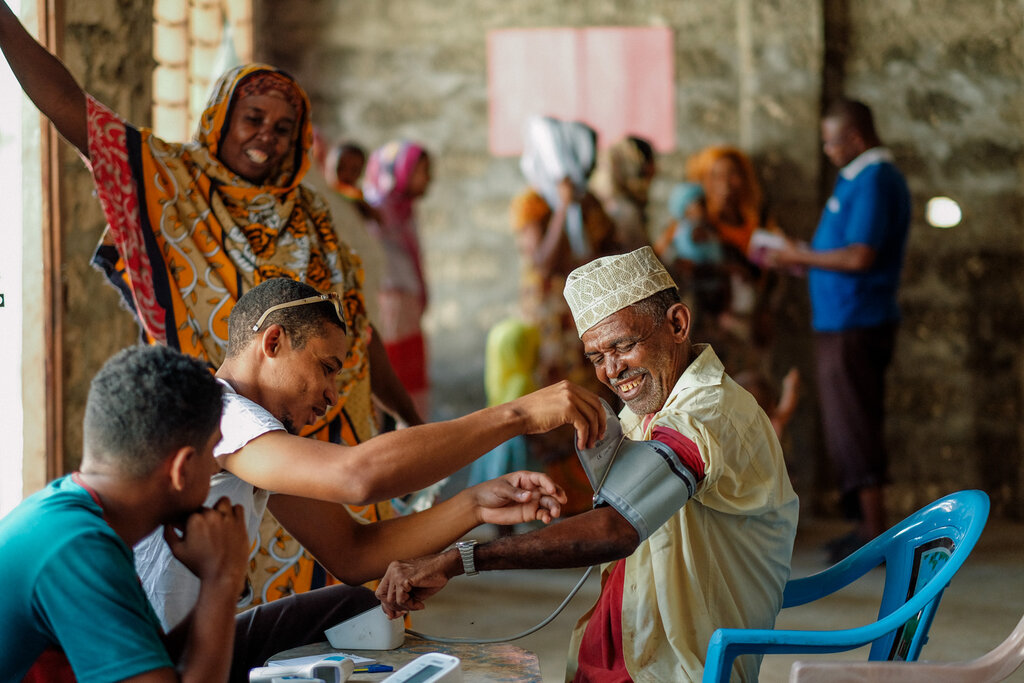
These determinants create patterns of health differences linked to social or economic disadvantage. When one group of people experiences consistently worse health outcomes compared to another, we call this a health disparity. The goal of public health, and a key role for preventive pharmacy, is to strive for health equity, where everyone has a fair and just opportunity to be as healthy as possible.
The Environment's Influence
The physical environment plays a massive role in a community's health. This includes the quality of the air and water, the condition of housing, and access to resources. A child living in a home with mould is more likely to develop asthma. A community without a nearby grocery store may have higher rates of diet-related illnesses because residents rely on less nutritious convenience foods.
Environmental health factors are not just about pollution. They also include the 'built environment'—the parks, sidewalks, and public transport that encourage or discourage physical activity.
As a pharmacist, being aware of local environmental factors is important. For instance, during a heatwave, you might proactively counsel elderly patients on the risks of dehydration. If you know a local factory is a source of air pollution, you can be extra vigilant in managing the respiratory conditions of patients living nearby.
Measuring a Community's Health
To understand and address health disparities, we need to measure them. Public health professionals use health indicators, which are quantifiable characteristics of a population. These metrics help us paint a picture of a community's overall well-being and track the impact of interventions over time. Two of the most fundamental indicators are morbidity and mortality rates.
Morbidity
noun
The rate of disease or illness in a population. It measures how many people have a certain condition within a specific timeframe.
Mortality
noun
The rate of death in a population. It's often expressed as the number of deaths per 1,000 or 100,000 individuals per year.
Let's compare two hypothetical city districts to see how these metrics reveal health disparities.
| Health Indicator | District A (High-Income) | District B (Low-Income) |
|---|---|---|
| Average Life Expectancy | 82 years | 72 years |
| Infant Mortality Rate (per 1,000 births) | 3 | 9 |
| Adult Asthma Morbidity (per 1,000 adults) | 50 | 150 |
The data clearly shows that residents of District B face a greater burden of disease and a shorter life expectancy. A pharmacist working in District B would use this knowledge to tailor their services, perhaps by offering more asthma management clinics or partnering with local organisations to improve access to care.
Literacy and Health Outcomes
One of the most powerful, yet often overlooked, social determinants is literacy. Health literacy is not just the ability to read; it's the capacity to obtain, process, and understand basic health information and services needed to make appropriate health decisions. A patient's literacy level directly impacts their ability to navigate the healthcare system.
Consider a patient with low health literacy. They might struggle to understand the instructions on a prescription label, miss appointments because they can't comprehend the scheduling information, or fail to recognise the symptoms that require urgent medical attention. This can lead to medication errors, poor health outcomes, and increased hospitalisations.
As pharmacists, you are on the front lines of patient education. It is your responsibility to bridge this gap. This means avoiding medical jargon, using simple language, and confirming that patients truly understand their treatment plans. Using tools like the 'teach-back' method, where you ask a patient to explain the instructions in their own words, is a simple yet effective way to ensure comprehension.
Understanding these broad determinants of health transforms the role of a pharmacist from a dispenser of medicine to a vital public health advocate. By recognising the social, environmental, and educational barriers your patients face, you can provide more holistic, effective, and compassionate care.
Which of the following best defines 'social determinants of health'?
A pharmacist is counselling a patient with a new, complex medication regimen. To ensure the patient understands, the pharmacist asks them to explain the instructions back in their own words. What is this technique called?