Soccer Tactics for Young Players
Basic Soccer Skills
The Building Blocks of Soccer
Every great soccer player starts with the same four skills: dribbling, passing, shooting, and controlling the ball. These are the fundamentals. Mastering them is the first step toward becoming a confident and effective player on the field. Think of them as the alphabet of soccer; once you know them, you can start forming words, sentences, and eventually, beautiful plays.
Getting better at soccer begins with focusing on the fundamental technique and mastering the core skills that form the bedrock of your performance on the field; by taking the time to start with good habits and consistent practice, every touch, pass, and move builds a stronger foundation for long-term improvement.
Dribbling with Confidence
Dribbling is how you move with the ball at your feet. The goal isn't to kick it and chase it; it's to keep it close, like it's attached to your foot by a short string. Good dribbling allows you to navigate through defenders and find open space.
Start by using the inside and outside of your foot to gently tap the ball forward. These touches should be soft enough that the ball stays within a step of you. As you get more comfortable, you can start using the laces of your cleats for moving faster in a straight line.

The biggest challenge for new players is to avoid staring at the ball. Practice keeping your head up as much as possible. This helps you see your teammates, opponents, and where the open space is. You can’t make a good pass if you don’t see who’s open.
Dribble with your head up. The more you can see the field, the better decisions you'll make.
Passing with Purpose
Soccer is a team game, and passing is the primary way you work with your teammates. A good pass can break down a defense and create a scoring opportunity. The most fundamental pass is the push pass.
To execute a push pass, use the inside of your foot. It provides the largest, flattest surface, which makes it the most accurate way to send the ball to a teammate. Approach the ball, plant your non-kicking foot next to it, pointing towards your target. Then, swing your kicking leg and make contact with the middle of the ball, following through smoothly in the direction of your teammate.
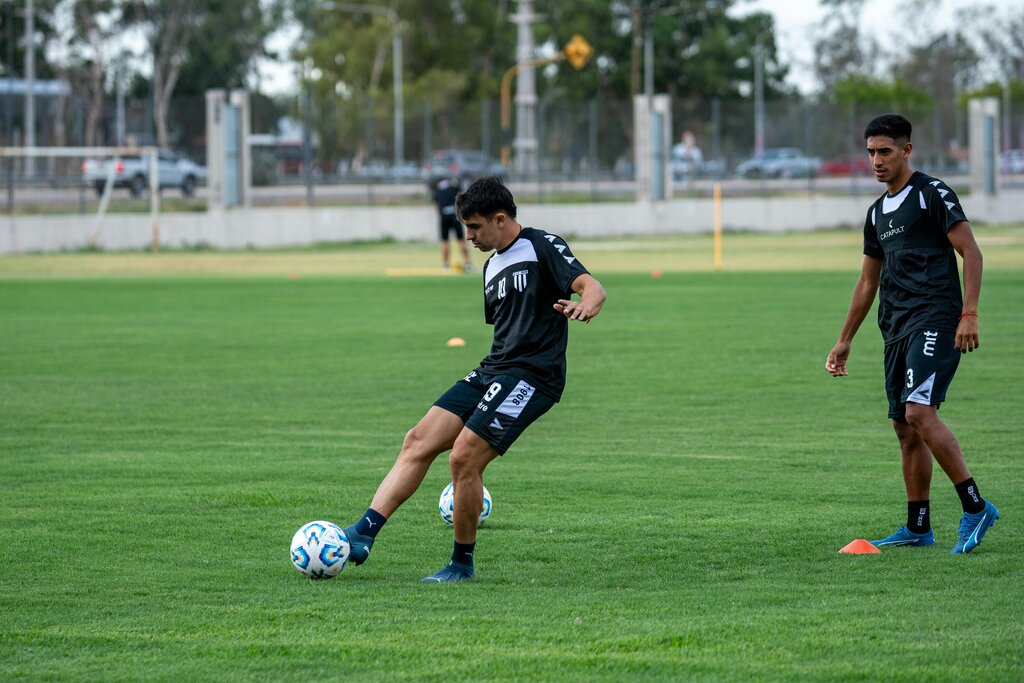
Accuracy is more important than power, especially when you're starting out. Focus on making clean contact and sending the ball right to your teammate's feet.
Shooting to Score
Shooting is often the most exciting part of the game. While the goal is to get the ball in the net, the technique is what makes it possible. A proper shot uses the same basic principles as a pass but with more power.
For a powerful and accurate shot, strike the ball with the hard, bony part of your foot where your shoelaces are. Just like with passing, plant your non-kicking foot beside the ball. Keep your ankle locked and your eyes on the ball as you swing your leg through, making solid contact. Your follow-through should go towards your target, helping to guide the ball in the right direction.

Controlling the Ball
Just as important as sending the ball is receiving it. Ball control, or trapping, is the skill of stopping a moving ball and getting it ready for your next move, whether that's a dribble, a pass, or a shot.
When a ball comes to you, you want to absorb its energy, not fight it. If you stick a stiff leg out, the ball will likely bounce far away. Instead, relax your foot and cushion the ball's arrival. Think of your foot as a pillow, not a brick wall. As the ball makes contact, slightly pull your foot back to soften the impact. This will cause the ball to drop right in front of you, ready for action.

You can control the ball with different parts of your body, including the inside of your foot, your thigh, or even your chest. The key is always to be soft and absorb the ball's momentum.
Let's review the core skills we've covered.
Now, test your understanding of these fundamental techniques.
When dribbling, what is the primary reason to keep your head up?
For the most accurate and controlled pass, you should use the inside of your foot because it provides the largest, flattest surface.
Practice is the only way to improve. Spend time on each of these four skills, and you'll build a strong foundation for your entire soccer journey.