Snowflake Fundamentals for Data Professionals
Introduction to Cloud Data Warehousing
What Is a Data Warehouse?
Think of a company's data like a massive, sprawling library. You have books from the sales department, scrolls from marketing, and ledgers from finance. If you needed to find out how a marketing campaign in July affected sales in August, you'd have to run all over the library, pulling records from different shelves. It would be slow and chaotic.
A data warehouse solves this. It's like a central, highly organized reading room for all that information. It pulls data from various sources, cleans it up, and stores it in a consistent format. This makes it easy for a business to analyze everything together and uncover insights that would otherwise be hidden.
Data warehousing refers to the process of collecting, storing, and managing large volumes of data from different sources, enabling complex queries and analyses.
The goal is simple: turn raw data into useful intelligence for better decision-making.
The Old Way vs. The New Way
For a long time, if a company wanted a data warehouse, it had to build one itself. This is the traditional, or on-premises, approach. It meant buying powerful computers called servers, finding space for them in a dedicated room (a data center), and hiring a team of experts to install, manage, and maintain everything. It was a huge upfront investment in both money and time.
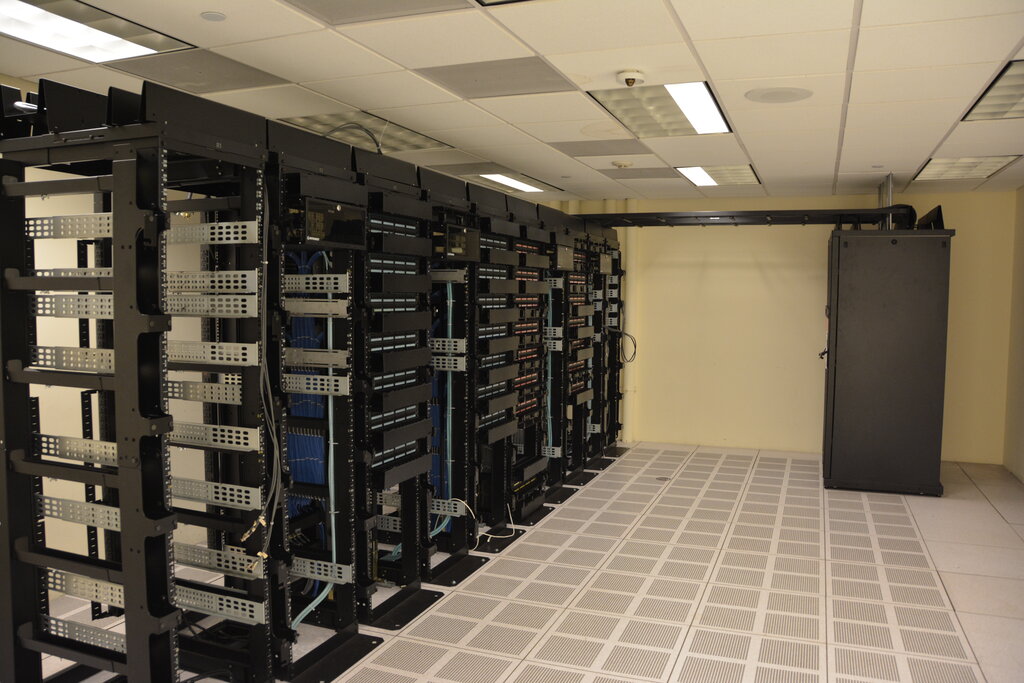
Then came cloud computing, which changed the game completely. A cloud data warehouse runs on the internet. Instead of building your own data center, you rent space and computing power from a provider like Amazon Web Services (AWS), Google Cloud, or Microsoft Azure. They handle all the hardware and maintenance behind the scenes.
Cloud computing is the delivery of computing services—including servers, storage, databases, networking, software, analytics, and intelligence—over the Internet to offer faster innovation, flexible resources, and economies of scale.
| Feature | Traditional Warehouse | Cloud Warehouse |
|---|---|---|
| Setup Cost | Very high (hardware, facilities) | Low (pay-as-you-go) |
| Scalability | Difficult and slow | Easy and fast (on-demand) |
| Maintenance | Managed by your in-house team | Managed by the cloud provider |
| Accessibility | Limited to the company network | Accessible from anywhere with internet |
Why Move to the Cloud?
The table above hints at the advantages, but they're worth spelling out. The shift to the cloud is driven by a few powerful benefits.
Scalability: With an on-premises warehouse, if you need more power, you have to buy and install more servers. It's a slow and expensive process. Cloud warehouses are elastic. You can scale your computing resources up or down in minutes, paying only for what you use. It's like plugging into the grid for electricity instead of building your own power plant.
Cost-Effectiveness: The cloud's pay-as-you-go model eliminates the massive upfront costs of hardware. This makes sophisticated data analysis accessible to smaller companies that could never afford a traditional data warehouse. You're shifting from a huge capital expense to a predictable operating expense.
Ease of Maintenance: Running a data center is a full-time job. With a cloud warehouse, the provider handles security updates, hardware failures, and network management. This frees up your technical team to focus on what actually matters: using data to drive business value.
Cloud Warehouse Architecture
While the details vary, most modern cloud data warehouses share a similar architecture that separates two key functions: storage and compute.
- Storage is where the data lives. It's a centralized repository, often called a data lake, designed to hold vast amounts of structured and semi-structured data cheaply and reliably.
- Compute refers to the processing power used to run queries and perform analysis on that data. These are clusters of virtual servers that can be spun up on demand.
This separation is the secret to the cloud's flexibility. You can scale your storage and compute resources independently. If you have a huge amount of data but only run a few queries a day, you can pay for massive storage but minimal compute. If you need to run complex, simultaneous analyses for different teams, you can spin up multiple compute clusters that all access the same central data store without interfering with each other.
What is the primary purpose of a data warehouse?
What is the key architectural feature of modern cloud data warehouses that provides flexibility and cost-efficiency?
This new architecture makes data warehousing more powerful, flexible, and accessible than ever before.