Snowboarding Fundamentals
Introduction to Snowboarding
From Backyard Toy to Olympic Sport
Snowboarding didn't start on pristine mountain peaks. It began in a Michigan garage in 1965. Sherman Poppen, an engineer, bolted two skis together for his daughters to play with in the snow. He called it the "Snurfer"—a mix of snow and surfer. It was a simple toy, with a rope at the nose for steering, but it sparked an idea.
In the 1970s, pioneers like Jake Burton Carpenter and Tom Sims saw the Snurfer's potential. They started experimenting in their own workshops, adding bindings for better control and refining board shapes. They envisioned a new way to ride the mountain, inspired by the freedom of surfing and skateboarding. Ski resorts were skeptical at first, often banning snowboarders from their lifts. But the passion was contagious. By the 1990s, snowboarding had exploded into the mainstream, becoming a global phenomenon and eventually an official Olympic sport in 1998.
Finding Your Style
Snowboarding is all about personal expression, and that's reflected in its different styles. While you can mix and match, most riding falls into three main categories. Finding the one that excites you most is the first step in your journey.
Freeride: This is the art of riding the entire mountain. Freeriders explore everything from groomed runs and tree-lined trails to open powder bowls. It's about freedom and adapting to whatever terrain you find. Think of it as the all-purpose, go-anywhere style of snowboarding.
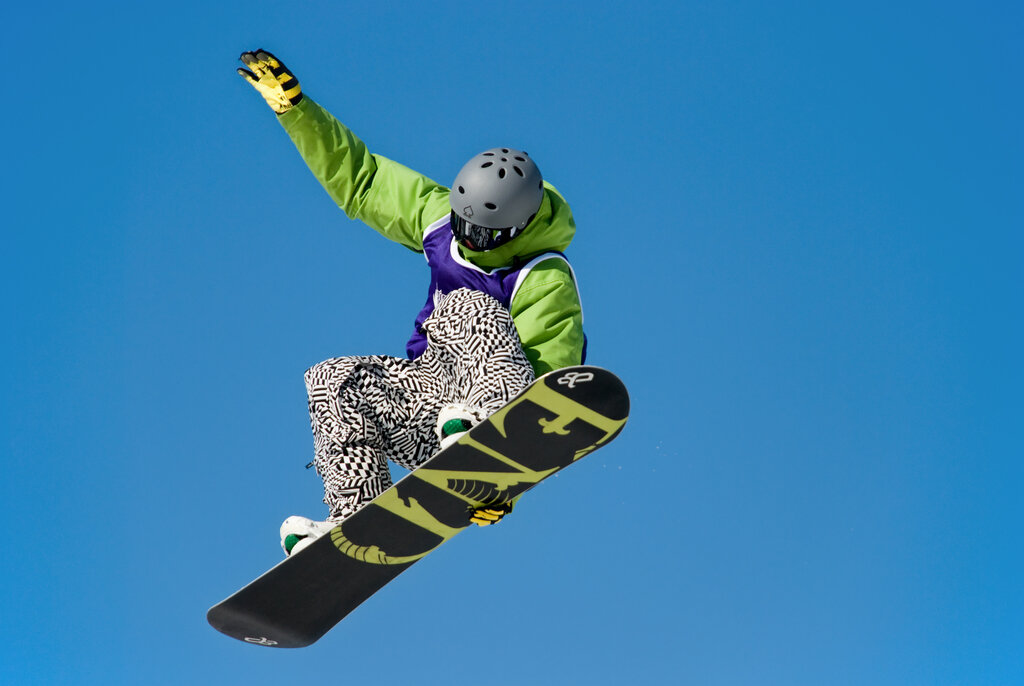
Freestyle: If you're drawn to tricks, jumps, and features, freestyle is your calling. This style is rooted in skateboarding and focuses on creativity in terrain parks, halfpipes, and even on natural features around the mountain. It’s playful, technical, and all about pushing the boundaries of what's possible on a board.
Alpine or Carving: This style is built for speed and precision. Alpine snowboarders use stiff boots and boards to lay down clean, powerful turns on hard-packed snow. It’s the closest snowboarding gets to ski racing, emphasizing control and efficiency as you carve arcs down the slope.
The Essential Gear
Your connection to the snow comes through three key pieces of equipment: the board, bindings, and boots. They work together as a system, and choosing the right setup for your preferred style makes a huge difference.
Snowboard
noun
The board you ride on, typically made from a wood core laminated with fiberglass. Its shape, flex, and length determine how it performs.
The board itself is the star of the show. Freestyle boards are often symmetrical (twin-tip) so they ride the same forwards or backwards. Freeride boards are typically directional, with a stiffer tail and softer nose, designed to float in powder and hold an edge at speed.
Bindings
noun
The connection between your boots and the board. They hold your feet securely, allowing you to transfer energy to control the board's edges.
Bindings transfer your movements directly to the board. Like boards, they have varying levels of stiffness. A softer binding gives you more freedom to tweak and maneuver for freestyle, while a stiffer binding provides instant response for high-speed carving.
Boots are your primary point of contact. Comfort is crucial, but so is performance. Softer boots are forgiving and comfortable, great for beginners and freestyle riders. Stiffer boots offer more support and control, which is ideal for aggressive freeriding and carving.
Choosing gear that matches your style will help you progress faster and have more fun. Here’s a quick guide:
| Style | Board Shape | Boot & Binding Flex |
|---|---|---|
| Freestyle | Symmetrical (Twin) | Soft to Medium |
| Freeride | Directional | Medium to Stiff |
| Alpine | Directional, Narrow | Very Stiff |
More Than a Sport
Snowboarding has always had a unique culture. Born from a rebellious spirit, it values individuality, creativity, and a laid-back attitude. It's a community where riders encourage each other, celebrate unique styles, and share a common passion for being in the mountains.
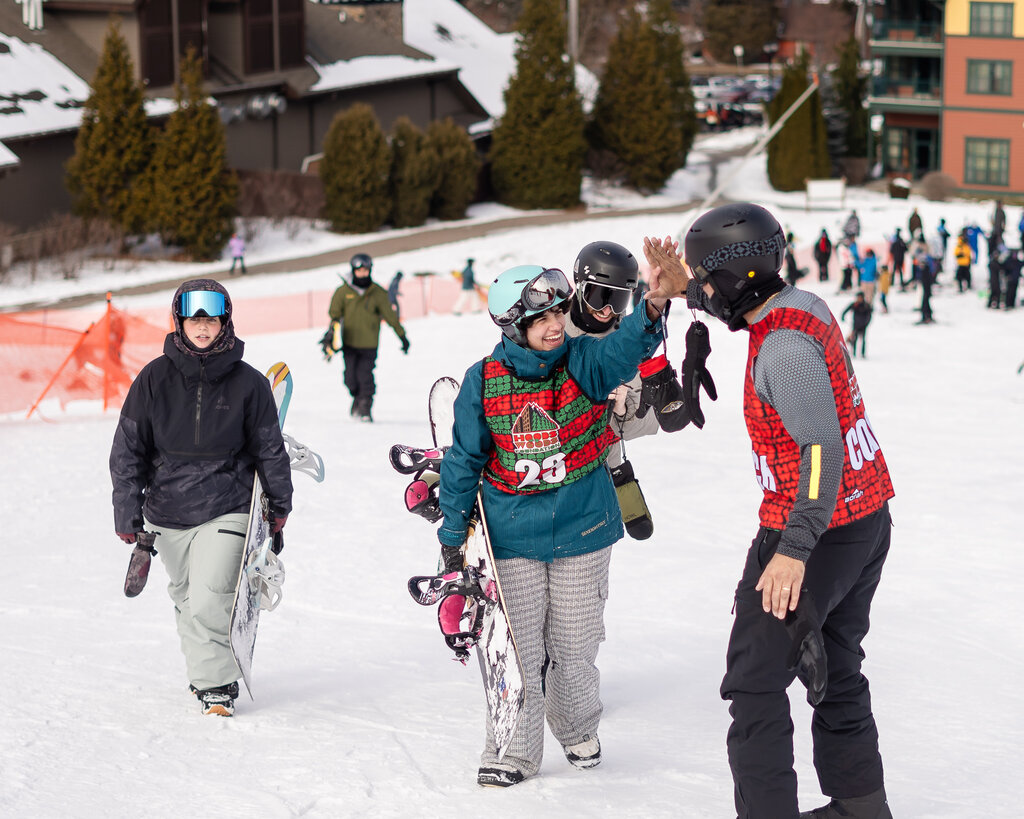
This sense of community also comes with a shared responsibility. Respecting the mountain, knowing your limits, and looking out for fellow riders are all core parts of the snowboarding ethos. As you get into more advanced terrain, understanding safety becomes paramount.
Regardless if you ski and snowboard the terrain accessible from a ski resort or go full-on touring in the backcountry, safety gear, equipment, and avalanche education is a must, and perhaps being the most important part of getting off-piste!
Now that you know the basics, let's review some of the key terms.
Ready to test your knowledge?
What was the original name for the snowboard, created by Sherman Poppen by bolting two skis together?
A rider who enjoys making fast, precise, powerful turns on groomed slopes is most likely focused on which style of snowboarding?
Understanding the history, styles, and gear is the foundation for a lifetime of fun on the snow. Welcome to the world of snowboarding.