Smart Tax Reduction Strategies
Understanding Tax Basics
From Paycheck to Tax Bill
When you think about taxes, you probably start with the money you earn. This is the first piece of the puzzle, and it has a specific name.
Gross Income
noun
The total amount of money you earn from all sources before any taxes or other deductions are taken out.
Gross income includes your salary, wages, tips, and any income from a side hustle, investments, or rental properties. It’s the grand total of everything you brought in.
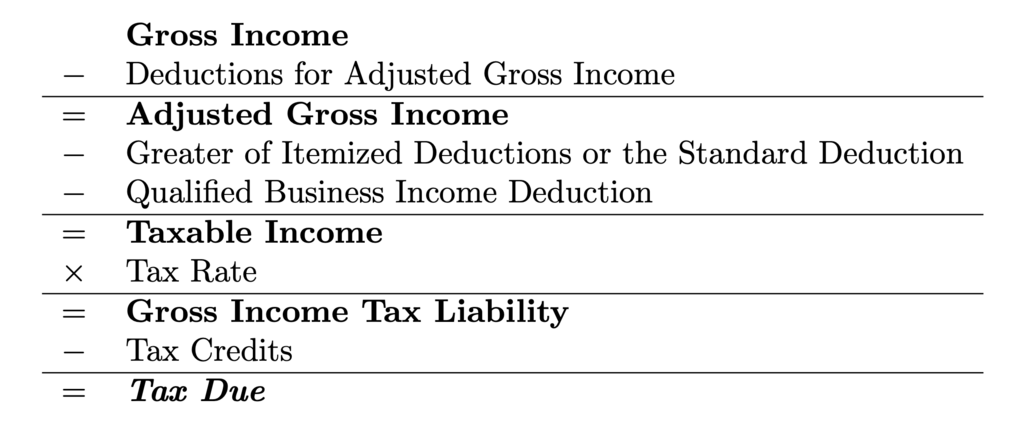
But you don't pay taxes on your entire gross income. The government allows you to subtract certain expenses to find a lower, more refined number. This brings us to Adjusted Gross Income, or AGI.
Think of your Adjusted Gross Income (AGI) as your gross income minus specific, "above-the-line" deductions. These can include things like contributions to a traditional IRA, student loan interest, or certain business expenses.
Your AGI is a key figure. It’s used to determine your eligibility for many tax breaks. After calculating your AGI, you take another set of deductions—either the standard deduction or itemized deductions—to arrive at your taxable income. This is the amount your tax is actually calculated on.
How Your Income Is Taxed
The United States uses a progressive tax system. This means that people with higher taxable incomes pay a higher percentage of their income in taxes. This system is structured using tax brackets.
A tax bracket is a range of income that's taxed at a specific rate. It’s a common misconception that if you’re “in” a certain tax bracket, all of your income is taxed at that rate. That's not how it works.
Instead, different portions of your income are taxed at different rates. For example, let's say the tax brackets are:
- 10% on income up to $10,000
- 12% on income between $10,001 and $40,000
- 22% on income over $40,000
If your taxable income is $50,000, you don't pay 22% on the whole amount. You pay 10% on the first $10,000, 12% on the next chunk (from $10,001 to $40,000), and 22% only on the amount that falls into the highest bracket (from $40,001 to $50,000).
| Income Portion | Rate | Tax Owed |
|---|---|---|
| First $10,000 | 10% | $1,000 |
| Next $30,000 | 12% | $3,600 |
| Final $10,000 | 22% | $2,200 |
| Total | $6,800 |
This marginal system ensures that you never lose money by earning more. Only the additional dollars you earn are taxed at the higher rate.
Deductions vs. Credits
The terms "deduction" and "credit" are often used interchangeably, but they have very different impacts on your tax bill. Understanding this difference is one of the most powerful concepts in basic tax knowledge.
Tax deductions, on the other hand, reduce how much of your income is subject to taxes.
A tax deduction lowers your taxable income. By reducing the amount of income the government can tax, you ultimately pay less. The value of a deduction depends on your marginal tax rate. For instance, a $1,000 deduction for someone in the 22% tax bracket is worth $220 ($1,000 x 0.22).
A tax credit is even better. A credit directly reduces the amount of tax you owe, dollar for dollar.
A 💲1,000 tax credit saves you 💲1,000 in taxes. It doesn't matter what tax bracket you're in.
Let's put it all together. Imagine two people, Alex and Ben, both have a tax bill of $5,000 before applying any final savings. Alex qualifies for a $2,000 tax deduction and is in the 12% tax bracket. Ben qualifies for a $2,000 tax credit.
As you can see, the credit provides a much larger financial benefit. Both deductions and credits are valuable tools for lowering your tax liability, but credits are more powerful.
Now, let's test your understanding of these core concepts.
Which of the following best describes how a progressive tax system with tax brackets works in the United States?
What is the key difference between a tax deduction and a tax credit?
Understanding these fundamentals—from gross income to the power of a tax credit—is the first step in navigating your taxes with confidence.