Smart Small Capital Stock Trading
Optimizing Brokerage Selection
Beyond Zero Commission
Choosing a brokerage for a small account isn't about finding the one with the flashiest ads. It's about optimizing for the details. Since you're starting with a smaller capital base, every fraction of a percent matters. The most important feature for this is the ability to buy fractional shares, which lets you invest with as little as $1 or $5, rather than needing enough to buy a full share of a high-priced stock like Nvidia or Amazon.
This means you can build a diversified portfolio immediately, even with just 💲100, by buying slices of multiple companies instead of being forced to buy one or two cheaper stocks.
However, not all fractional shares are created equal. Some brokers may have limitations on which stocks are available for fractional trading. More importantly, the liquidity can differ. When you place a small order, your broker might batch it with other small orders, which can sometimes lead to a slight delay or a less-than-perfect price. This is rarely a major issue for long-term investors, but it's something to be aware of. The goal is good execution, meaning your order is filled quickly and at a fair price.
The Hidden Costs
Zero-commission trading is now standard, but it doesn't mean trading is free. Several small, mandatory fees still apply, and while they're tiny, they can add up on a small account with frequent trades. The two most common are SEC fees and TAF (Trading Activity Fee) fees, which are regulatory charges on sell orders.
| Fee Type | Who Charges It | Applies To | Typical Cost |
|---|---|---|---|
| SEC Fee | U.S. Securities and Exchange Commission | Sell Orders Only | $8.00 per $1,000,000 of principal |
| TAF | Financial Industry Regulatory Authority (FINRA) | Sell Orders Only | $0.000166 per share (max $8.30 per trade) |
| ADR Fee | Depository Banks | Foreign Stocks (ADRs) | $0.01 - $0.05 per share, annually |
American Depositary Receipts (ADRs) are how you invest in many foreign companies on U.S. exchanges. The banks that facilitate these charge small annual fees. If you plan to invest internationally, check how your broker handles these pass-through costs.
Putting Your Cash to Work
What happens to the uninvested cash in your account? It doesn't just sit there. Brokers automatically move it into a "sweep" account. The interest rate on these cash sweeps varies dramatically between platforms.
Some brokers offer high-yield options, effectively turning your uninvested cash into a savings account. Others offer very low rates. For a small account, this might seem trivial, but it's a matter of principle: your money should always be working for you, even when it's waiting on the sidelines. A higher sweep rate means your idle cash is generating returns.
Another powerful tool for small accounts is the Dividend Reinvestment Plan, or . If a company you own a piece of pays a dividend, a DRIP automatically uses that cash to buy more shares (or fractional shares) of the same company, completely commission-free. This is the essence of compounding. It's a "set it and forget it" feature that ensures your returns start generating their own returns. All major brokers offer this, but ensure it's easy to enable across your entire portfolio.
Platform Face-Off
Let's compare three popular choices for small-balance investors: Fidelity, Charles Schwab, and Robinhood. While all offer zero-commission trades and fractional shares, they differ in the details.
| Feature | Fidelity | Charles Schwab | Robinhood |
|---|---|---|---|
| Fractional Shares | Yes (Stocks & ETFs) | Yes (S&P 500 stocks only) | Yes (Stocks & ETFs) |
| Order Execution | Excellent, price improvement is common | Excellent | Good, but relies heavily on PFOF* |
| Cash Sweep Rate | High (auto-invests in money market fund) | Low (can be manually moved to higher yield funds) | Moderate (via Gold subscription) |
| User Interface | Robust, data-rich (can be complex) | Robust, great for research | Sleek, minimalist (fewer advanced tools) |
| Account Types | Full range, including custodial | Full range, including custodial | Standard taxable, IRA |
*PFOF stands for Payment for Order Flow, a common practice where brokers are paid to route orders to specific market makers. While legal, critics argue it can create conflicts of interest.
For a young investor, the availability of a custodial account (UGMA/UTMA) is a major advantage. These accounts are held in a minor's name but managed by an adult. This allows a parent or guardian to start an investment portfolio for a child, which can then be transferred to them when they reach adulthood. Fidelity and Schwab are strong contenders here.
Beginner investors benefit most from stock brokers that offer straightforward design, robust educational content, and responsive customer support.
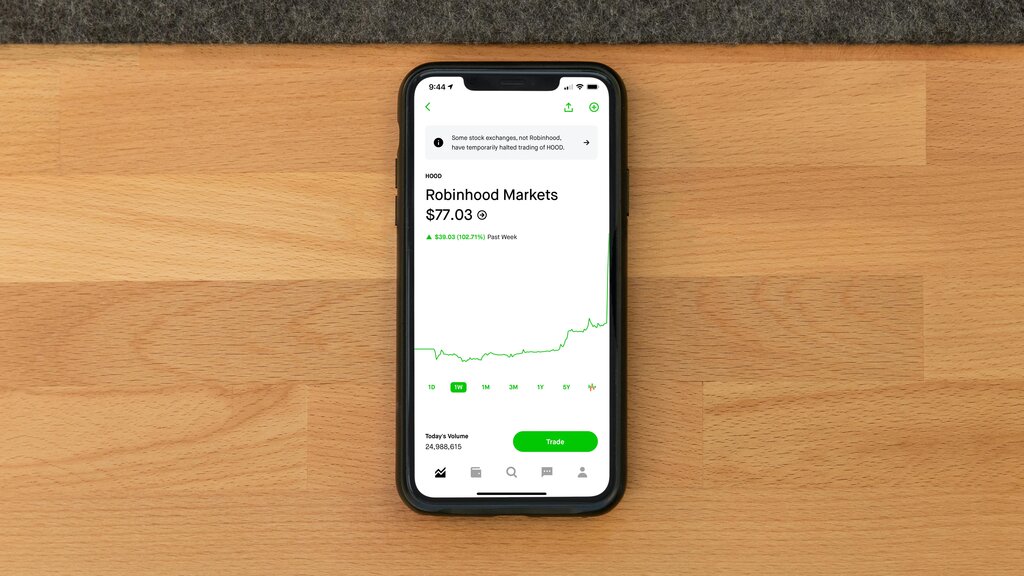
Ultimately, the best platform depends on your priorities. If you want the highest return on your cash and the most account options, Fidelity is a top choice. If you value research tools and are primarily investing in large-cap U.S. stocks, Schwab is excellent. If your main goal is a simple, mobile-first experience, Robinhood delivers that.
What is the primary advantage of being able to buy fractional shares for an investor with a small account?
Why should an investor with a small account pay attention to the interest rate on their cash sweep account?
Choosing the right broker is the first strategic decision you'll make. By focusing on these details, you set your account up for optimal growth from day one.