Smart Infrastructure and Decentralized Sustainability
Decentralized Resource Architecture
Beyond the Central Grid
Traditional utility models are straightforward: a central entity, like a municipal water department, manages the supply and distributes it to consumers. This top-down structure has worked for centuries, but it has inherent vulnerabilities. A single point of failure—a contaminated reservoir or a major pipeline break—can disrupt service for thousands.
Now, imagine a different approach: a distributed utility model. Instead of one massive source, the network consists of many small, interconnected sources. In our case, these sources are individual rainwater harvesting systems. Each home, business, or community garden with a collection tank becomes a potential supplier, not just a consumer. This is where Web3 protocols come into play, providing the trustless infrastructure needed for these independent nodes to coordinate and share resources without a central intermediary.
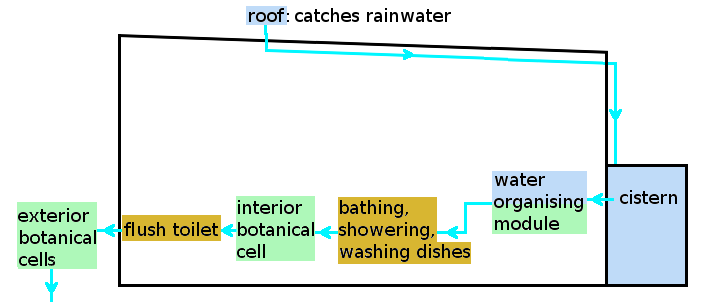
This model shifts the focus from passive consumption to active participation. Each harvesting unit is a node in a larger, resilient network. The system's strength lies in its redundancy. If one node's tank is empty, it can request water from its neighbors. If another has a surplus, it can offer it to the local grid. Smart contracts automate these exchanges, handling the measurement, transfer, and value exchange transparently on a blockchain.
Designing Resilient Infrastructure
Connecting a physical asset like a water tank to a digital ledger requires a specific node architecture. Each resource unit isn't just a barrel on a roof; it's an intelligent node equipped with sensors and a communication module.
Here’s a breakdown of a typical node:
- Physical Asset: The rainwater harvesting system itself (cisterns, filters, pumps).
- Sensor Layer: IoT devices that measure water volume, purity, and flow rate. These sensors provide the verifiable, real-world data that smart contracts need to execute.
- Control Layer: Microcontrollers that operate pumps and valves based on instructions from the network or the owner.
- Communication Layer: A secure connection to the blockchain network (e.g., via Wi-Fi or a low-power network like LoRaWAN). This layer transmits sensor data and receives instructions from smart contracts. This entire package transforms a simple water tank into a proactive component of a (DLT) network.
This setup creates a physical-to-digital bridge. The smart contract doesn't just trust a person to report their water levels; it reads data directly from the source. This enables autonomous, peer-to-peer transactions. For instance, a contract could be written to automatically purchase 50 liters of water from the nearest node with a surplus if a user's tank drops below 20% capacity. The entire process—request, validation, payment, and valve operation—occurs without human intervention.
Centralized vs. Decentralized Trade-offs
A decentralized water grid isn't a perfect solution, but a set of trade-offs. The main advantage of a centralized system is efficiency at scale. A single large-scale purification plant is typically more cost-effective per liter than hundreds of small, individual filters. Centralized management also simplifies maintenance and quality control.
However, decentralization offers unparalleled and local autonomy. A distributed grid can withstand failures that would cripple a centralized one. It also empowers communities by giving them direct control over a critical resource. Water can be managed and priced based on local supply and demand, rather than a one-size-fits-all regional rate. This is especially valuable in remote or underserved areas where centralized infrastructure is either unavailable or unreliable.
| Feature | Centralized System | Decentralized System |
|---|---|---|
| Efficiency | High (economies of scale) | Lower (redundant components) |
| Resilience | Low (single point of failure) | High (distributed network) |
| Control | Top-down, by a single utility | Bottom-up, by community/peers |
| Cost | High initial capital investment | Lower entry cost, incremental growth |
| Maintenance | Simplified, predictable | Complex, distributed responsibility |
| Flexibility | Low (rigid infrastructure) | High (adaptive and scalable) |
The optimal solution often lies in a hybrid model. A city might maintain its core centralized infrastructure for baseline needs while encouraging the development of decentralized, neighborhood-level microgrids. During normal operation, the systems work in tandem. But during an emergency, like a major drought or earthquake, the can operate independently, providing a critical layer of water security.
Now let's review what we've covered.
Ready to test your knowledge?
What is the primary vulnerability of a traditional, centralized utility model as described in the text?
In a distributed water grid, which component of a node's architecture is responsible for providing verifiable data like water volume and purity to the smart contract?
By bridging physical infrastructure with Web3 protocols, we can create resource networks that are more transparent, autonomous, and resilient than ever before.