Smart Home Organization
Understanding Smart Home Basics
What Makes a Home Smart?
A smart home is simply a home equipped with devices that can be controlled remotely. Using your smartphone, tablet, or even just your voice, you can manage everything from lights and thermostats to locks and cameras. It's about connecting everyday objects to the internet so they can work for you.
The magic happens through a simple setup: a central hub (like a smart speaker or an app on your phone), the smart devices themselves, and your home's Wi-Fi network. The hub acts as the brain, sending your commands to the right device. The Wi-Fi is the nervous system, carrying those messages instantly.
Think of it as giving your home a digital upgrade. Instead of manually flipping switches or turning dials, you gain the ability to control and automate your environment from anywhere.
More Than Just Gadgets
The real benefit of a smart home isn't just about having the latest tech. It's about reducing your mental load—the running list of small tasks and worries you carry throughout the day. Did I turn off the lights? Is the front door locked? Is the heat on too high?
Home automation takes care of these things for you. You can set schedules, create routines, and let your home manage itself. For example, you can program your lights to turn off and the thermostat to lower automatically every time you leave the house. This frees up your attention for more important things.
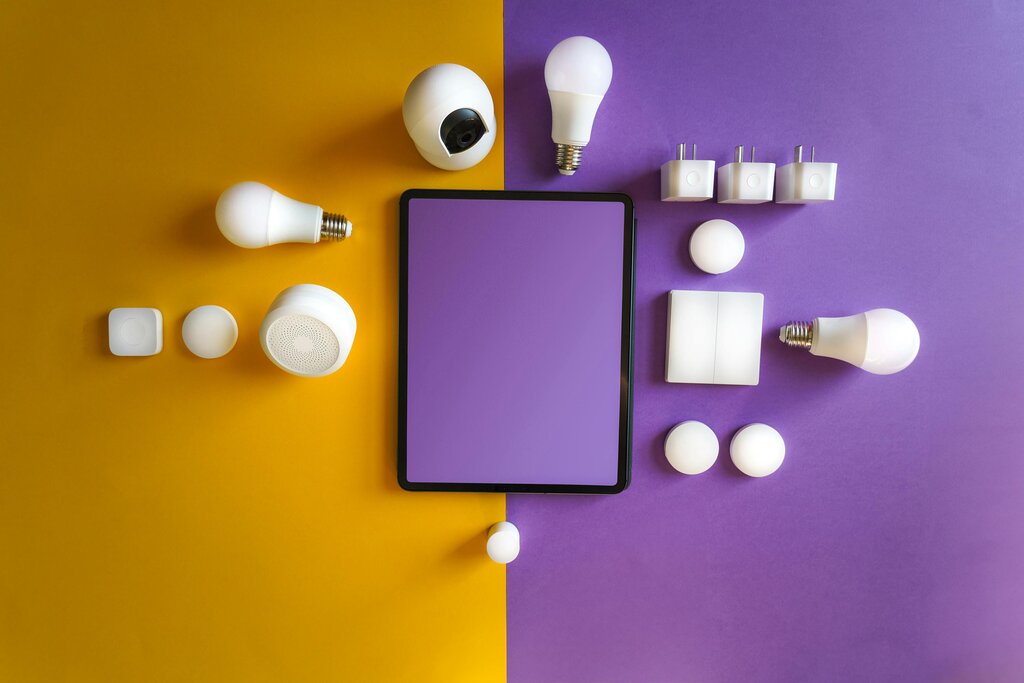
The goal of a smart home is to make life simpler and more efficient, giving you convenience and peace of mind.
Key Players in a Smart Home
While there are countless smart devices, most smart homes start with a few core components. Each one plays a specific role in creating a more organized and responsive living space.
| Device | What It Does | How It Helps Organization |
|---|---|---|
| Smart Speaker | A voice-controlled hub for your devices. | Set reminders, manage calendars, and control other devices hands-free. |
| Smart Lighting | Wi-Fi connected light bulbs. | Schedule lights to turn on/off, saving energy and creating routines. |
| Smart Plugs | Make any standard appliance smart. | Automate coffee makers, fans, or lamps with timers and remote control. |
| Smart Thermostat | Manages your home's heating and cooling. | Learns your schedule to save energy and keep you comfortable automatically. |
| Smart Lock | A keyless entry system for your door. | Grant temporary access to guests and check if your door is locked from anywhere. |
These devices form the foundation of most systems. They can work independently or together in what's known as an ecosystem. For instance, Amazon Alexa, Google Home, and Apple HomeKit are popular ecosystems that allow different devices to communicate and work in sync.
When choosing devices, it's helpful to check if they are compatible with the ecosystem you plan to use. This ensures all your gadgets can be controlled seamlessly from a single app or with a single voice command.
What is the fundamental principle that defines a smart home?
In a smart home setup, the Wi-Fi network acts as the system's _______, carrying commands from the central hub to the individual devices.
Now that you've got the basics down, you're ready to think about how these tools can help organize your own space.