Smart Home Organization for Mental Clarity
Introduction to Smart Home Organization
A Smarter, Simpler Home
When we think of home organization, we usually picture tidy closets and neatly labeled containers. It’s about managing our physical belongings. But what if we could organize the actions and routines that make up our daily lives? That’s the core idea behind smart home organization.
Instead of just arranging objects, you're arranging your environment to work for you. It's a system where technology handles repetitive tasks and decisions, freeing up your mental energy for more important things. The goal isn't just a tidy house, but a calmer mind.
Smart home organization uses technology to automate daily routines, manage your environment, and reduce the mental load of running a household.
Imagine your home as a helpful assistant. It knows when to dim the lights in the evening, adjust the temperature before you wake up, and make sure the doors are locked at night. You don't have to remember these small but constant details because the system handles them. This shift from manual to automatic significantly cuts down on daily decision-making and the nagging feeling that you've forgotten something.
How Automation Works
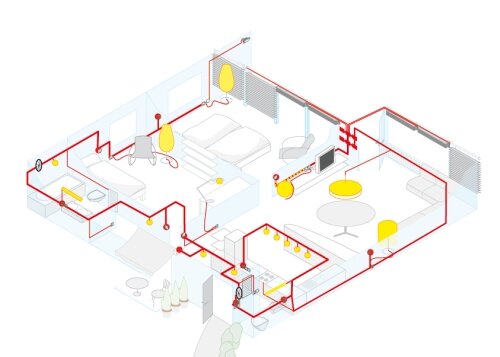
The engine behind a smart home is automation. Automation is simply setting up rules that tell your devices what to do and when to do it. These rules often follow a simple "if this, then that" logic.
For example:
- If my alarm goes off in the morning, then gradually turn on the bedroom lights and start the coffee maker.
- If I leave the house, then turn off all the lights, lower the thermostat, and lock the front door.
- If it gets dark outside, then close the blinds and turn on the porch light.
Each automated routine, or "scene," handles a series of small tasks that you would otherwise have to do yourself. When strung together, these automations create a responsive environment that adapts to your needs throughout the day.
Less Clutter, More Calm
The benefits of this approach go far beyond convenience. By automating decisions, you reduce your cognitive load—the amount of information your brain has to process at any given time. Each task your home handles for you is one less thing on your mental to-do list.
This reduction in mental clutter directly impacts well-being. A home that runs smoothly in the background creates a predictable, stable environment. This sense of order can lower stress and anxiety, creating a more peaceful living space. It’s not just about having a technologically advanced home; it’s about using that technology to support a calmer, more organized life.
Organized closets simplify daily choices, reduce decision fatigue, and create a sense of control and stability that improves overall mental well-being
Ultimately, smart home organization is a tool. It's a way to design a living space that actively helps you manage the complexities of modern life, giving you back time and mental energy.
What is the core idea behind smart home organization, as described in the text?
The rules for smart home automations often follow what simple logic?