Smart Contract Auditing Essentials
Introduction to Smart Contracts
What Are Smart Contracts?
Think of a vending machine. You put in money, select a snack, and the machine automatically gives you what you paid for. There's no negotiation, no paperwork, and no cashier. The rules are built into the machine itself.
Smart contracts are a bit like that vending machine, but for digital agreements. They are programs stored on a blockchain that automatically execute when certain conditions are met. The terms of the agreement between a buyer and a seller are written directly into lines of code.
Unlike a traditional contract that needs lawyers and notaries to enforce it, a smart contract enforces itself. The code is the final arbiter.
This code lives on a decentralized blockchain network. Once a smart contract is deployed, it's there to stay. No single person can change or delete it, which makes the agreement transparent and tamper-proof. Its main purpose is to automate the execution of an agreement so that all participants can be immediately certain of the outcome, without an intermediary's involvement or any time loss.
How They Function
So, how does this process unfold on a platform like Ethereum, which was the first blockchain to popularize smart contracts?
The process begins when developers write the contract's logic in a programming language. They define the rules, the conditions, and what should happen when those conditions are met. For example, a contract could be coded to release funds to a freelancer once a client marks a project as complete.
Once the code is ready, it’s deployed to the blockchain. It's assigned a unique address, and from that point on, it exists as a self-operating program on the network. Anyone can view it, but no one can alter it. The contract then lies dormant, waiting for someone to interact with it by sending a transaction to its address. When a transaction triggers a condition defined in the code, the contract executes automatically, just as it was programmed to do.
DAOs employ smart contracts, which are self-executing agreements coded on the blockchain.
This capability is the backbone of decentralized applications, or dApps. These are applications that run on a peer-to-peer network of computers rather than a single central server. From decentralized finance (DeFi) platforms that let you lend or borrow money without a bank, to voting systems where results are instantly verifiable and immutable, smart contracts make it all possible.
Benefits and Risks
The advantages of using smart contracts are significant. They offer a high degree of trust and transparency, since all terms and transactions are recorded on a public ledger. They are also incredibly efficient, removing the need for manual processing and the delays that come with it. By cutting out intermediaries like lawyers or brokers, they can also reduce costs substantially.
However, they aren't without challenges.
| Benefit | Risk |
|---|---|
| Automation | Code is Law |
| Contracts execute instantly without manual intervention. | Bugs or loopholes in the code are irreversible and can be exploited. |
| Transparency | Lack of Flexibility |
| All parties can see the contract's terms and transaction history. | They cannot be easily changed, even if real-world circumstances change. |
| Security | Legal Uncertainty |
| The cryptographic strength of the blockchain protects agreements from alteration. | Their enforceability in traditional legal systems is still evolving. |
The biggest risk stems from one of their greatest strengths: immutability. If there's a bug or a vulnerability in the smart contract's code, it can't be patched or fixed after deployment. Attackers can exploit these flaws to drain funds or disrupt the application, and because the transactions are irreversible, there's often no way to recover the losses.
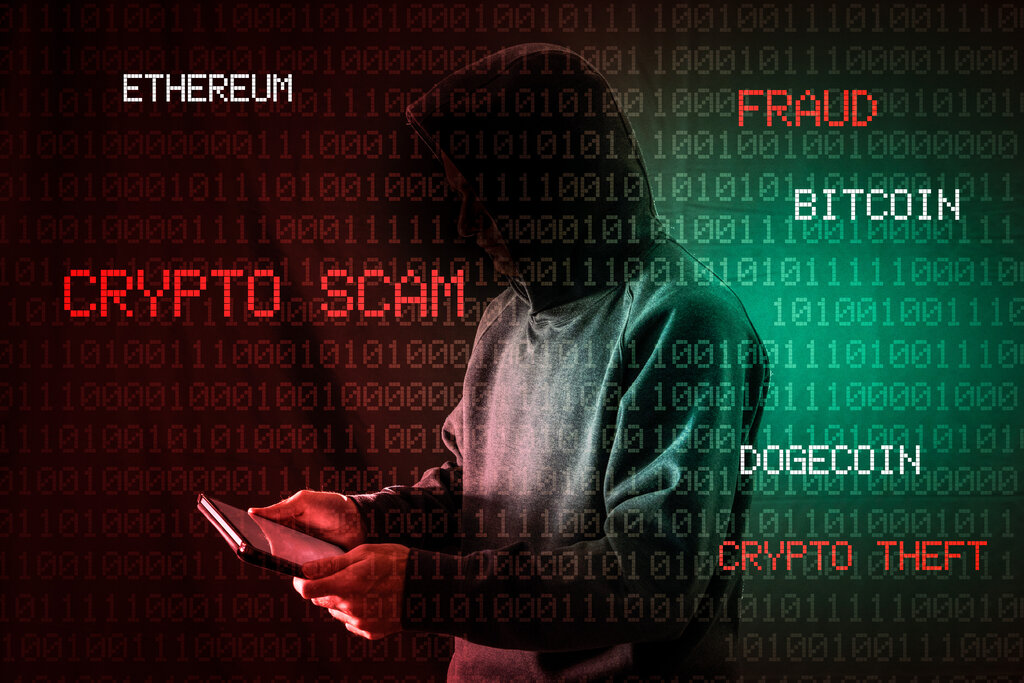
Furthermore, because they are just code, smart contracts can't interpret ambiguity or intent the way a human judge can. They execute exactly what they are told to do, which means the code must be written with extreme care to account for every possible scenario.
Let's test your understanding of these core concepts.
What is the primary function of a smart contract?
Once a smart contract is deployed on a blockchain, developers can easily patch it to fix bugs or vulnerabilities.
Smart contracts represent a fundamental shift in how we can form and enforce agreements in a digital world. While challenges remain, their ability to automate trust and create transparent systems is a cornerstone of blockchain technology.