Small Warehouse Management Essentials
Warehouse Setup
Laying Out Your Space
The foundation of an efficient warehouse isn’t the technology or the inventory; it’s the floor plan. A thoughtful layout creates a natural flow for goods, from the moment they arrive to the moment they leave. The goal is to minimize the steps your team takes and make every process intuitive.
Most warehouses, regardless of size, have four key areas: receiving, storage, packing and shipping, and an office space. The trick is to arrange them logically. A U-shaped workflow is one of the most effective and popular designs. Goods come in one door, move through the storage area, get prepared for shipment, and go out another door on the same side of the building.
This setup keeps the receiving and shipping docks separate to avoid congestion but close enough for staff to move between them easily. High-turnover items are stored closer to the shipping area, while slower-moving goods can be placed further back. The path from receiving, to storage, to shipping is clear and unobstructed.
Choosing the Right Shelving
Once you have a layout, it's time to choose your storage hardware. The right shelving makes the most of your vertical space and keeps products safe and accessible. For a small warehouse, you'll likely need a mix of solutions.
| Storage Type | Best For | Key Feature |
|---|---|---|
| Pallet Racking | Bulk goods, heavy items | Stores large quantities on pallets. |
| Industrial Shelving | Loose boxes, individual items | Highly versatile and adjustable. |
| Bins and Totes | Small parts, granular items | Organizes small pieces neatly. |
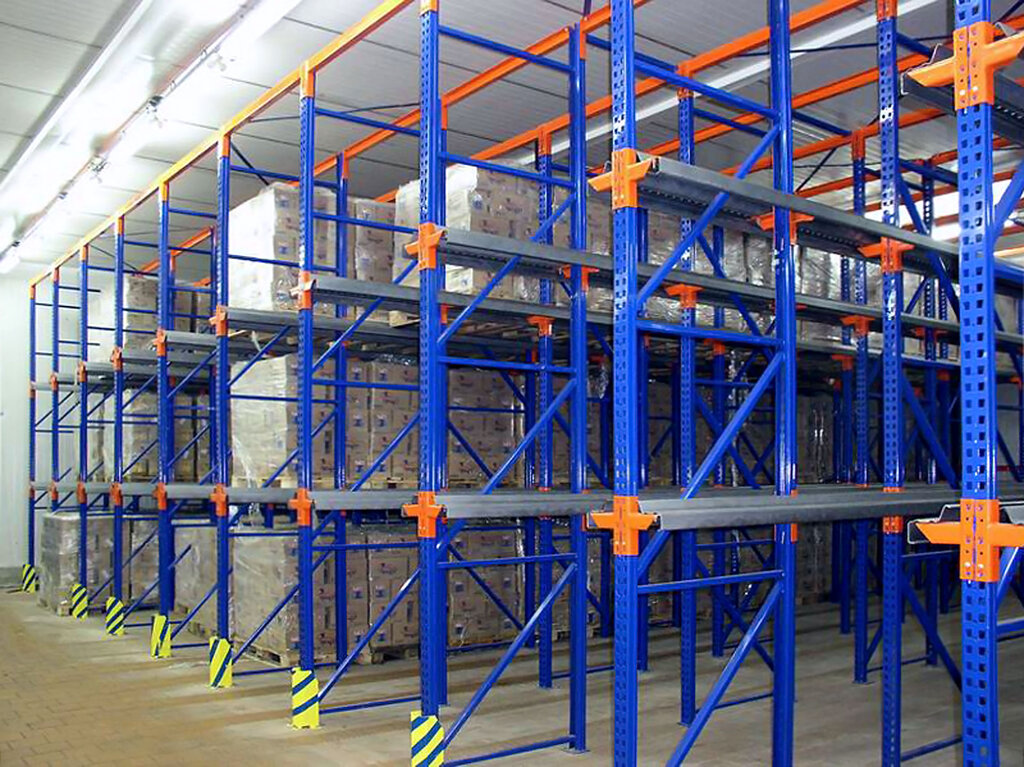
Most warehouses use a combination of these. Pallet racks are the workhorses for bulk inventory. They line the main aisles and hold goods that arrive on pallets. Industrial shelving units are better for items that need to be picked by hand, often called “each-picking.” These are typically placed in a dedicated zone for easier access.
For tiny components like nuts, bolts, or electronic parts, plastic bins are indispensable. They can be placed on shelves or specialized racks, keeping small but critical inventory from getting lost.
A Place for Everything
An organized layout and the right shelving are useless if you can't find anything. A clear, consistent labeling system is the final piece of the puzzle. It directs your team to the exact location of any item, saving time and preventing errors.
A common and effective method is to create a coordinate-style location name for every spot in your warehouse.
The system breaks down a location into Aisle, Bay (or Section), Level, and Position. For example, a label reading A01-03-B-2 would mean Aisle 1, Bay 3, Level B (second from the bottom), and Position 2 (second from the left).
This alphanumeric code is easy to understand and scalable. Every aisle gets a number, every vertical section of shelving gets a number, and every shelf level gets a letter (starting with A at the bottom). If a shelf holds multiple items, each spot gets a number.
Make sure your labels are large, clear, and durable. Use barcodes alongside the human-readable text to prepare for future systems you might adopt. Placing signs at the end of each aisle helps staff navigate quickly, turning your warehouse from a confusing maze into a logical grid.
What is the most fundamental element for creating an efficient warehouse?
What is a primary advantage of implementing a U-shaped workflow?
With these fundamentals in place, your warehouse will have a solid operational core. A good layout, appropriate storage, and clear labels work together to create an efficient and organized environment.