Small Scale Gold Mining Impacts and Solutions
Introduction to Small-Scale Gold Mining
The World of Small-Scale Mining
When you picture gold mining, you might imagine massive, open-pit mines with heavy machinery and corporate logos. But that's only one side of the story. A huge amount of the world's gold comes from small-scale gold mining (SSGM), also known as artisanal mining. This is mining done by individuals, families, or small groups using simple tools and a lot of manual labor.
Think of it this way: large-scale mining is like a giant industrial farm, while SSGM is more like a local community garden. It's less mechanized, operates on a much smaller plot of land, and is often informal or unregulated. The focus is on extracting gold from surface-level deposits, often in rivers or streams, rather than digging deep into the earth.
Artisanal
adjective
Relating to or characteristic of an artisan; made in a traditional or non-mechanized way.
Globally, an estimated 40 million people work in artisanal and small-scale mining, with about 15-20 million of them focused specifically on gold. It’s most common in developing countries across Africa, Asia, and South America, where it can be a vital, if precarious, source of income.
For many communities, SSGM is a primary livelihood. It offers a path out of poverty where other options are scarce, allowing people to feed their families and send their children to school. This economic engine, however informal, supports entire local economies.
Finding Gold by Hand
The methods used in SSGM are often basic and have been used for centuries. The goal is always the same: separate the heavy gold particles from the much lighter sand, silt, and rock. Gold is extremely dense—about 19 times heavier than water—which makes these simple techniques effective.
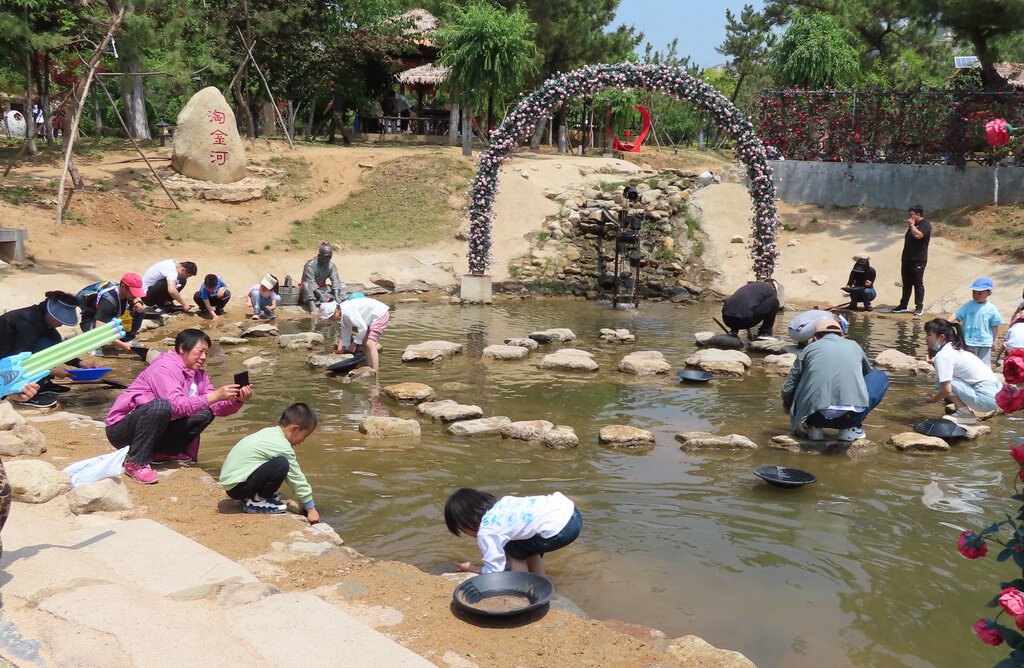
The most iconic method is panning. A miner scoops up sediment and water into a wide, shallow pan. By swirling the pan, the lighter materials like sand and gravel wash over the side, leaving the heavier gold flakes and nuggets behind.
Panning is simple but requires skill. Too much swirling, and you lose the gold. Too little, and you're left with a pan full of mud.
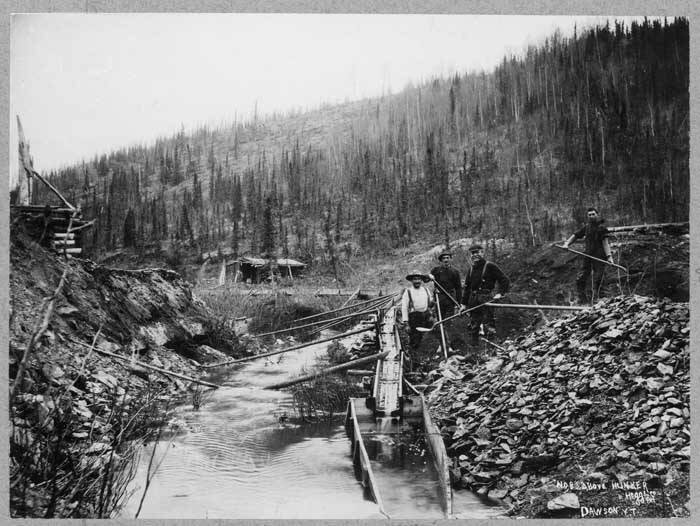
For a slightly larger operation, miners use a sluice box. This is a long, sloping trough with riffles—small barriers—along the bottom. Miners shovel gold-bearing sediment into the top of the box, and a constant flow of water washes the material down the slope. The lighter sand and gravel are carried away by the water, while the heavy gold gets trapped behind the riffles.
Sluice boxes allow miners to process much more material than they could with a pan alone, increasing their chances of finding gold.
To extract very fine, almost invisible gold particles from crushed ore, some miners turn to a more complex method involving mercury. Mercury is a liquid metal that binds with gold to form a mixture called an amalgam. Miners mix liquid mercury with gold-bearing sediment or crushed ore. The mercury sticks to the gold but not to the rock.
Later, the amalgam is heated. The mercury evaporates as a vapor, leaving behind the purified gold. While effective for capturing tiny gold particles, this process is dangerous and sets the stage for significant health and environmental challenges.
Now, test your understanding of these fundamental concepts in small-scale mining.
What is a primary characteristic that distinguishes small-scale gold mining (SSGM) from large-scale mining?
The technique of gold panning effectively separates gold from sand and gravel primarily because of which physical property?
These basic methods form the foundation of small-scale gold mining around the world. While simple in principle, they are the starting point for a complex industry that impacts millions of lives.