Small Modular Reactors Explained
Introduction to Nuclear Energy
From Theory to Power
The story of nuclear energy begins with a simple question: what is the world made of? For centuries, we thought atoms were the smallest, indivisible pieces of matter. But in the late 19th and early 20th centuries, scientists like Marie Curie and Ernest Rutherford discovered that atoms had an inner structure and that some were naturally unstable, emitting energy in a process called radioactivity.
The real breakthrough came from Albert Einstein's famous equation, . It suggested that a tiny amount of mass could be converted into a tremendous amount of energy. This was no longer just a theoretical idea. In 1938, physicists Lise Meitner and Otto Frisch, interpreting experiments by Otto Hahn, realized that a uranium atom could be split in two, releasing a fraction of its mass as energy. They called this process “fission.”
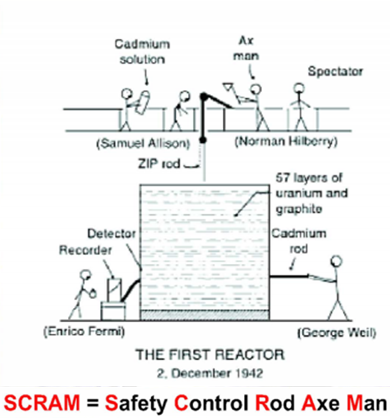
This discovery kicked off a race to harness this power. On December 2, 1942, a team led by Enrico Fermi achieved the first self-sustaining nuclear chain reaction in a makeshift reactor built under the stands of a football stadium at the University of Chicago. After World War II, the focus shifted from weapons to peaceful energy production, leading to the development of the first commercial nuclear power plants in the 1950s.
Splitting the Atom
Nuclear fission is the engine of a nuclear reactor. It all starts with a specific type of uranium, called Uranium-235 (). Its atomic nucleus is large and barely stable. When a slow-moving particle called a neutron strikes a nucleus, the nucleus absorbs it, becomes highly unstable, and splits apart into two smaller nuclei, known as fission fragments.
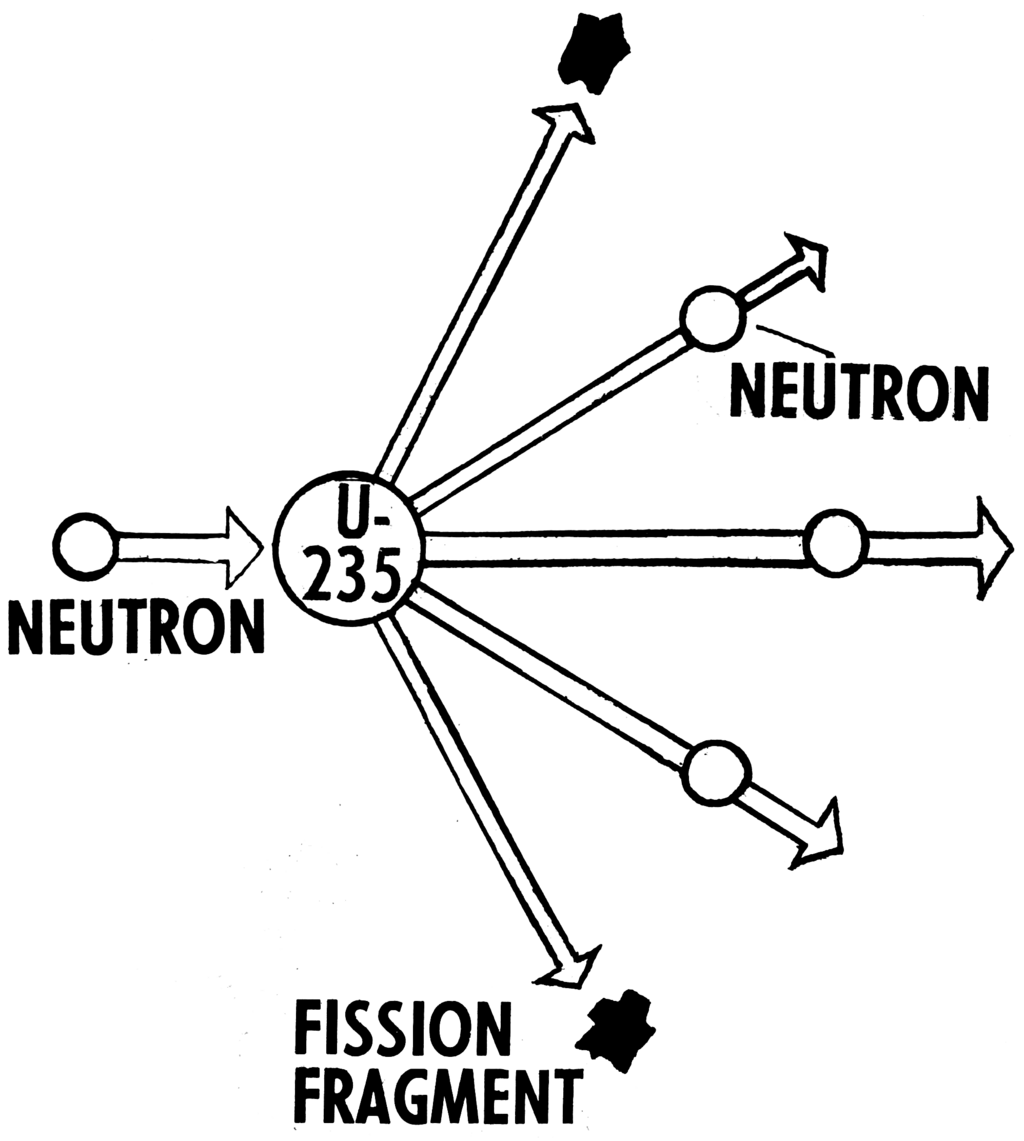
This splitting isn't clean. It releases a massive burst of energy, mostly in the form of heat, along with two or three more neutrons. These newly released neutrons can then fly off and strike other nuclei, causing them to split and release more energy and more neutrons. This process is called a chain reaction. In a nuclear reactor, this reaction is carefully controlled to produce heat at a steady rate.
The energy released from fission is immense. Splitting a single uranium atom releases about 200 million times more energy than burning a single carbon atom from coal.
How a Reactor Works
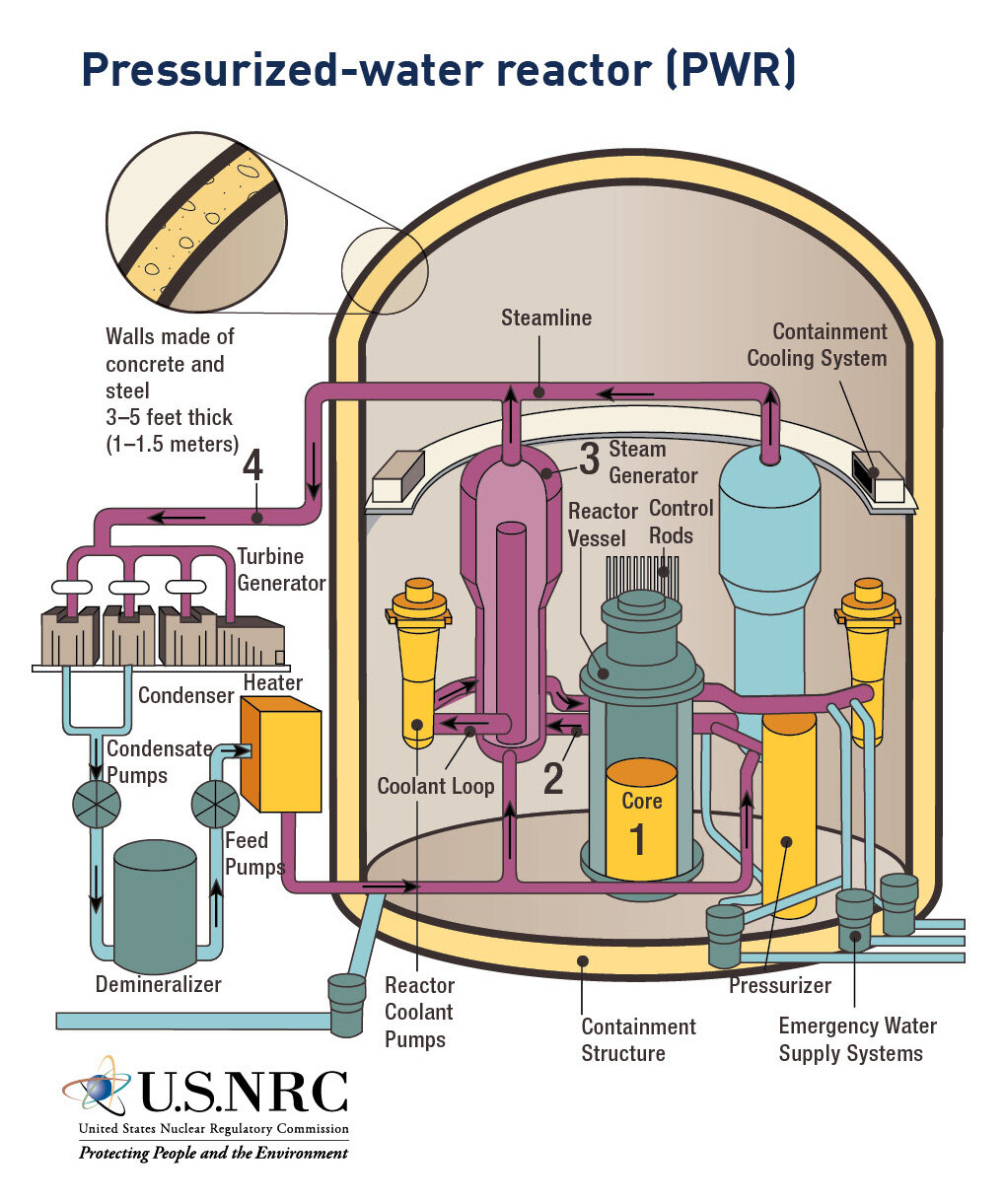
A nuclear power plant is essentially a sophisticated steam engine. Instead of burning fossil fuels to create heat, it uses a controlled nuclear fission chain reaction. The core of the plant is the reactor, a large, strong steel vessel containing fuel rods, control rods, and a coolant.
- Fuel Rods: These are long metal tubes containing small pellets of uranium fuel. This is where fission occurs.
- Control Rods: Made of materials that absorb neutrons (like boron or cadmium), these rods can be raised or lowered into the reactor core. Lowering them absorbs more neutrons and slows the chain reaction; raising them speeds it up. This is the primary way operators control the reactor's power output.
- Coolant: A fluid, usually water, is pumped through the reactor core. It absorbs the intense heat generated by fission and carries it away from the core.
The superheated coolant then travels to a steam generator. There, it heats a separate loop of water, turning it into high-pressure steam. This steam spins a turbine, which is connected to a generator that produces electricity. It's the same principle used in coal or natural gas plants, but with a different heat source.
Benefits and Challenges
Nuclear power holds a unique place in the global energy landscape. Its biggest advantage is its ability to produce huge amounts of electricity from a small amount of fuel, without releasing greenhouse gases like carbon dioxide. A single uranium fuel pellet, about the size of a gummy bear, can produce as much energy as a ton of coal. This makes it a powerful tool in the fight against climate change.
Nuclear plants also provide what's known as baseload power. Unlike solar or wind, which depend on the weather, nuclear reactors can run continuously for months or even years at a time, providing a reliable and stable source of electricity to power homes and industries around the clock.
The consistent, reliable electricity from nuclear power is crucial for maintaining a stable electrical grid.
However, nuclear power is not without its challenges. The primary concern is safety. Though rare, accidents like those at Chernobyl and Fukushima have shown the devastating potential consequences of a reactor failure. This has led to extremely strict safety regulations and complex, expensive designs for modern plants.
Another significant challenge is managing nuclear waste. The used fuel rods from a reactor are highly radioactive and remain dangerous for thousands of years. This long-term waste must be stored securely in specialized facilities, and finding permanent geological repositories for it has proven to be a difficult political and technical problem.
Finally, building a traditional nuclear power plant is an enormous undertaking. They are incredibly expensive and can take a decade or more to construct, which can make them a difficult investment compared to other energy sources.
Now, let's test your understanding of these core concepts.
What is the primary function of control rods in a nuclear reactor?
According to the text, who were the scientists who first realized a uranium atom could be split and named the process “fission”?
Nuclear energy is a complex topic with a long history, blending incredible scientific achievement with serious practical challenges. Understanding these fundamentals is the first step to appreciating its role in our energy future.