Small Modular Nuclear Reactors Explained
Introduction to Nuclear Energy
Energy from the Atom
Everything around us is made of tiny particles called atoms. At the center of every atom is a nucleus, which is incredibly dense and packed with energy. In the early 20th century, Albert Einstein developed his famous equation, . It revealed that mass and energy are two sides of the same coin. A tiny amount of mass could be converted into a tremendous amount of energy.
Nucleus
noun
The positively charged central core of an atom, consisting of protons and neutrons and containing nearly all its mass.
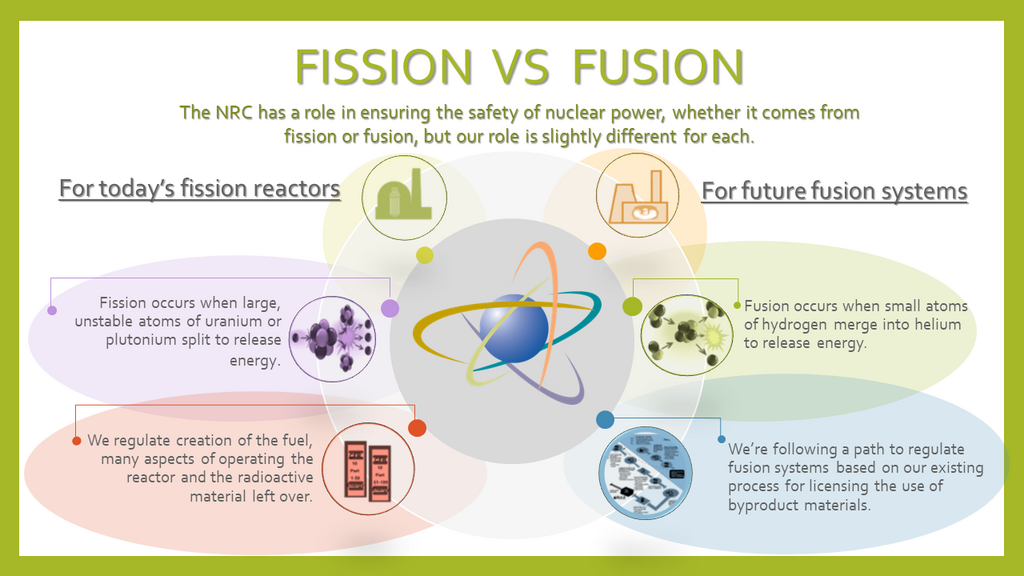
Scientists figured out how to unlock this energy in two ways: fusion and fission. Fusion involves combining light atomic nuclei, which is what powers the sun. Fission involves splitting a heavy, unstable nucleus into two smaller ones. Modern nuclear power plants all use fission to generate power.
A Chain Reaction
The key to nuclear fission is finding the right kind of atom. Uranium-235 is a great candidate because its nucleus is large and wobbly. It’s naturally unstable. All it needs is a little push to break apart.
That push comes from a tiny particle called a neutron. When a neutron strikes a uranium-235 nucleus, the nucleus absorbs it, becomes highly unstable, and splits. This split releases a huge burst of energy, along with two or three more neutrons.
This is where it gets interesting. Those newly released neutrons can now fly off and strike other uranium-235 atoms, causing them to split as well. Each of those splits releases more neutrons, which cause more splits. This creates a self-sustaining chain reaction, releasing a steady and controllable amount of energy.
Powering a City
A nuclear reactor is a machine designed to safely contain and control this chain reaction. The immense energy released by fission heats up the reactor's core. A coolant, usually water, is pumped through the core to absorb this heat.
That superheated water is then used to boil another body of water, turning it into high-pressure steam. This process is very similar to how a coal or gas plant works. The steam is channeled to a large turbine, causing it to spin at high speed.
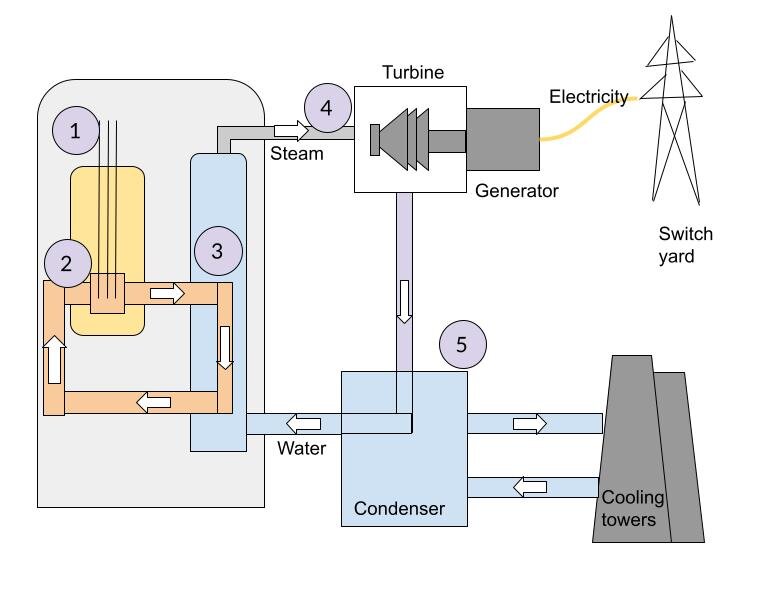
The spinning turbine is connected to a generator, which converts mechanical energy into electrical energy. From there, the electricity is sent out over transmission lines to power homes and businesses. The steam is then cooled back into water and cycled through the system again.
A Brief History
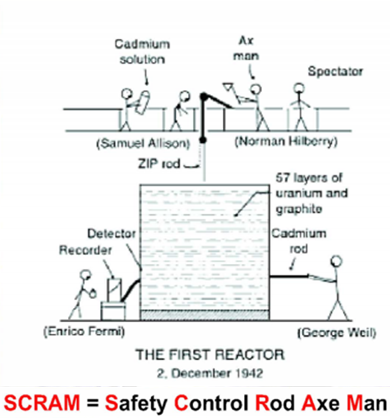
The idea of nuclear energy moved from theory to reality in the 1940s. In 1942, a team led by physicist Enrico Fermi achieved the first self-sustaining nuclear chain reaction at the University of Chicago. Their reactor, called Chicago Pile-1, was built in secret under the university's football stands as part of the Manhattan Project.
After World War II, the focus shifted to peaceful applications of nuclear energy. The United States launched the first nuclear-powered submarine, the USS Nautilus, in 1954. The world's first commercial nuclear power station to generate electricity for a public grid began operating in Obninsk, Soviet Union, that same year. In the following decades, countries around the world began building nuclear power plants to provide clean, reliable electricity for their growing populations.
Today, nuclear power provides about 10% of the world's electricity from over 400 reactors.
Now that you understand the fundamentals, let's test your knowledge.
What does Albert Einstein's famous equation, , reveal about the relationship between mass and energy?
Modern nuclear power plants generate electricity by splitting heavy atomic nuclei. What is this process called?
This foundational technology, born from our understanding of the atom, has been powering parts of the world for over 70 years.