Small Modular Nuclear Reactors Explained
Introduction to Nuclear Energy
The Heart of the Atom
Everything around us is made of atoms. At the center of every atom is a tiny, dense core called a nucleus. This nucleus holds an incredible amount of energy. Nuclear energy is all about unlocking that power.
The main way we do this is through a process called nuclear fission. Imagine trying to split a single, oversized log with an axe. When you finally break it, the pieces fly apart with a burst of energy. Fission is similar, but on an atomic scale.
fission
noun
The process of splitting a large atomic nucleus into smaller ones, releasing a substantial amount of energy.
In a nuclear reactor, we don't use an axe. Instead, we fire a tiny particle called a neutron at a large, unstable atom, usually an isotope of uranium called Uranium-235 (U). When the neutron hits the uranium nucleus, the nucleus splits into two smaller atoms. This split releases a huge amount of energy as heat, along with two or three more neutrons.
Those newly released neutrons can then fly off and hit other uranium atoms, causing them to split, too. This creates a self-sustaining chain reaction, like a series of dominoes falling one after another. Controlling this chain reaction is the key to harnessing nuclear power safely.
From Theory to Reality
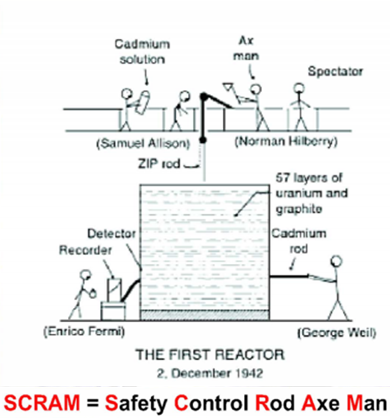
The idea of splitting atoms was a breakthrough in physics in the early 20th century. But it wasn't until 1942 that the first self-sustaining nuclear chain reaction was achieved. In a squash court under the stands of a football stadium at the University of Chicago, a team led by physicist Enrico Fermi built the world's first nuclear reactor, called Chicago Pile-1.
It was a simple pile of graphite blocks and uranium fuel. The experiment proved that a controlled chain reaction was possible, paving the way for all future nuclear technology.
After World War II, the focus shifted toward using this powerful new technology for peaceful purposes. President Eisenhower's "Atoms for Peace" speech in 1953 launched a global effort to develop nuclear energy for electricity generation. The first commercial nuclear power plant came online in the mid-1950s, and hundreds more were built around the world in the following decades.
Inside a Nuclear Power Plant
A nuclear power plant is essentially a high-tech steam engine. It uses the heat from a controlled nuclear fission reaction to produce electricity. While designs vary, the basic principle is the same.
The process starts in the reactor core, which contains thousands of long, thin fuel rods filled with small pellets of uranium. The chain reaction happens here, generating an immense amount of heat. Control rods, made of materials that absorb neutrons, can be raised or lowered between the fuel rods to speed up, slow down, or stop the reaction.
This heat is used to boil water and create high-pressure steam. The steam is then piped out of the reactor to spin a large fan-like object called a turbine. The spinning turbine is connected to a generator, which produces electricity.
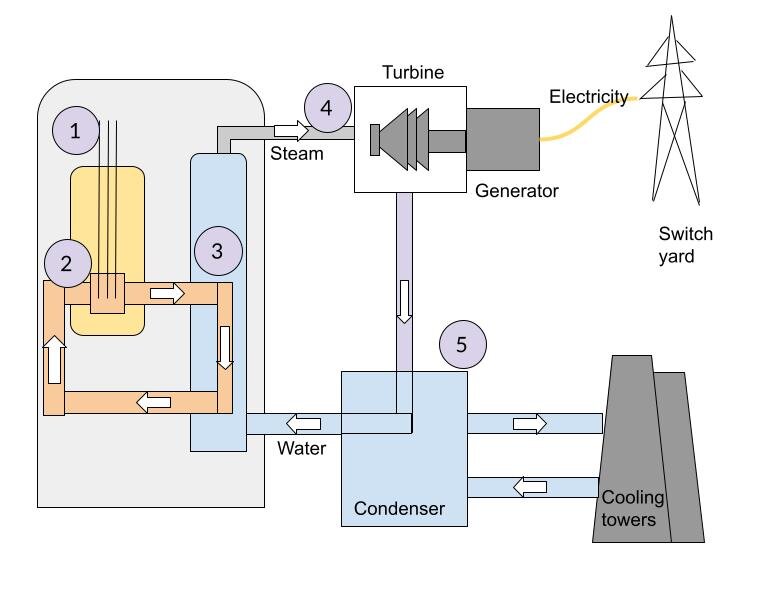
Most of the world's traditional reactors are light-water reactors, which use normal water as both a coolant (to carry heat away from the core) and a moderator (to slow down neutrons so they can cause fission more efficiently).
There are two main types:
-
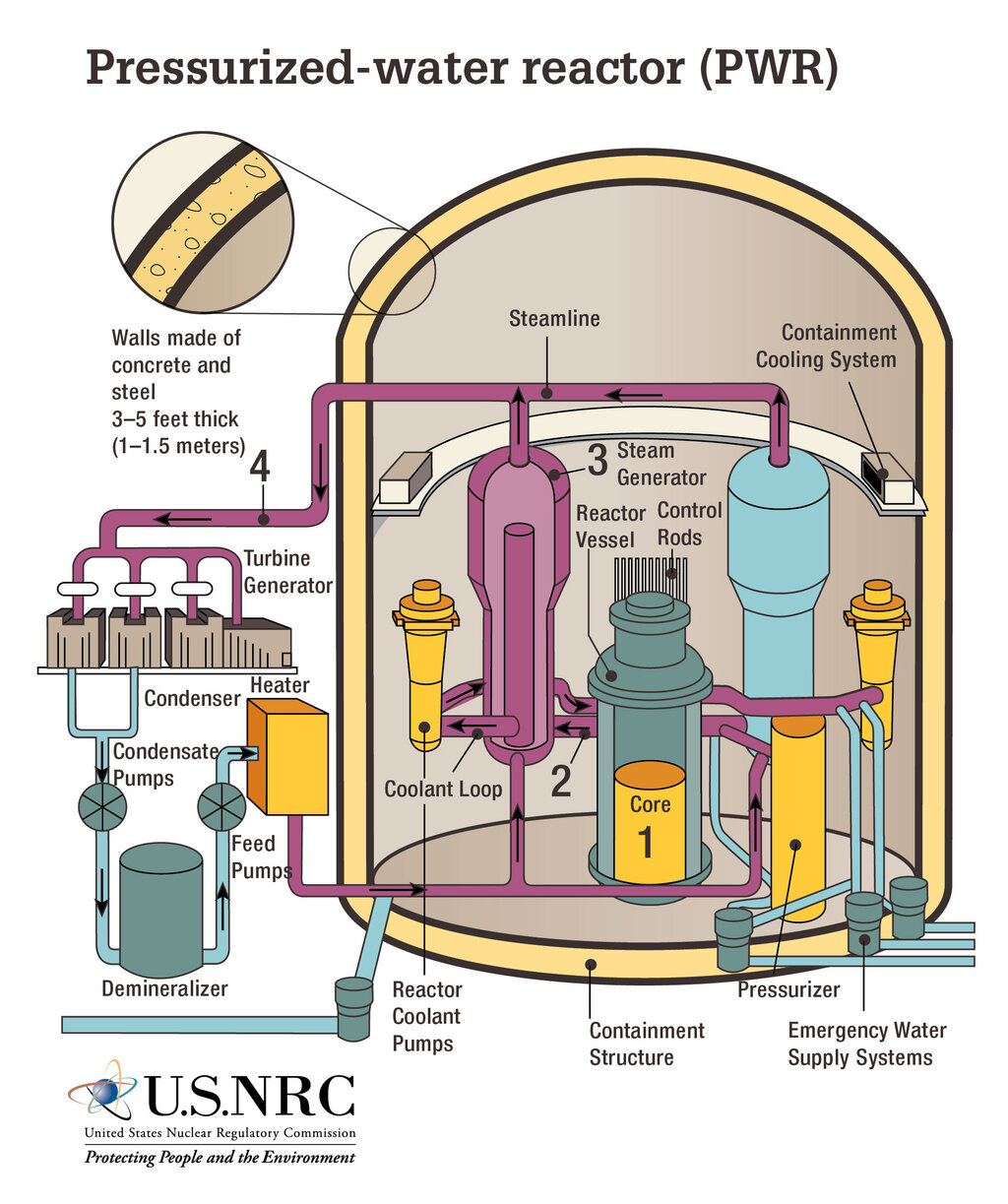
Pressurized Water Reactors (PWRs): The water heated by the core is kept under very high pressure to prevent it from boiling. This superheated water flows through tubes in a separate device called a steam generator, where it boils a separate loop of water to create steam for the turbine. The water from the reactor core never touches the turbine.
-
Boiling Water Reactors (BWRs): The water heated by the core is allowed to boil directly inside the reactor vessel. The steam it produces is sent straight to the turbine to generate electricity.
Weighing the Pros and Cons
Like any major energy source, nuclear power has a distinct set of benefits and challenges that have shaped public debate for decades.
| Benefits | Challenges |
|---|---|
| Low Carbon Emissions: Nuclear plants produce almost no greenhouse gases during operation. | Nuclear Waste: Fission creates radioactive byproducts that must be safely stored for thousands of years. |
| High Power Output: A single plant can generate a huge amount of electricity reliably, 24/7. | Safety Concerns: Though rare, accidents like Chernobyl and Fukushima have had severe consequences. |
| Small Land Footprint: Nuclear facilities require much less land than solar or wind farms to produce the same amount of power. | High Upfront Costs: Building a large nuclear power plant is extremely expensive and takes many years. |
| Fuel Efficiency: A small amount of uranium fuel can produce a massive amount of energy. | Security Risks: The materials used in nuclear power could be targets for terrorism or proliferation. |
These factors create a complex picture. Nuclear energy offers a powerful tool for generating clean, reliable electricity, but it also demands rigorous safety protocols, long-term waste management solutions, and significant financial investment. Understanding this foundation is key to appreciating how and why nuclear technology continues to evolve.
Ready to check your understanding? Let's see what you've learned about the fundamentals of nuclear energy.
What is the primary process used in nuclear power plants to generate heat?
In a nuclear reactor, what is the main purpose of control rods?
You now have a solid grasp of how traditional nuclear energy works, from the atomic level up to the global energy grid. This background sets the stage for exploring the next generation of nuclear technology.