Small Intestine Motility Explained
Small Intestine Anatomy
The Small Intestine
The small intestine is the powerhouse of digestion. It's a long, coiled tube, stretching about 20 feet in the average adult, where most of the chemical digestion and nutrient absorption takes place. After food is partially broken down into a semi-liquid substance called chyme in the stomach, it enters the small intestine to be processed further.
The small intestine isn't one uniform tube. It's divided into three distinct segments, each with a specific job: the duodenum, the jejunum, and the ileum.
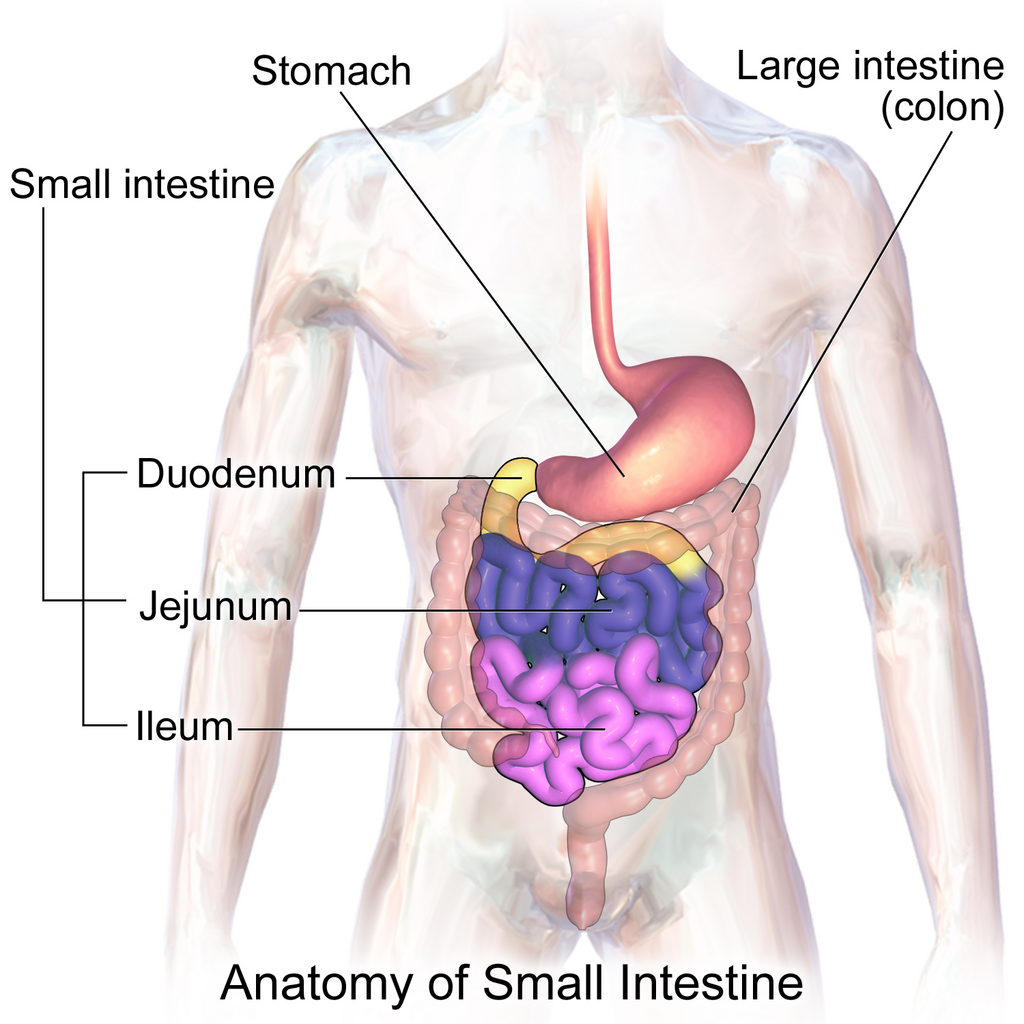
The Three Segments
The journey through the small intestine begins in the duodenum. This first section is the shortest, only about 10-15 inches long, and forms a C-shape that wraps around the head of the pancreas. Its main role is to mix the chyme from the stomach with bile from the gallbladder and digestive juices from the pancreas. A unique feature of the duodenum is the presence of Brunner's glands in its wall, which secrete an alkaline mucus to help neutralize the strong acid from the stomach.
Next up is the jejunum, the middle section, which measures around 8 feet long. If the duodenum is the mixing bowl, the jejunum is the absorption factory. Its inner wall is covered in large, circular folds and long, finger-like projections called villi. These features dramatically increase the surface area available for absorbing sugars, amino acids, and fatty acids into the bloodstream.
Finally, the chyme moves into the ileum, the longest and final segment, which is about 12 feet long. The ileum's wall is thinner and has fewer folds and villi than the jejunum. Its specialized role is to absorb vitamin B12 and bile salts, which are then recycled back to the liver. The ileum also contains prominent clusters of immune tissue known as Peyer's patches, which monitor intestinal bacteria and prevent the growth of harmful pathogens.
The Intestinal Wall
Regardless of the segment, the wall of the small intestine is made of the same four layers. Each layer has a specific function that contributes to the overall process of digestion and absorption.
-
Mucosa: This is the innermost layer, and it's in direct contact with the digested food. It's the star of absorption and secretion. The mucosa itself has three sub-layers: an epithelium that absorbs nutrients, a lamina propria (connective tissue with blood and lymph vessels), and a thin layer of smooth muscle called the muscularis mucosae.
-
Submucosa: Found just outside the mucosa, this layer is a thick band of connective tissue. It contains larger blood vessels, lymphatic vessels, and nerves. It supports the mucosa and connects it to the muscular layer below. In the duodenum, this layer also houses the Brunner's glands.
-
Muscularis Externa: This is the main muscle layer responsible for moving food through the intestine. It consists of two layers of smooth muscle: an inner circular layer and an outer longitudinal layer. Their coordinated contractions create the wave-like motions that propel chyme forward.
-
Serosa: The outermost layer is a thin, smooth membrane that covers the surface of the small intestine. It secretes a watery fluid that lubricates the intestine, allowing it to slide freely against other abdominal organs without friction.
The small intestine digests food further and absorbs nutrients.
Each segment and every layer of the small intestine is finely tuned for its purpose. Understanding this complex anatomy helps explain how our bodies so efficiently extract the vital nutrients from the food we eat.
Let's review what you've learned about the anatomy of the small intestine.
What is the primary role of the jejunum, the middle section of the small intestine?
Which layer of the small intestine wall is responsible for the wave-like muscle contractions that move food forward?
The structure of the small intestine is a perfect example of how anatomy is directly related to function, with each part playing a critical role in the complex process of digestion.