Sleep Science and Physiology
Neurochemical Sleep Regulation
The Brain’s Sleep Switch
Your daily rhythm of sleep and wakefulness feels automatic, but it’s orchestrated by a complex chemical ballet inside your brain. Beyond the 24-hour circadian clock, a second system acts like a timer, building up 'sleep pressure' the longer you’re awake. This system is driven by a molecule called adenosine.
Throughout the day, your neurons fire, consuming energy. This energy comes from a molecule called Adenosine Triphosphate (ATP). As ATP is used, it breaks down, and one of the byproducts is adenosine. This adenosine slowly accumulates in the spaces between your brain cells. It then binds to specific receptors, primarily the A1 and A2A receptors, on neurons in wake-promoting areas like the basal forebrain. This binding action has an inhibitory effect, essentially telling these 'on' cells to quiet down. The more adenosine that builds up, the stronger the signal for sleep becomes—this is the homeostatic sleep drive.
Think of it like a sand timer. When you wake up, the timer is flipped. As sand (adenosine) collects at the bottom, the pressure to flip it back over (go to sleep) grows.
Flipping the Switch
As adenosine pressure mounts, the brain doesn’t just drift into sleep; it flips a switch. This is where the primary inhibitory neurotransmitter, gamma-aminobutyric acid (GABA), takes center stage. Specific clusters of neurons, particularly in the ventrolateral preoptic nucleus (VLPO) of the hypothalamus, are activated by high adenosine levels. These VLPO neurons are GABAergic, meaning they release to inhibit other neurons.
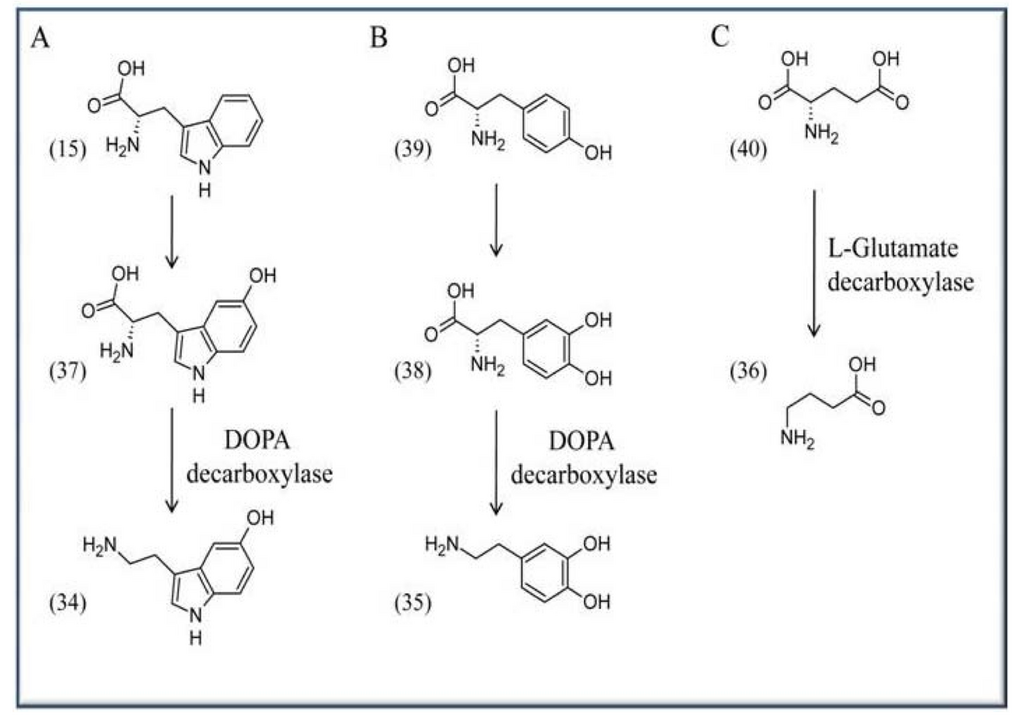
The main target of these GABA signals is the brain’s arousal network, a collection of brainstem and hypothalamic areas often called the ascending reticular activating system (ARAS). The ARAS includes regions that produce wake-promoting neurotransmitters like norepinephrine, serotonin, and histamine. By releasing GABA, the VLPO effectively silences this arousal system, pushing the brain into a state of sleep.
This mechanism is known as the hypothalamic 'flip-flop switch'. The sleep-promoting VLPO and the wake-promoting ARAS mutually inhibit each other. This ensures a rapid and complete transition between states, preventing a groggy, in-between feeling. When one system is active, it strongly suppresses the other, creating stability.
Stabilising Wakefulness
However, a simple flip-flop switch can be unstable. A small nudge could flip it unexpectedly. To prevent this, the brain has a stabiliser for the 'wake' state: a neuropeptide called (also known as hypocretin). Orexin-producing neurons are located in the lateral hypothalamus and provide excitatory input to the entire ARAS. They act like a finger holding the 'wake' side of the switch firmly in the 'on' position.
Orexin neurons are active during wakefulness and quiet during sleep. They are inhibited by the VLPO's GABA signals but also receive input from the circadian system and metabolic cues. This ensures you stay awake and alert throughout the day, even when minor sleep pressure builds up.
The transitions between sleep stages, particularly from NREM to REM sleep, involve another flip-flop switch. During NREM sleep, the brain is dominated by GABAergic inhibition from the VLPO. To enter REM, a switch occurs in the brainstem. GABAergic neurons in an area called the ventrolateral periaqueductal gray (vlPAG) are turned off, which in turn 'releases the brakes' on REM-promoting neurons in the pons. This REM-on activity then excites neurons that paralyze the body’s muscles and generates the characteristic brain waves and rapid eye movements of REM sleep.
This sleep-wake cycle promotes alertness during the day and promotes sleep at night through chemical signals.
What is the primary molecule that builds up the longer you are awake, creating 'sleep pressure'?
The hypothalamic 'flip-flop switch' describes the mutually inhibitory relationship between which two brain regions?
Understanding this intricate chemical dance reveals how sleep is not a passive state, but an actively controlled process essential for brain function.