Skin and Hair Care Formulation Basics
Skin and Hair Anatomy
Your Skin's Three Layers
Your skin is much more than a simple covering. It's your body's largest organ, a complex system working tirelessly. To understand how skin care products work, you first need to know its structure. It's organized into three main layers, each with a specific job.
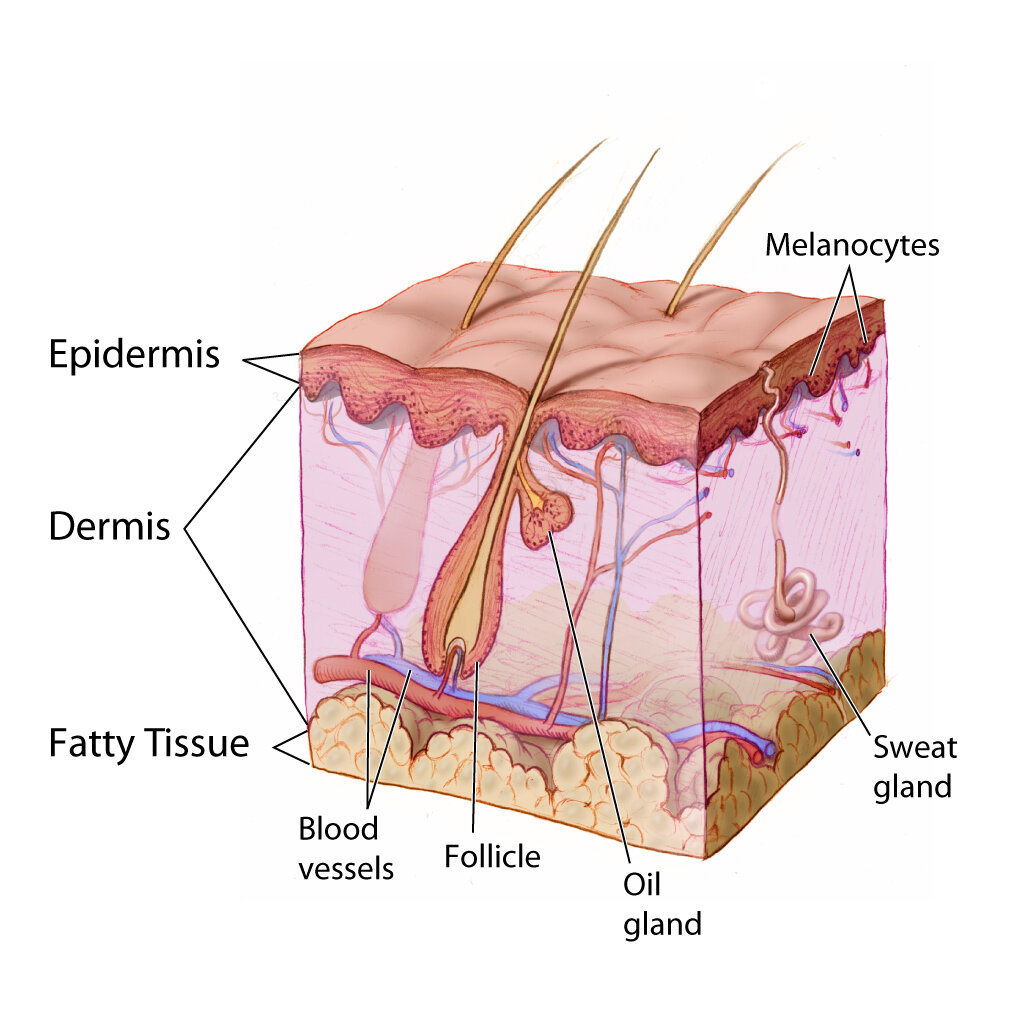
The outermost layer is the epidermis. Think of it as your personal bodyguard. It's a waterproof barrier that protects you from UV radiation, harmful bacteria, and environmental pollutants. The epidermis is constantly renewing itself. New cells are born at its base and gradually move up to the surface, eventually dying and flaking off. This cycle of renewal is key to maintaining healthy skin.
Primarily consisting of multilayered keratinocytes, the epidermis is continuously renewed by proliferation of stem cells and the differentiation of their progeny, which undergo terminal differentiation as they leave the basal layer and move upward toward the surface, where they die and slough off.
Beneath the epidermis lies the dermis. This layer is the skin's support structure, packed with collagen and elastin fibers that give it strength and flexibility. The dermis is a busy place. It houses hair follicles, sweat glands, oil glands (sebaceous glands), blood vessels, and nerve endings. When you feel heat, cold, or touch, it's the nerves in your dermis sending signals to your brain.
The deepest layer is the hypodermis, also known as subcutaneous tissue. It's mostly made of fat and connective tissue. This layer acts as an insulator, helping to regulate your body temperature. It also provides cushioning to protect your bones and muscles from injury.
The Structure of a Hair Strand
Like skin, hair has a distinct structure. Each strand is more complex than it appears, consisting of three concentric layers. Understanding these layers helps explain how hair care products can affect its texture, strength, and shine.
The innermost layer is the medulla. This soft, spongy core isn't always present, especially in people with very fine or naturally blonde hair.
Surrounding the medulla is the cortex, which forms the main bulk of the hair strand. The cortex is made of long, twisted protein fibers, and it's where the pigment that gives your hair its color is stored. The strength and elasticity of your hair come from this layer.
The outermost layer is the cuticle. It's a thin, protective layer made of overlapping scales, like shingles on a roof. When the cuticle is smooth and flat, it reflects light, making hair look shiny. When it's damaged or raised, hair can appear dull and frizzy. Conditioners and styling products often work by smoothing down this outer layer.
The Hair Growth Cycle
Hair doesn't grow continuously. Each follicle cycles through three distinct phases: a growing phase, a transitional phase, and a resting phase. At any given time, different hairs on your head are in different phases.
| Phase | Name | Duration | Description |
|---|---|---|---|
| 1 | Anagen | 2-7 years | The active growth phase. Cells in the hair root divide rapidly, and the hair grows about half an inch per month. |
| 2 | Catagen | ~10 days | A short transitional phase. The hair follicle shrinks, and growth stops. |
| 3 | Telogen | ~3 months | The resting phase. The hair follicle is dormant, and the old hair is eventually pushed out by a new anagen hair growing underneath. |
It's normal to shed 50 to 100 hairs a day as part of this natural cycle. Factors like age, genetics, and health can influence the length of these phases, affecting hair thickness and growth.
Understanding the basic anatomy of skin and hair provides the foundation for making informed choices about personal care. When you know how these structures work, you can better select products designed to support their health and appearance.
Which layer of the skin is primarily responsible for providing a waterproof, protective barrier against the environment?
The hair's color pigment is stored in which of its layers?