Skills for an AI World
Understanding AI Impact
The AI Reshuffle
Artificial intelligence, or AI, isn't just about robots in science fiction movies. At its core, AI involves creating smart computer systems that can perform tasks that usually require human intelligence. This includes things like learning from experience, recognizing patterns, understanding language, and making decisions.
Artificial Intelligence
noun
The theory and development of computer systems able to perform tasks that normally require human intelligence, such as visual perception, speech recognition, decision-making, and translation between languages.
The idea of AI has been around for decades, but for a long time, it was mostly confined to research labs. Early AI could perform specific, narrow tasks, like playing chess. But recent breakthroughs in computing power and data analysis have pushed AI out of the lab and into our daily lives. From the recommendation engine that suggests your next movie to the navigation app that finds the fastest route, AI is already a quiet partner in many of our activities.
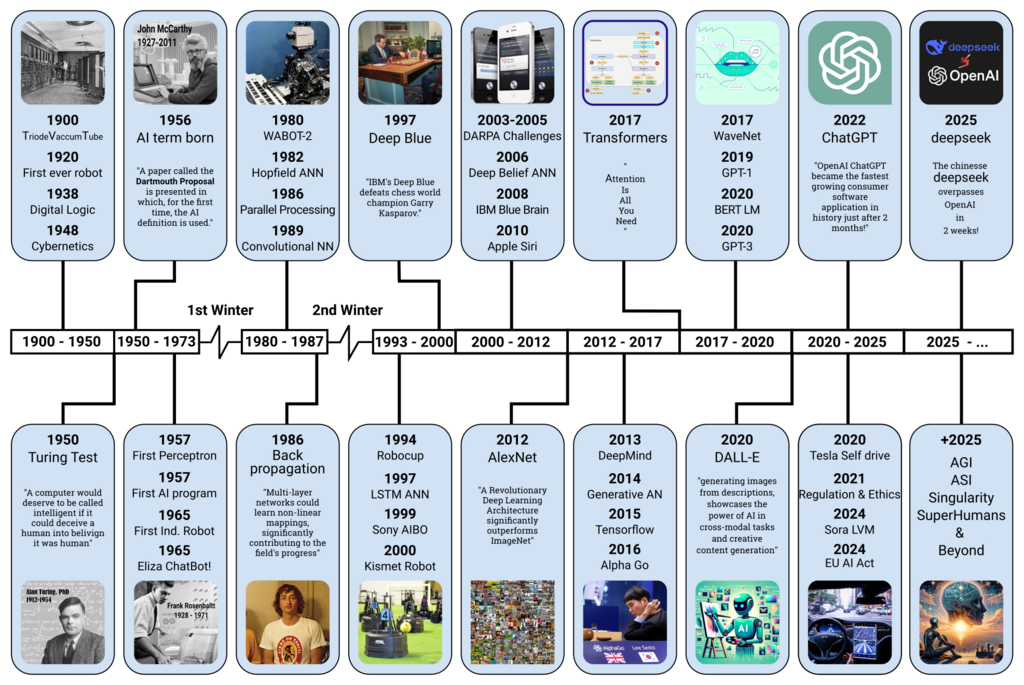
AI at Work Today
Today, AI is being woven into the fabric of countless industries, changing how work gets done. It's not one-size-fits-all; different sectors are adopting AI to solve unique problems. This adoption is creating new efficiencies and possibilities that were hard to imagine just a few years ago.
In healthcare, AI helps doctors analyze medical images like X-rays and MRIs, often spotting signs of disease earlier and more accurately than the human eye. In finance, it works tirelessly to detect fraudulent transactions, protecting consumers and banks. Retail companies use AI to manage their inventory and create personalized shopping experiences for customers, while manufacturers deploy AI-powered robots to handle repetitive or dangerous tasks on the assembly line.
Advances in artificial intelligence (AI) will transform many aspects of our lives and society, bringing immense opportunities but also posing significant risks and challenges.
This trend isn't just about big corporations. Small businesses are also using AI tools for marketing, customer support, and administrative tasks, allowing them to compete in a changing marketplace. The common thread is the drive for greater accuracy, speed, and insight.
Jobs of the Future
The rise of AI naturally brings questions about jobs. Will robots take over? The reality is more nuanced. AI is transforming the job market by both displacing certain roles and creating entirely new ones.
Tasks that are repetitive, predictable, and data-heavy are the most likely to be automated. Think of roles involving data entry, basic report generation, or assembly-line work. As AI takes over these functions, the demand for such jobs is expected to decline. This is similar to how ATMs reduced the need for some bank tellers or how factory automation changed manufacturing.
| Task Type | Impact of AI | Example Job |
|---|---|---|
| Repetitive & Manual | High automation potential | Data Entry Clerk |
| Complex & Strategic | Low automation potential, AI as a tool | Marketing Strategist |
| Creative & Original | AI as an assistant for ideation | Graphic Designer |
| Interpersonal & Emotional | Low automation potential | Therapist |
However, this is not the whole story. The integration of AI also creates a demand for new skills and professions. We now see job titles that didn't exist a decade ago: AI Specialist, Machine Learning Engineer, and AI Ethics Officer. These roles focus on developing, managing, and ensuring the responsible use of AI systems.
Beyond these technical roles, AI also elevates the importance of uniquely human skills. Critical thinking, creativity, emotional intelligence, and complex problem-solving are becoming more valuable than ever. The future of work isn't just about learning to code; it's about learning to collaborate with intelligent systems to achieve better outcomes.
The goal is to shift from tasks AI can do better to tasks that humans do better, focusing on creativity, strategy, and empathy.
For anyone in the workforce today, the key takeaway is the need for continuous learning and adaptation. Staying relevant means understanding how AI is affecting your field and being proactive about developing the skills that will complement this new technology.
Let's check your understanding of how AI is shaping the modern workforce.
What is the core concept of Artificial Intelligence (AI)?
Which of the following job roles is most likely to be automated by AI systems?
The integration of AI into the workplace is not an event but a continuous process. By understanding its impact, we can better prepare for the opportunities and challenges ahead.