Ski Touring Avalanche Safety
Avalanche Basics
What is an Avalanche?
An avalanche is a rapid flow of snow down a slope, such as a mountainside. While it sounds simple, the forces involved are immense. Avalanches can be triggered by natural events like new snowfall or a sudden temperature change, or by human activity, like a skier or snowmobiler crossing a fragile slope.
avalanche
noun
A mass of snow, ice, and rocks falling rapidly down a mountainside.
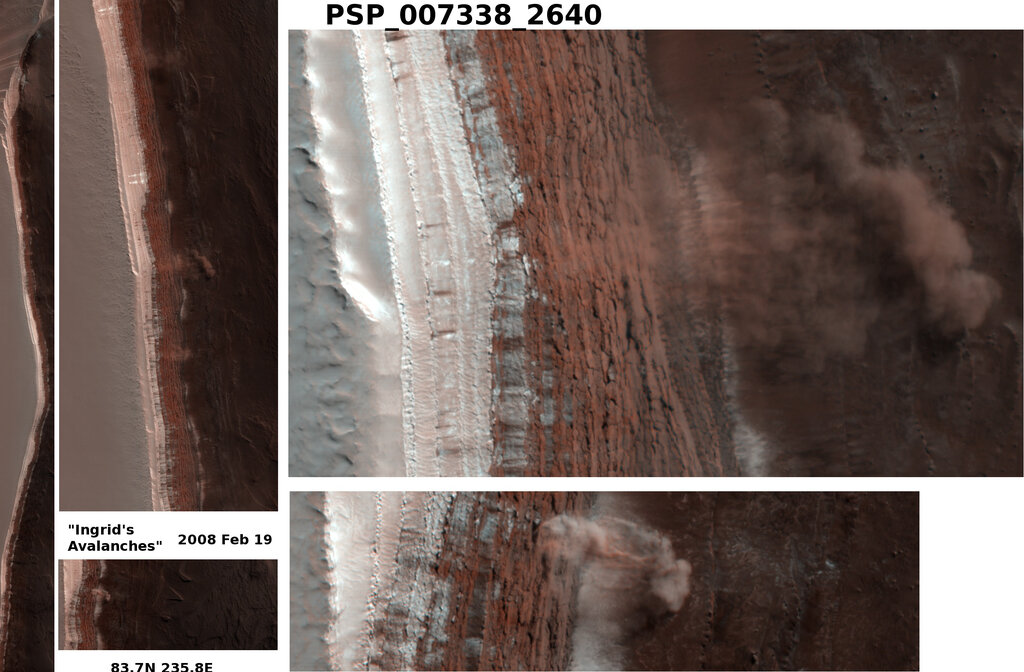
They aren't just a terrestrial phenomenon. Massive debris falls, essentially avalanches, have even been observed on the steep cliffs of Mars, demonstrating the universal physics at play.
How Avalanches Form
An avalanche isn't just a pile of snow sliding downhill. It's a failure within the snowpack. A snowpack is the accumulation of snow on the ground throughout the winter. It’s not one uniform block, but a complex structure of distinct layers built up by successive snowfalls, wind, and temperature changes.
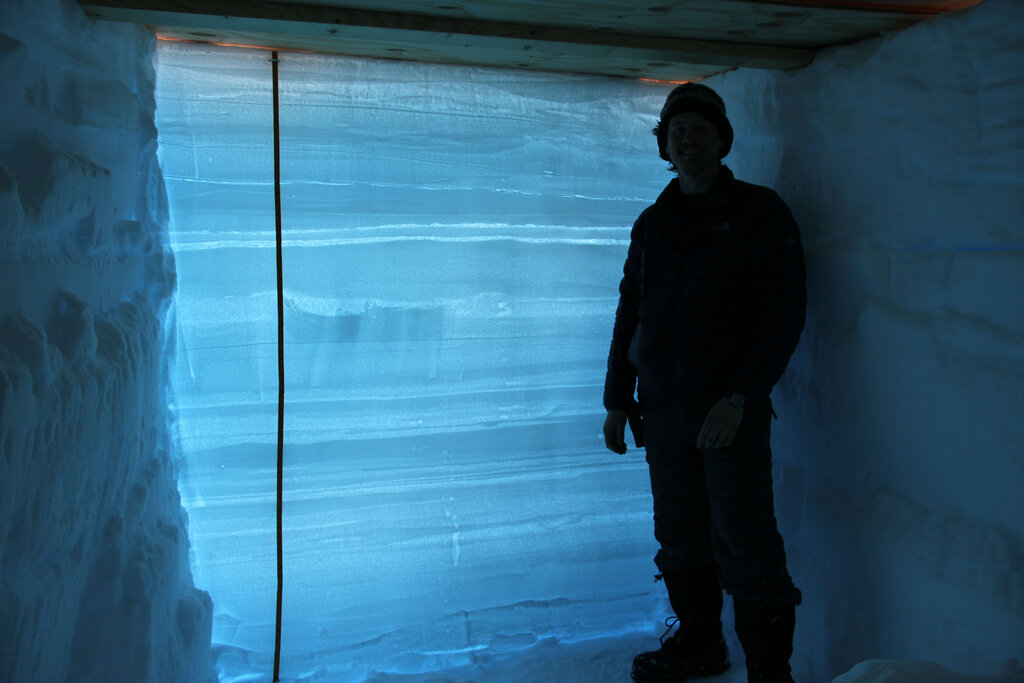
The danger arises when a strong, cohesive layer of snow (a slab) sits on top of a weak, unstable layer. This weak layer can't support the weight above it. All it needs is a trigger to collapse.
Think of it like a book resting on a layer of marbles on a tilted table. The book is the slab, the marbles are the weak layer. A small nudge can cause the marbles to give way, sending the book sliding.
Two Main Types
Avalanches generally fall into two categories: loose snow and slab.
Loose Snow Avalanches: These usually start at a single point and gather more snow as they move downhill, fanning out in an inverted 'V' shape. They are common on steep slopes after a fresh snowfall and typically involve only the top layers of snow. While still dangerous, they are often less destructive than slab avalanches.
Slab Avalanches: These are the most dangerous and cause the vast majority of avalanche fatalities. They occur when a cohesive slab of snow breaks away from the surrounding snowpack and slides as a single unit. When the weak layer beneath the slab collapses, a fracture propagates across the slope in fractions of a second, creating a distinct crack or 'crown' where the slab broke free.
Because they involve a massive volume of snow moving at once, slab avalanches can reach high speeds and have tremendous destructive power, capable of snapping trees, destroying buildings, and burying people deep beneath the surface.
Harmless slopes in non-winter conditions can be superhighways of big avalanches that can be deadly.
Recognizing the ingredients for an avalanche is the first step toward safety in the winter backcountry. Understanding how snow behaves is crucial, as the beautiful, quiet landscape can hide significant danger.