Ski Instructor Blueprint for Friends
Pedagogy and Safety
From Skier to Teacher
You can link parallel turns down a black diamond, but can you teach someone how to put on their skis for the first time? The transition from skilled practitioner to effective teacher requires a completely different mindset. It’s no longer about what your body knows intuitively; it’s about breaking down those instincts into simple, digestible steps for a complete novice.
Your goal isn't to show off your skills, but to build a beginner's confidence. This means you need a structured approach to teaching and an unwavering focus on safety. Your success is measured by your student's progress, not your own.
Your Core Teaching Model
Every good lesson needs a blueprint. For ski instruction, the most reliable framework is the DEPF model — Demonstrate, Explain, Practice, Feedback. This simple loop provides structure for you and clarity for your students.
Demonstrate: Show the skill correctly. If you're teaching a wedge, your demo should be a perfect, controlled example. Visuals are powerful; a beginner will mimic what they see far more than what they hear.
Explain: Use clear, non-technical language. Instead of saying "Engage your inside edge," try "Roll your ankle into the hill." Connect the movement to a feeling or a simple analogy.
Practice: Give them space to try it themselves. Choose terrain that is well below their ability level so they can focus on the new skill without fear. Repetition is key.
Feedback: Offer specific, positive reinforcement. Instead of "That was bad," say "Great job keeping your hands forward. Next time, try to make your wedge a little wider."
Managing Your Herd
Positioning yourself correctly on the slope is the most critical part of group management. As a rule, you should almost always be downhill from your students. This allows you to see everyone at once and act as a physical barrier between them and other skiers below. You are their safety net.
Beyond physical safety, you must manage your group's psychological state. Fear is the biggest barrier to learning. Before starting any drill, assess your students' comfort levels. Are their shoulders tense? Are they looking down at their skis instead of ahead? Use your voice to build confidence. Keep your instructions calm, clear, and encouraging. Celebrate small victories, like their first successful stop, to build momentum.
The Responsibility Code
As an instructor, you don't just follow the Alpine Responsibility Code—you embody it. It is your job to instill these principles in your students from the very first moment. This isn't just a list of rules; it's the foundation of mountain safety culture.
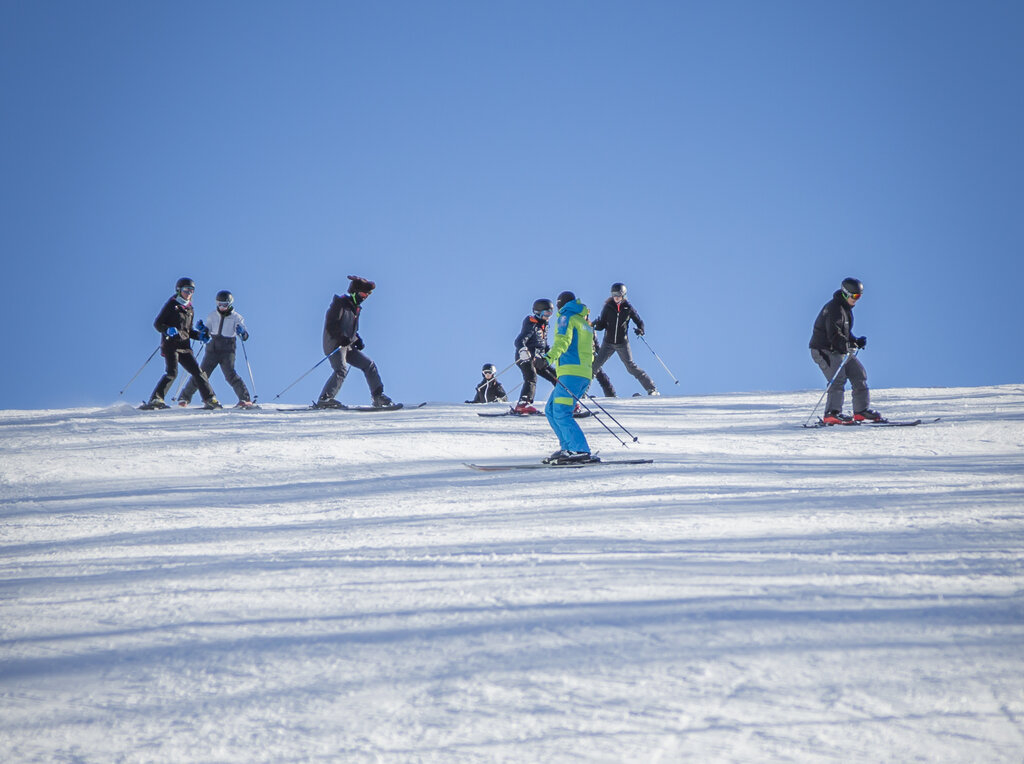
Your most important duties under the code are:
- Stay in control. Teach this by starting on the easiest possible terrain. Control, not speed, is the first skill.
- People ahead have the right of way. Explain this like a traffic rule. The downhill skier is a blind spot, so it's the uphill skier's job to avoid them.
- Stop in a safe place. Never stop below a blind spot or in the middle of a trail. Lead your group to the side of the run when you need to talk or rest.
- Look uphill and yield. Before starting downhill or merging onto a trail, make it a habit for your group to look uphill together.
By making safety a constant, integrated part of your lesson, you give beginners the tools to not only learn how to ski but to become responsible members of the mountain community.
When teaching a group of beginners on a slope, where should the instructor primarily position themselves for maximum safety and visibility?
According to the Alpine Responsibility Code, if two skiers are on the same trail, who has the right of way?