Skateboarding Physics Newton's Laws
Introduction to Newton's Laws
The Law of Inertia
An object at rest tends to stay at rest, and an object in motion tends to stay in motion. This simple idea is Newton's first law. It's often called the law of inertia. Inertia is just the resistance any physical object has to changing its state of motion.
inertia
noun
The property of matter by which it continues in its existing state of rest or uniform motion in a straight line, unless that state is changed by an external force.
Think about a soccer ball on a field. If you don't kick it, it's not going anywhere. It will stay at rest. Now, if you kick it, it will roll until friction from the grass and air resistance slows it down and eventually stops it. In a perfect, friction-free world, that ball would roll forever in a straight line at a constant speed. The forces of friction and air resistance are what change its state of motion.
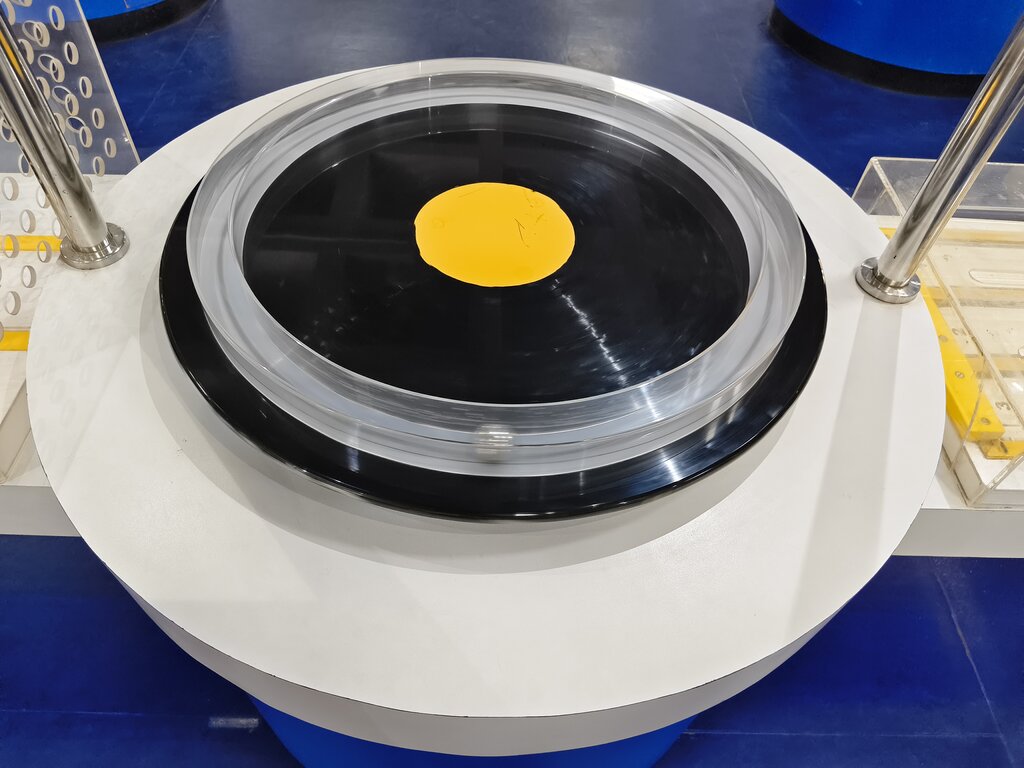
In short: things keep doing what they're doing unless something messes with them.
Force, Mass, and Acceleration
Newton's second law explains what happens when a force does act on an object. It gives us a way to calculate the effect of that force. The law states that the force acting on an object is equal to its mass multiplied by its acceleration. This is probably the most famous equation in all of physics.
Let's break that down:
- F is the net force applied to the object.
- m is the mass of the object (how much 'stuff' it's made of).
- a is the acceleration of the object (the change in its velocity).
Imagine you're pushing a shopping cart. If you push it gently (a small force), it accelerates slowly. If you push it with all your might (a large force), it accelerates much faster. Now, what if the cart is full of heavy groceries? Its mass is greater, so you have to push much harder to get it to accelerate at the same rate as an empty cart.
Action and Reaction
The third law of motion might be the most counterintuitive, but you see it everywhere. It states that for every action, there is an equal and opposite reaction. This means that forces always come in pairs. When one object exerts a force on a second object, the second object simultaneously exerts a force back on the first one. This reaction force is equal in strength and opposite in direction.
If you push on a wall, the wall pushes back on you with the same amount of force.
Why don't you go flying backward when you push on a wall? Because your mass, combined with the friction between your shoes and the floor, is enough to counteract the wall's push. But think about a rocket. It pushes hot gas out of its engines (the action). The gas, in turn, pushes the rocket upward (the reaction), propelling it into space.
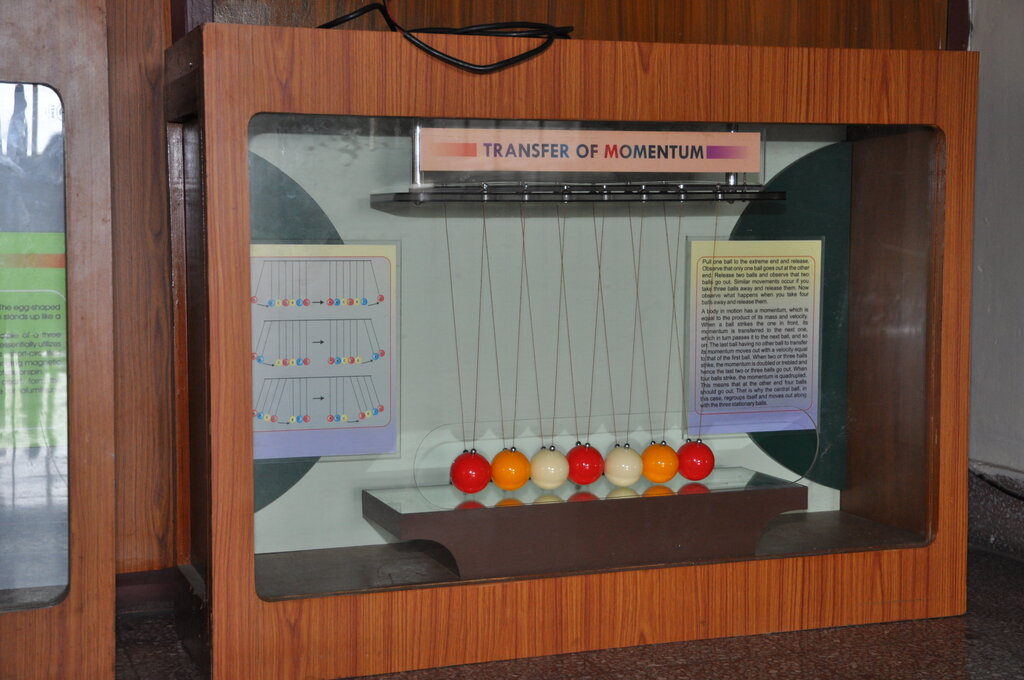
Every time you walk, you're using Newton's third law. Your foot pushes backward on the ground, and the ground pushes forward on your foot, moving you along.
Ready to check your understanding?
A hockey puck slides across a frictionless ice rink at a constant velocity. Which of Newton's laws best explains why it continues to move without any apparent force pushing it?
According to Newton's Second Law (), if you push two shopping carts with the same amount of force, and one cart has twice the mass of the other, the more massive cart will accelerate at _______ the rate of the less massive one.
These three laws are the foundation of classical mechanics. They describe the relationship between an object and the forces acting upon it, providing a framework for understanding the motion of everything in the universe.