Skateboarding Fundamentals for Elementary PE
Skateboard Anatomy
The Parts of a Skateboard
A skateboard might seem simple, but it's a fine-tuned machine made of several distinct parts. Each component plays a crucial role in how the board rides, turns, and feels under your feet. Understanding this anatomy helps you choose the right board and keep it in good shape.
The Deck
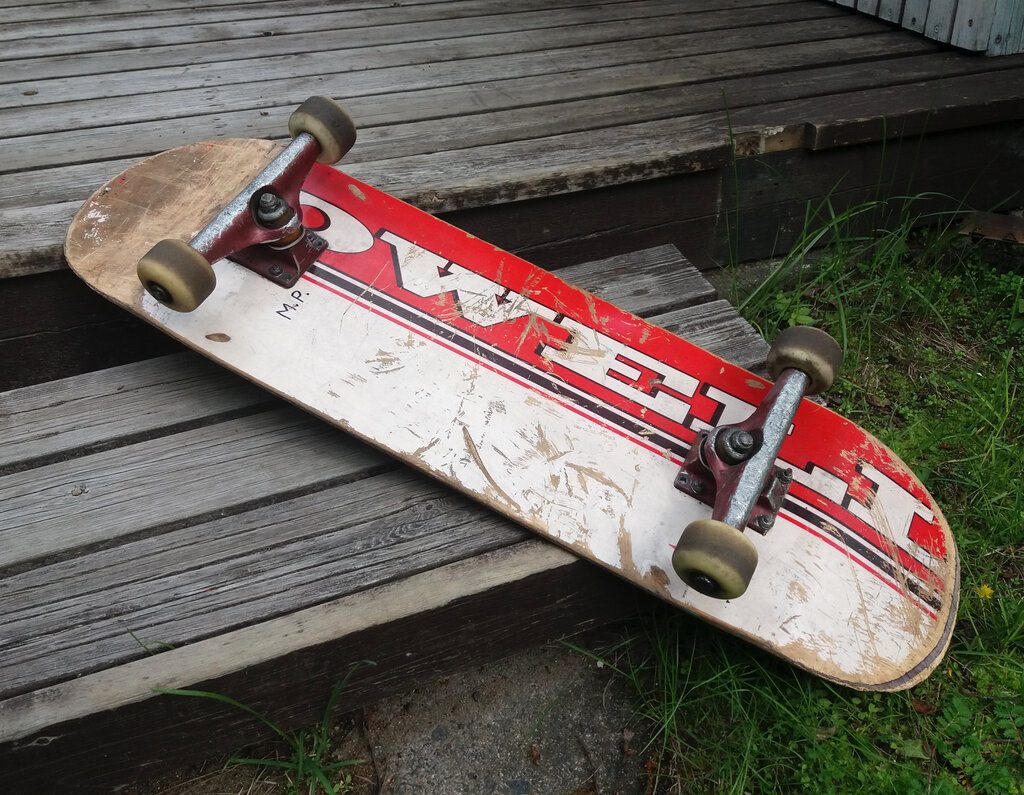
The deck is the wooden platform you stand on. Most decks are made from 7 to 9 thin layers of maple wood pressed together, which makes them both strong and flexible. They aren't flat; they have a specific shape that helps with control.
The top is covered with grip tape, a sandpaper-like sheet that keeps your feet from slipping. The upward curves at the front and back are called the nose and tail. The slight side-to-side curve along the length of the deck is its concave.
Concave
noun
The U-shaped curve of a skateboard deck from edge to edge. It helps lock in your feet, making it easier to steer and perform tricks.
Trucks: Steering the Board
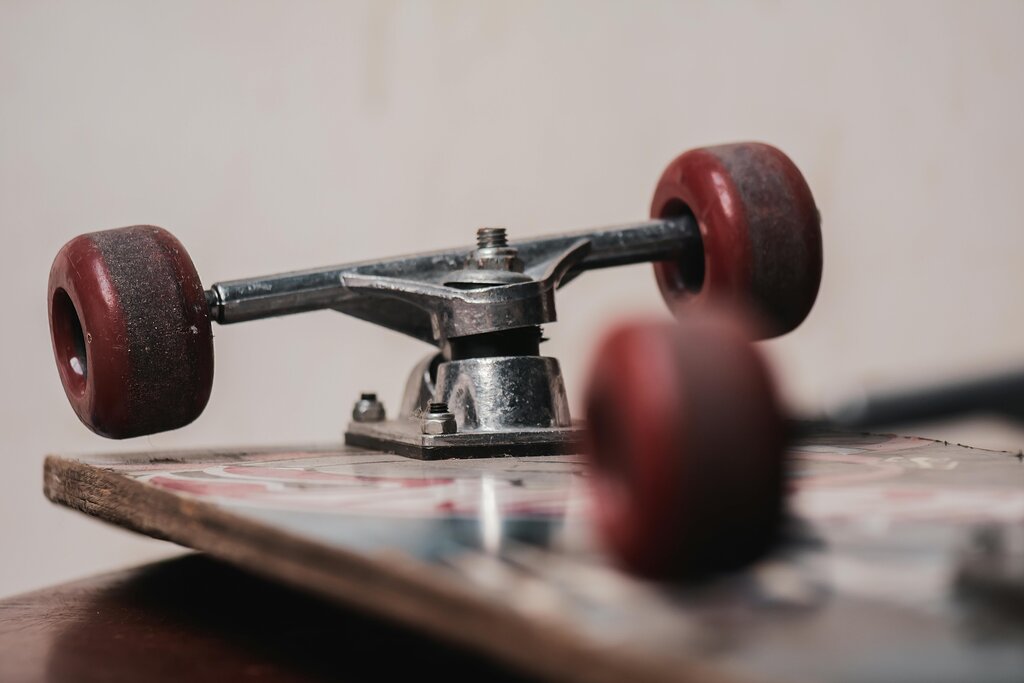
Trucks are the metal, T-shaped assemblies that mount to the underside of the deck and connect the wheels. They are the steering mechanism of the skateboard. Each truck consists of an axle that runs through a hangar. The hangar pivots on a kingpin, which is a large bolt held in place by a nut.
Between the hangar and the baseplate are soft urethane rings called bushings. These control how much the truck can pivot. By tightening or loosening the kingpin nut, you can adjust how easily the board turns. Tighter trucks are more stable at high speeds, while looser trucks allow for sharper, quicker turns.
Bushings
noun
The soft rubbery rings fitted around the kingpin of a skateboard truck. They cushion the ride and control the turning resistance.
Wheels and Bearings
Skateboard wheels are almost always made of a durable plastic called polyurethane. They come in different sizes and hardness levels, which dramatically affect the ride.
Size is measured in millimeters (mm). Smaller wheels (50-54 mm) accelerate faster and are preferred for street and technical skating. Larger wheels (55 mm and up) hold their speed better and are smoother on rough surfaces, making them ideal for cruising and ramps.
Hardness, or durometer, is measured on a scale, typically the 'A' scale. A higher number means a harder wheel. Harder wheels (99A and above) are fast and slide easily, great for skateparks. Softer wheels (below 90A) have more grip and absorb vibrations, offering a smoother ride on sidewalks and roads.
| Wheel Hardness (Durometer) | Best Use |
|---|---|
| 78A - 87A | Very soft. Great for rough surfaces, cruising, and longboards. Maximum grip. |
| 88A - 95A | Slightly harder and faster with a little less grip. Good for streets and rough spots. |
| 96A - 99A | Good speed and grip. A versatile wheel for skateparks, ramps, and pools. |
| 101A+ | The hardest and fastest wheels. Pro standard. Less grip, slides easily. |
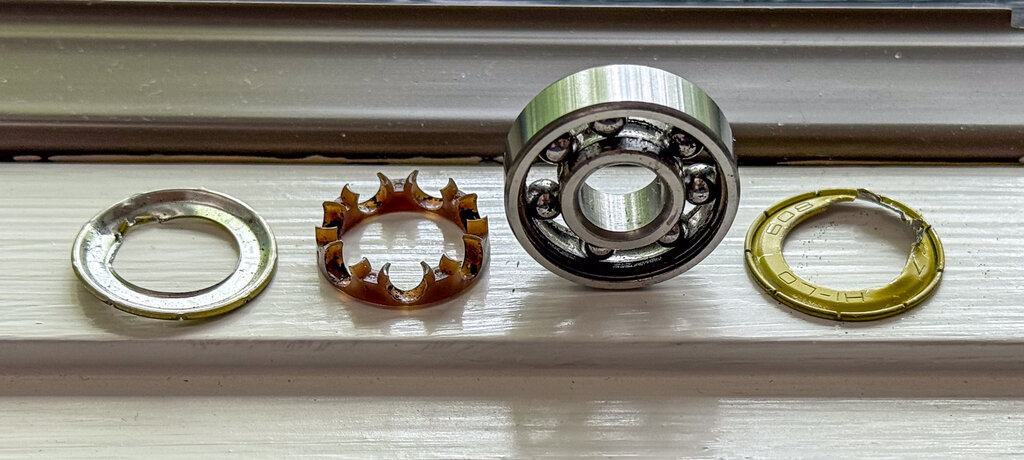
Inside each wheel sit two bearings. These are small metal rings containing lubricated steel balls that allow the wheels to spin freely with minimal friction. They need to be kept clean and dry. Riding through water or dirt can damage them quickly. If your wheels sound gritty or don't spin for long, it's a sign the bearings need cleaning or replacement.
Ready to test your knowledge on skateboard parts?
What is the primary function of the trucks on a skateboard?
A skater who primarily cruises on rough sidewalks would benefit most from which type of wheels?
Knowing these parts and how they work together is the first step to becoming comfortable with a skateboard. It allows you to understand what makes a board feel the way it does and how to care for it.