Six Sigma Yellow Belt Fundamentals
Introduction to Six Sigma
What Is Six Sigma?
At its core, Six Sigma is a disciplined, data-driven approach for eliminating defects in any process. The ultimate goal is to get as close to perfection as possible. The name "Six Sigma" comes from a statistical concept where a process only produces 3.4 defects per million opportunities. That's 99.99966% perfect.
Think of it this way: if you shipped a million packages, a Six Sigma process would ensure that only three or four of them had any issues.
This methodology isn't new. It was developed by engineers at Motorola in the mid-1980s to compete with Japan's high-quality manufacturing. It gained widespread fame in the 1990s when Jack Welch made it a central part of his business strategy at General Electric. Since then, it has been adopted by companies across countless industries, from healthcare to finance.
The overarching premise of Six Sigma is that variation in a process leads to opportunities for error; opportunities for error then lead to risks for product defects.
Core Principles
Six Sigma is built on a few fundamental ideas that guide every project and decision.
Focus on the Customer: Everything starts and ends with the customer. A defect is anything that doesn't meet a customer's expectation. By understanding what the customer truly values, a business can focus its improvement efforts where they matter most.
Use Data to Make Decisions: Gut feelings and assumptions don't cut it. Six Sigma replaces guesswork with a systematic way of collecting and analyzing data. This allows teams to identify the proven root causes of a problem, not just the symptoms.
Improve the Process, Not the People: When something goes wrong, the natural tendency is often to find someone to blame. Six Sigma takes a different view. It assumes that people want to do good work, and that defects are usually caused by a flawed process. The focus is always on finding and fixing the process issues that lead to mistakes.
Strive for Perfection: The goal is continuous improvement. It’s a proactive approach that aims to prevent defects before they happen, rather than just reacting to them after the fact.
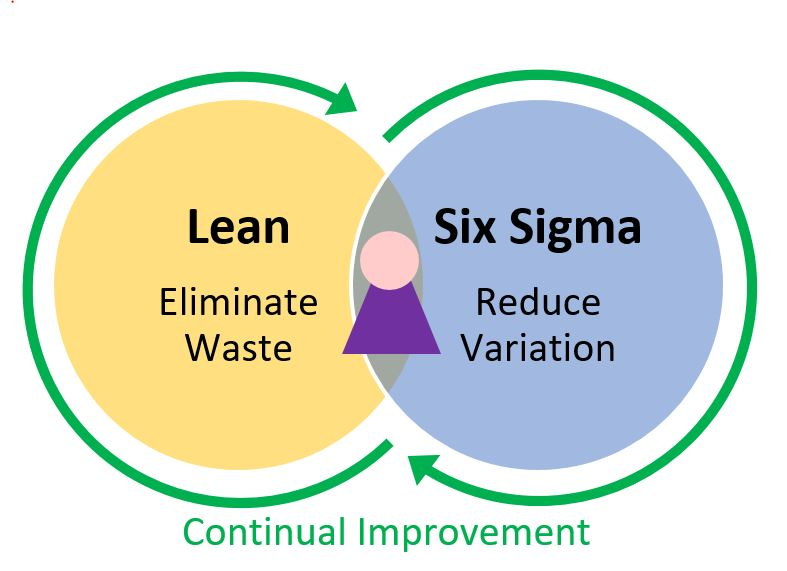
A New Way of Thinking
How is this different from how companies traditionally handled quality? Traditional quality control often relied on inspection at the end of the line. A certain percentage of defects was considered acceptable—the cost of doing business. Six Sigma flips that idea on its head.
| Feature | Traditional Quality Control | Six Sigma |
|---|---|---|
| Approach | Reactive (inspects to find defects) | Proactive (improves processes to prevent defects) |
| Goal | Meet an "acceptable" quality level | Strive for near-perfection (3.4 DPMO) |
| Focus | Product inspection | Process improvement |
| Responsibility | Quality department | Entire organization |
| Decisions | Often based on experience or opinion | Based on statistical analysis and data |
Imagine baking a batch of cookies. The traditional approach is to taste them after they come out of the oven to see if they're good. The Six Sigma approach is to precisely control the recipe, ingredient quality, oven temperature, and baking time so you know the cookies will be perfect every single time.
The Six Sigma Team
Implementing Six Sigma requires a dedicated team structure, with roles often named after martial arts belts. Each level has a specific set of responsibilities.
Champions and Sponsors: These are senior-level managers who select projects, provide resources, and remove any roadblocks for the team. They are the high-level supporters of the Six Sigma initiative.
Master Black Belts: These are the in-house experts. They train and mentor Black Belts and Green Belts and help the Champions manage the overall strategy. They're the coaches of the organization's Six Sigma teams.
Black Belts: Black Belts lead complex, high-impact improvement projects full-time. They have advanced training in statistical tools and project management.
Green Belts: Green Belts lead smaller-scoped projects as part of their regular job duties. They have a solid understanding of the methodology and work under the guidance of Black Belts.
Yellow Belts: These are team members who have basic Six Sigma training. They participate in projects and support the Green Belts and Black Belts by collecting data and helping implement changes.
By establishing this clear structure, companies ensure that projects are properly supported, managed, and executed, which is key to making lasting improvements.
What is the statistical performance goal for a process operating at a Six Sigma level?
According to the core principles of Six Sigma, when a mistake occurs, the primary focus should be on what?
This structured approach, from its core philosophy to its team roles, is what makes Six Sigma a powerful framework for driving quality and efficiency.