Six Sigma for Process Improvement
Introduction to Six Sigma
What is Six Sigma?
Six Sigma is a disciplined, data-driven approach for eliminating defects in any process. Think of it as a toolkit for making things better, whether you're building a car, processing a loan, or even just baking a batch of cookies. The goal is to make the outcome of a process as consistent and error-free as possible.
The name itself comes from statistics. "Sigma" is a measure of variation, and "Six Sigma" represents a level of quality that is near perfection. The methodology was developed by Motorola engineers in the 1980s as a way to compete with Japanese manufacturing's high quality standards. It worked so well that it was adopted by countless other companies, becoming a global standard for quality improvement.
The overarching premise of Six Sigma is that variation in a process leads to opportunities for error; opportunities for error then lead to risks for product defects.
Objectives and Benefits
The primary goal of Six Sigma is to reduce variability. When a process is inconsistent, you get unpredictable results. Some customers might get a perfect product, while others get a faulty one. This inconsistency leads to defects.
defect
noun
Any output of a process that does not meet customer requirements.
By using statistical methods to find the sources of variation and then fixing them, Six Sigma aims to make processes stable and predictable. This doesn't just happen by chance; it's a systematic effort to measure, analyze, and improve.
The benefits are significant. For a business, it means lower costs, because there's less waste and rework. It also leads to improved efficiency and, most importantly, higher customer satisfaction. When customers know they can rely on your product or service every single time, they become loyal.
Core Concepts
At its heart, Six Sigma is about numbers. It uses data to understand how a process is performing and to pinpoint areas for improvement. The name itself, "Six Sigma," refers to a specific goal: ensuring the process output is 99.99966% defect-free.
A Six Sigma process produces only 3.4 defects per million opportunities (DPMO).
This might sound extreme, but it's the standard for high-quality operations. Most companies operate at a much lower sigma level without realizing it. Here's a look at how sigma levels correspond to quality.
| Sigma Level | Defects Per Million Opportunities (DPMO) | Quality Percentage |
|---|---|---|
| 2 | 308,537 | 69.1% |
| 3 | 66,807 | 93.3% |
| 4 | 6,210 | 99.38% |
| 5 | 233 | 99.977% |
| 6 | 3.4 | 99.99966% |
Another key concept is the idea of a process. In Six Sigma, everything is a process. Taking a customer order is a process. Hiring a new employee is a process. Manufacturing a part is a process. By defining activities as processes, they can be measured, analyzed, improved, and controlled.
Six Sigma in Action
While it started in manufacturing, Six Sigma's principles are universal. They can be applied to virtually any industry where there is a process that can be improved.
- Healthcare: Hospitals use it to reduce patient wait times, decrease errors in medication administration, and streamline billing processes.
- Finance: Banks apply it to speed up loan approvals, reduce errors in financial transactions, and improve customer service call centers.
- Logistics: Shipping companies use it to optimize delivery routes, reduce package handling errors, and improve on-time delivery rates.
- Software Development: Tech companies use it to reduce bugs in code, improve testing procedures, and ensure new features meet user expectations.
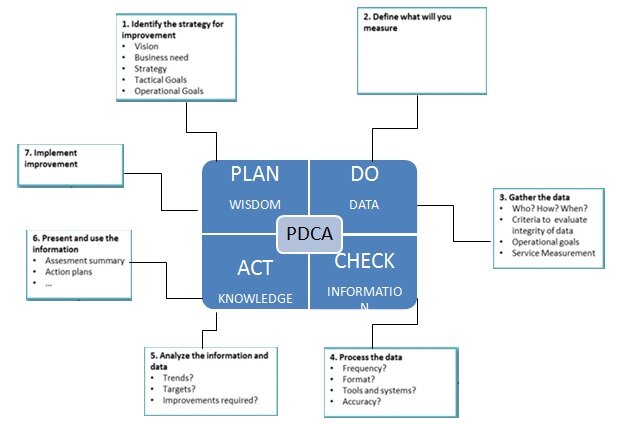
The common thread is the focus on using data to make informed decisions that lead to tangible improvements in quality and efficiency. It provides a common language and a structured path for problem-solving.
What is the primary goal of the Six Sigma methodology?
The term "Six Sigma" refers to a specific quality goal where the process output is expected to be what percentage defect-free?
Six Sigma provides a powerful framework for achieving operational excellence. By focusing on reducing defects and variability, organizations can deliver better products and services, ultimately leading to greater customer satisfaction.