Six Month Culinary Mastery
Knife Skills
The Chef's Most Important Tool
Before you can roast, sauté, or braise, you need to prepare your ingredients. That almost always starts with a knife. Good knife skills aren't about speed, they're about safety, efficiency, and consistency. Mastering how to hold, use, and care for a knife will transform your cooking more than any other skill.
Good knife skills are the foundation of culinary excellence.
Know Your Knives
Walk into any kitchen supply store and you'll see massive blocks filled with a dozen different knives. You don't need all of them. Most professional chefs rely on just three or four key knives for the vast majority of their work. For a home cook, three is plenty to get started.
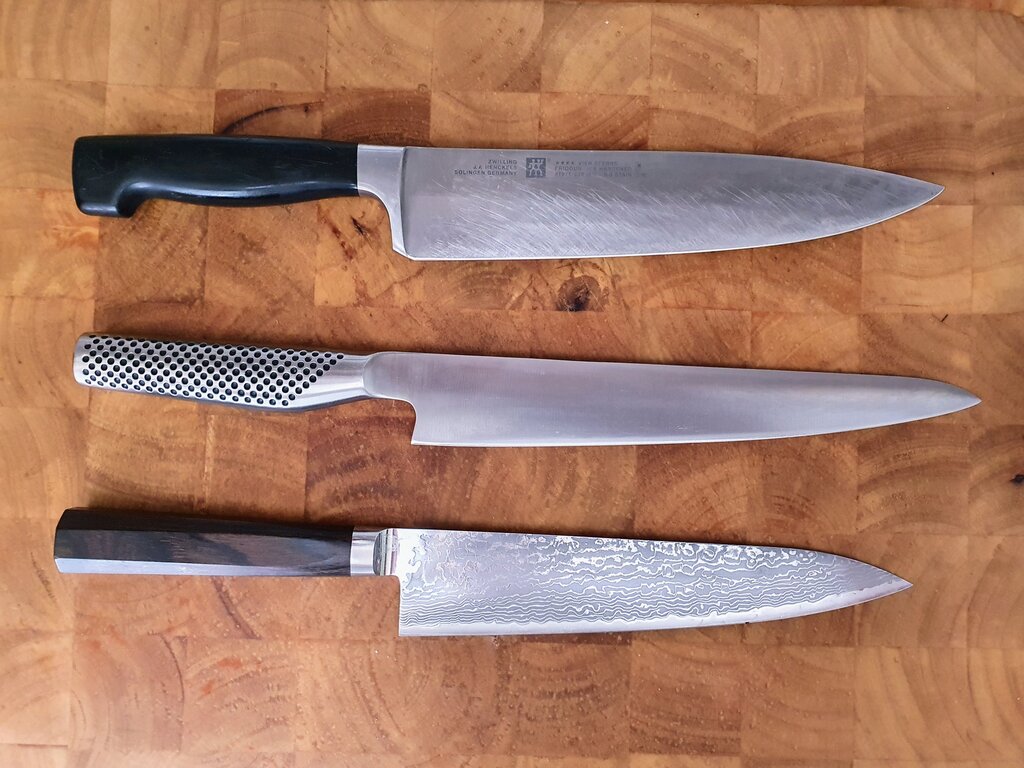
Understanding what each knife is for helps you work smarter. The big three are the chef's knife, the paring knife, and the serrated knife.
| Knife Type | Best For | Description |
|---|---|---|
| Chef's Knife | Most tasks | The all-purpose workhorse, usually 8-10 inches long. Used for chopping, slicing, and dicing. |
| Paring Knife | Small, delicate tasks | A small knife (2-4 inches) for peeling, trimming, and intricate work. |
| Serrated Knife | Tough skins, soft interiors | Has a toothed edge, perfect for slicing bread, tomatoes, and citrus without squishing them. |
Handling Your Knife Safely
Proper technique keeps your fingers safe and gives you better control over the blade. It comes down to two things: how you hold the knife and how you guide it with your other hand.
The most important rule of knife safety: A sharp knife is a safe knife. A dull knife is more likely to slip and cause an injury.
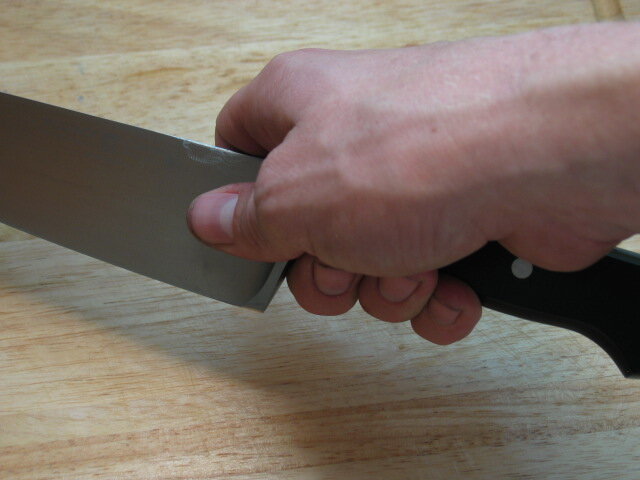
For your knife hand, use the pinch grip. Hold the handle with your last three fingers, and pinch the blade right where it meets the handle with your thumb and index finger. This grip gives you maximum control and feels like a natural extension of your hand.
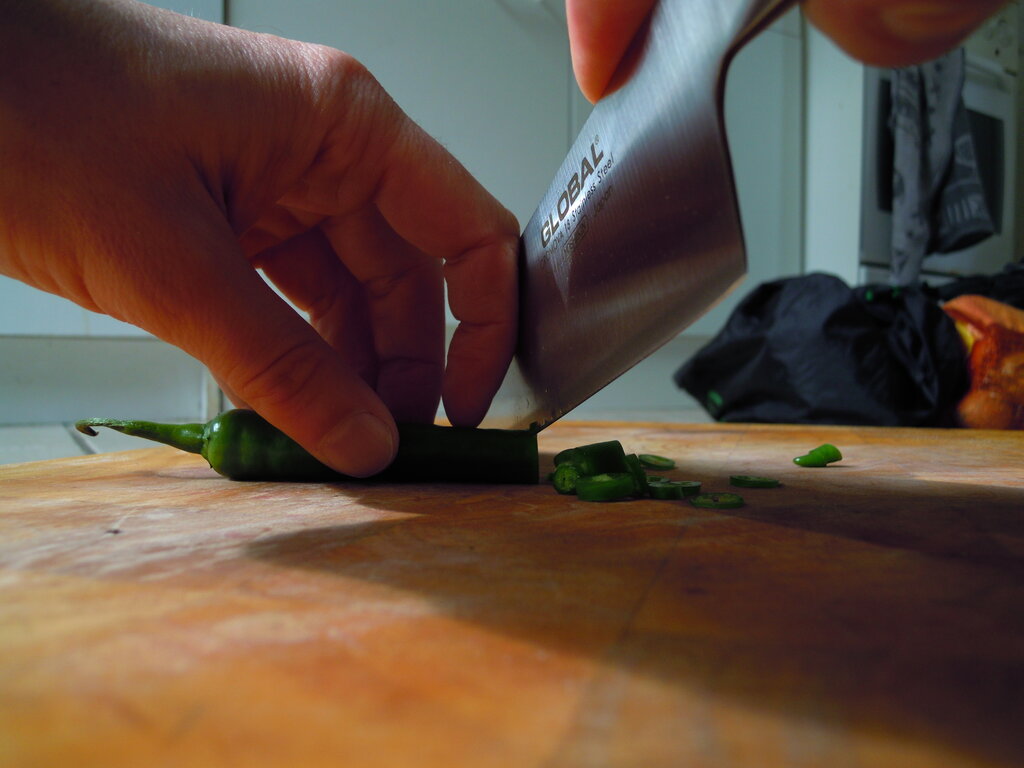
Your other hand, the guiding hand, should be in a claw grip. Curl your fingertips under so your knuckles are pointing out. Rest your knuckles against the side of the blade. This protects your fingertips and allows you to guide the knife for precise, even cuts. As you slice, you slowly slide the claw back.
Common Cuts
Uniform cuts aren't just for looks; they help food cook evenly. Whether you're making a soup or a stir-fry, consistent pieces ensure one bite isn't raw while another is overcooked. Here are a few of the most common cuts to practice.
Chop
verb
To cut food into irregularly shaped pieces. The size can vary from small to large.
Dice
verb
To cut food into small, uniform cubes. Common sizes are small (1/4 inch), medium (1/2 inch), and large (3/4 inch).
Julienne
verb
To cut food, typically vegetables, into long, thin strips, similar to matchsticks.
Keeping Your Edge
A knife is only as good as its edge. Maintaining your knives involves two different processes: honing and sharpening.
Honing is something you should do often. It uses a steel rod to realign the microscopic teeth on the blade's edge, which get bent out of shape with regular use. It doesn't remove metal, it just straightens the edge.
Sharpening is done less frequently. It actually grinds away a tiny bit of the blade to create a brand new, sharp edge. You can use a whetstone or an electric sharpener for this.
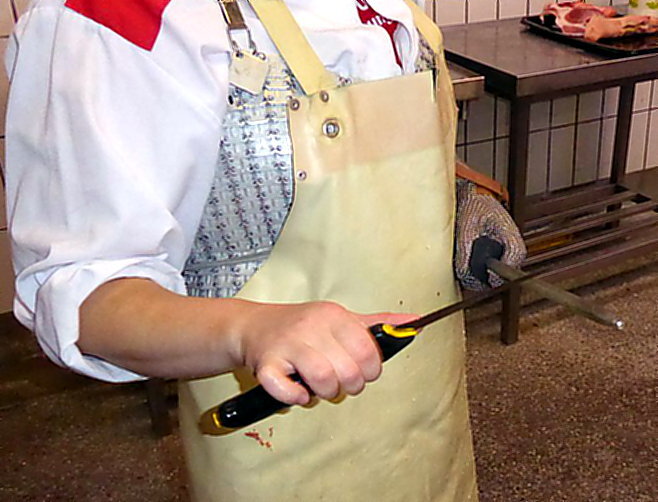
Caring for your knives also means washing them by hand, not in the dishwasher, and drying them immediately to prevent rust. Store them in a knife block, on a magnetic strip, or with blade guards to protect the edges.
What is the primary purpose of honing a knife with a steel rod?
When chopping vegetables, what is the safest and most effective way to position your guiding hand (the hand not holding the knife)?
With these basics, you're ready to start practicing. Take your time, focus on technique, and you'll build the confidence and skill to tackle any recipe.