Six Levels of IoT Architecture
Local Node Architectures
The Standalone System
Not every smart device needs the internet. The simplest and often most reliable IoT systems are Level 1: single, self-contained nodes that operate entirely offline. These devices handle everything locally, from sensing the environment to making decisions and taking action. Think of a smart thermostat that adjusts a room's temperature or a motion-activated security light. They don't need to check in with a server miles away to do their job.
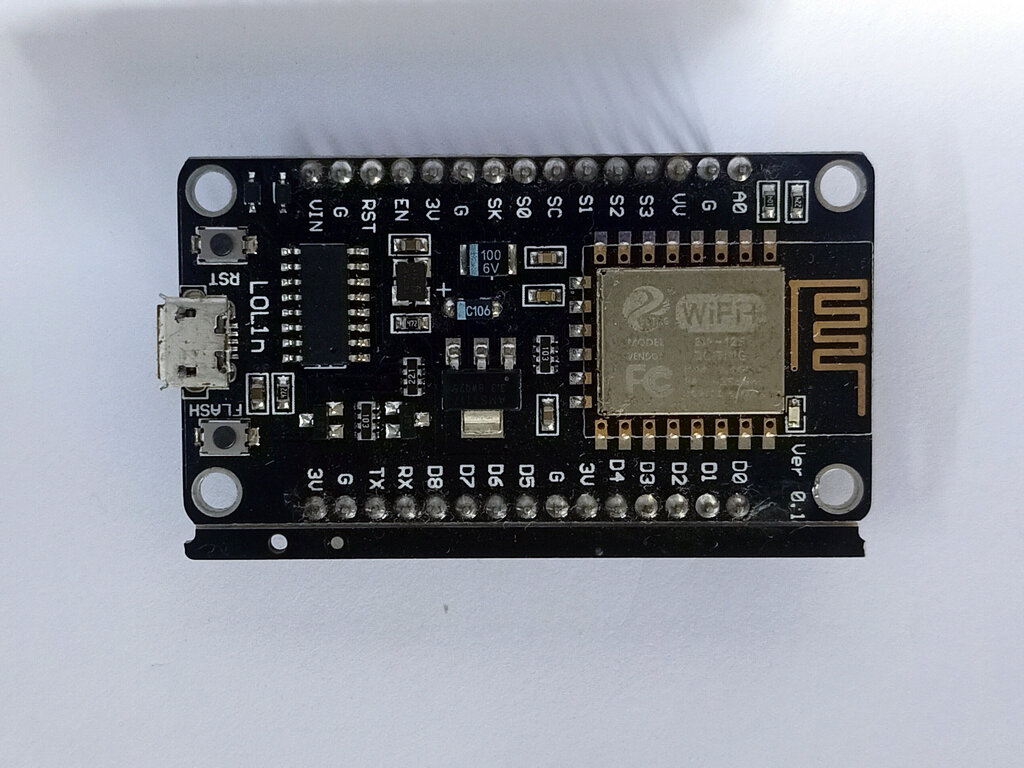
This local architecture is built around a single microcontroller unit, or MCU. This tiny computer on a chip has everything it needs: a processor, memory, and input/output peripherals. It's the brain of the operation, running a specific program designed for one task. Because everything happens on this single chip, there's no network delay. The response is immediate and predictable.
The Local Control Loop
The logic inside a standalone node is typically a continuous loop. The MCU reads data from a sensor, processes that data according to pre-programmed rules, and then sends a command to an actuator. This cycle repeats, sometimes hundreds of times per second.
This is often called a deterministic system. When an input changes, the output responds in a predictable and consistent amount of time. There's no guesswork. If the temperature hits 25°C, the fan turns on now, not after a round trip to the cloud. This reliability is critical for tasks where even a small delay could cause problems.
The core benefit of a Level 1 system is its zero latency. Actions are immediate because decisions are made right where the data is collected.
The software that governs these is often quite simple. It's not a full-blown operating system like you'd find on a laptop. Instead, it's a lightweight piece of firmware focused entirely on its specific task. Here’s a basic look at the logic for a temperature controller:
// A simplified example for an MCU

setup() {
  // Configure the temperature sensor pin as input
  // Configure the fan control pin as output
}

loop() {
  // 1. SENSE: Read temperature from the sensor
  float currentTemp = readTemperatureSensor();

  // 2. PROCESS: Check if temperature is above threshold
  if (currentTemp > 25.0) {
    // 3. ACT: Turn the fan on
    turnFanOn();
  } else {
    // 3. ACT: Turn the fan off
    turnFanOff();
  }

  // Wait a short time before looping again
  delay(1000); // Wait 1 second
}
Constraints and Use Cases
While powerful, standalone MCUs have significant hardware constraints. They have limited processing power, a tiny amount of RAM, and minimal storage. This means the software must be incredibly efficient. You can't run complex machine learning algorithms or store years of historical data on a simple node. The focus is on immediate, stateless decision-making.
Because of these characteristics, offline nodes are perfect for specific jobs:
- Simple Automation: A smart plug that turns a lamp on at a set time.
- Appliance Control: The internal logic of a washing machine or coffee maker.
- Safety Systems: A smoke detector that triggers an alarm. It needs to work even if the Wi-Fi is down.
- Industrial Control: A single machine on a factory floor that monitors its own temperature and pressure to prevent failure.
These devices form the bedrock of the IoT. They are simple, robust, and cost-effective. While they can't offer the rich features of a cloud-connected system, their reliability and immediacy make them essential for countless applications where a response is non-negotiable.
Now, let's review the core ideas of these standalone systems.
Ready to check your understanding?
What is the central component that processes data and controls actions in a Level 1, offline IoT device?
Which of the following scenarios best exemplifies a Level 1, standalone IoT system?
Next, we'll explore how these individual nodes can start communicating with each other, forming more complex local networks.